The Short Answer for Chicago Founders
Chicago is one of the few big tech cities where app developers cost about the US median, so hiring your own team is a real option here sooner than on either coast. The metro had 40,370 software developers at a median of $134,380 in the Bureau of Labor Statistics figures for May 2025. For a first version with nobody technical on your side, pick a team that hands you a build every week and puts a fixed number in writing, then hire in Chicago once the product has users.
The catch is who else is hiring. Logistics software, a public health AI company and a hardware scene with its own accelerator all want the same mobile engineers, and Illinois law decides which of them you can recruit and on what paper.
The pay figures, sectors and places to start are also on our Chicago app development page, each with its source. For interview questions and contract terms that apply in any city, read how to hire an app developer.
What a Developer Costs in Chicago
These are Bureau of Labor Statistics figures for May 2025, for software developers in the Chicago, Naperville and Elgin metro, as republished by Wagedex.
- Median pay: $134,380 a year, or $64.60 an hour. The US median is $135,980.
- Mean pay: $141,640 a year.
- 10th percentile: $83,820.
- 25th percentile: $104,530.
- 75th percentile: $167,650.
- 90th percentile: $203,410.
The same page puts the Chicago median 1.2% below the US median and ranks the metro 40th of 500 areas. Compare that with Boston, where we found the 25th percentile at $131,880 in our Boston hiring guide. In Chicago a quarter of developers earn $104,530 or less. That spread is the opportunity and the trap. The bottom half of the market exists here, and it is where you will find people who have never shipped to a store.
Those are salaries. Benefits, payroll taxes, a recruiter and equity sit on top, and one developer is still not a designer or a QA lead. Our breakdown of what it costs to hire a mobile app developer covers the rest of the bill.
Postings in Illinois show the range
Since January 1, 2025, an Illinois employer "with 15 or more employees" that posts a job has to include the "pay scale" and "general information about all employment benefits", according to the Illinois Department of Labor's FAQ. Pay scale means the wage or salary range the employer "reasonably expects in good faith to offer". Employees outside Illinois count toward the 15.
So the market research is free. Read twenty current postings for iOS, Android and React Native roles from Chicago companies before you write an offer. If you have fewer than 15 people the rule does not bind you, but every candidate has seen those ranges, so post yours.
What agencies in the city report
Clutch's Chicago list showed 334 companies when we checked in November 2026, with self-reported hourly bands from "$25 - $49 / hr" at the bottom to "$150 - $199 / hr" at the top. A band is not a quote. A Chicago address with a $25 to $49 band means the code is written somewhere else. That can be fine, if they tell you before you ask.
Who You Are Bidding Against
Chicago does not have one dominant employer for engineers the way some cities do. It has several industries that each need app and platform people, and they pay well for anyone with experience in their domain.
- Logistics software. project44 lists Chicago as its headquarters on Built In Chicago, with "750 Total Employees" when we checked in November 2026. It sells a visibility platform for shippers and logistics providers. A developer who has built shipment tracking or carrier integrations there understands real time data and messy third party APIs, which most consumer apps need too.
- Software for marketers. Sprout Social has its headquarters in Chicago and "1,400 Total Employees", per its Built In Chicago profile in November 2026. Engineers from there have shipped a SaaS product with a mobile app at scale.
- Health and AI. Tempus AI is headquartered at 600 West Chicago Avenue and lists 3,800 employees on its Stock Analysis profile as of November 2026. People who have worked there know clinical data and the rules around it.
- Quantum and the South Side. The state of Illinois is "committing roughly $700 million" to the Illinois Quantum and Microelectronics Park, and the park includes a "$200 million PsiQuantum facility", according to Capitol News Illinois on February 7, 2026. That is a future employer of software people more than a current one.

What this means depends on what you are building. A B2B tool for freight, retail or marketing teams has a deep local bench, and paying for someone who has sold to those buyers is worth it. A health product should hire for HIPAA experience first. Our guide on how to build a healthcare app covers that build. A consumer app is the harder hire, because the 40,370 figure counts every kind of software developer, backend and enterprise included. Ask every candidate for a store link.
Four Ways to Get the App Built in Chicago
Each of the four works for someone. The fields are the same for each, so you can compare them line by line.
1. Hire your own developers
- Good for: a product with users and a roadmap, and a company that wants the knowledge kept inside.
- Watch for: months of recruiting before code. One engineer is one skill. Design, QA and the launch still need an owner.
- In Chicago: one developer at the median is $134,380 a year, close to the national figure. That makes an early hire more realistic here than in New York or Boston. Illinois limits noncompetes by pay, so check what a candidate signed and what they earned, as covered below.
- Time to a first build: the slowest of the four.
2. A local agency
- Good for: a full team from the first week, and meetings in the Loop or the West Loop if you want them.
- Watch for: hourly billing with no ceiling, and a sales office in Chicago with the engineers somewhere they did not mention.
- In Chicago: 334 companies on Clutch is a lot of choice for a metro of this size. Ask how many consumer apps they shipped to the App Store in the last two years, and ask to install one.
- Time to a first build: a few weeks from first call to kickoff, if they have room.
3. A freelancer
- Good for: one defined piece of work, started this week.
- Watch for: a single person covers a single skill. When they take a full time offer, your context leaves with them.
- In Chicago: Illinois has a statute for this. A freelance contract worth $500 or more in a 120 day period needs a written contract with set terms and a payment date. Details in the Illinois section.
- Time to a first build: the fastest start. Also the option most likely to stall halfway.
4. A product team
- Good for: a first version when nobody on your side writes code. Design, iOS, Android, web and AI come from one team, with a fixed number in writing before you commit.
- Watch for: they are not your staff. After launch you keep them on or you hire. It is not the cheapest line on this list either.
- In Chicago: this is the option we are. We have no office in Chicago. Founders there work with us over calls, design reviews and a demo every week on Central time.
- Time to a first build: a demo every week on TestFlight or a live URL once the design is approved.
The longer argument for each model, with the cases where each one fails, is in in-house vs agency vs freelance. In Chicago the hire option comes up earlier than it does on the coasts, because the median is close to the national one.
Where Chicago Founders Find Help
Chicago has more support for early founders than its reputation suggests. Some of it is for software, and some is built for physical products, which matters if your app runs a device.
1871
The city's best known incubator moved. On October 29, 2025, 1871 announced that it, Current and the Illinois Hispanic Chamber of Commerce were moving into a space "provided by and next door to Edelman's Chicago headquarters". Older guides still point at the old address. Its homepage in November 2026 lists 17 "Unicorns in membership", "$3.5B" raised in venture capital and 14,500 jobs created. It is a good place to meet technical cofounders and the developers who want to work with startups.
mHUB
mHUB calls itself an innovation center for hardtech, and its site counts $2.33B in capital raised and 627 patents awarded by its companies as of November 2026. Most hardware needs a companion app, and that is a different build from a pure software product. The app has to pair with the device, work when Bluetooth drops, and update firmware without bricking anything.

The Polsky Center and the New Venture Challenge
The University of Chicago's Polsky Center runs the New Venture Challenge. At the 30th edition on June 4, 2026, judges and investors "awarded a total of $2.1 million to 10 finalists" selected from 27 teams, and Slideflow Labs, a cancer pathology AI company, won the $575,000 first place prize, per UChicago News on June 8, 2026. The same article says the program has "graduated more than 200 companies still in operation today". If you are in it, the finals date sets your deadline. A demo that works on a judge's phone beats a deck.
Techstars Chicago and TechChicago Week
Techstars runs a Chicago accelerator, and its accelerators give startups "three months of intensive, mentorship-driven support". Three months is about the length of a first version, so plan the build backward from demo day. TechChicago Week, run by the nonprofit P33, ran July 20 to 26, 2026, and the 2027 edition is listed for July 19 to 25. It is the easiest week of the year to meet local engineers in one place.
Illinois Rules That Change the Hire and the Build
We are not lawyers and this is not legal advice. It is the list we would take to one before hiring in Illinois.
Noncompetes: the Freedom to Work Act
Illinois ties noncompetes to pay. Under the amendments that took effect January 1, 2022, a noncompete cannot be used against workers "who are expected to make, an annual salary of no more than $75,000", and "that threshold will increase by $5,000 every five years, until 2037", per Troutman Pepper's summary from October 2021. Nonsolicitation agreements have their own floor, which "starts at $45,000, and increases by $2,500 every five years".
Three parts of it matter when you recruit.
- The 25th percentile in Chicago is $104,530, so most experienced developers are above the noncompete floor. Assume the candidate you want may have signed one, and ask.
- The employer has to give the agreement "at least 14 days" before it takes effect and "advise the individual, in writing, that they should consult an attorney". An agreement missing those steps is weaker. Your lawyer will tell you how much.
- If you want one in your own offers, you have to follow the same steps. Most seed stage companies are better off with a strong invention assignment and a confidentiality agreement.
Freelancers: the Freelance Worker Protection Act
The Illinois Department of Labor says the law covers freelancers who work for a hiring entity located in Illinois "when the value of that work is equal to or greater than $500 in a 120-day period", for contracts taking effect after July 1, 2024. The written contract has to include both parties' names and contact details, an "itemization of products and services", the rate and method of pay, the date pay is due and the dates of the work. With no due date, payment is owed "within 30 days of completing the services".
That is a decent contract anyway. Add the parts the statute does not cover: who owns the code, and where the repository lives.

Biometric data: BIPA
This one changes the product, not the hire. Illinois has had the Biometric Information Privacy Act since 2008. It "requires consent before a private entity can collect, obtain, or disclose biometric information", and covers "fingerprints, voiceprints, eye scans, and scans of hand or face geometry", per King and Spalding on August 12, 2024. Damages are "$1,000 for negligent violations and $5,000 for reckless or intentional violations". An amendment signed August 2, 2024 limits recovery to once per type of violation per person and lets you collect the written release by electronic signature.
For an app, this means any face login you build yourself, a selfie match for identity checks, or voice features need a consent screen, a published retention and destruction policy, and a developer who has done it before. Face ID through Apple's own API keeps the data on the phone, which is a different conversation. Ask any developer you hire in Chicago how they handled BIPA last time. If they have not heard of it, that is your answer.
What to Check Before You Sign
Run these on an employee, a freelancer, an agency and on us.
- A store link. An app you can install today and use for ten minutes. Ask which screens they built.
- What they signed with their last employer. A noncompete, a nonsolicit, an invention assignment. Check their pay against the Illinois thresholds and get copies to your lawyer before the offer goes out.
- Who writes the code, by name. Meet the engineers on a call before the contract. A Chicago address tells you where the sales team sits.
- Who owns the code and the accounts. The repository lives in your GitHub organization. The Apple and Google developer accounts are in your company's name. The contract assigns the work to you on payment.
- A contract that meets the freelance law. If it is a freelancer, check that every item the Illinois statute lists is in it, plus IP assignment.
- A fixed number in writing. Scope, price, date, and a written process for changes.
- A BIPA answer. If the app touches faces, fingerprints or voices, ask where the data is stored, how consent is captured and when it is deleted.
- A build every week. TestFlight or a live URL, on your phone. A slide deck in its place is a warning.
- Two founders you call yourself. Ask whether problems were raised early, and whether the app is still live.
The longer version of the agency checks, with how to read a proposal, is in how to vet a software development agency.
When an Agency or Product Team Is the Wrong Call
We build apps for a living, so read this with that in mind. Some Chicago founders should not hire a team like ours.
- You can hire at the 75th percentile, $167,650, and you plan to ship every week for years. In Chicago that money buys a strong senior engineer. Hire that person and give them equity.
- You have a technical cofounder from the New Venture Challenge or 1871 who wants to write it. Let them, and add a contractor for the parts they have not done.
- Your product is the device. If you came out of mHUB and the hard part is firmware or a mechanical design, the app is a thin layer. Hire the hardware engineer first.
- You need someone in your office every day. We are not in Chicago. If sitting next to the person writing code matters most to you, hire locally.
- The work is one integration or one bug. That is a freelancer's job, under a contract that meets the Illinois statute.
- You are a hospital system or a public company with a procurement process and a security team. You need a vendor set up for that paperwork.
The opposite case is the one we fit. You know the product and the buyer, nobody on your side writes mobile code, and you need design, a backend and an app on one schedule with the cost known up front.
How Chicago Founders Work With Us
We build with Chicago founders over calls, design reviews and a demo every week. The work happens in your day: the scoping call, design reviews in Figma and the weekly demo on TestFlight all run on Central time.
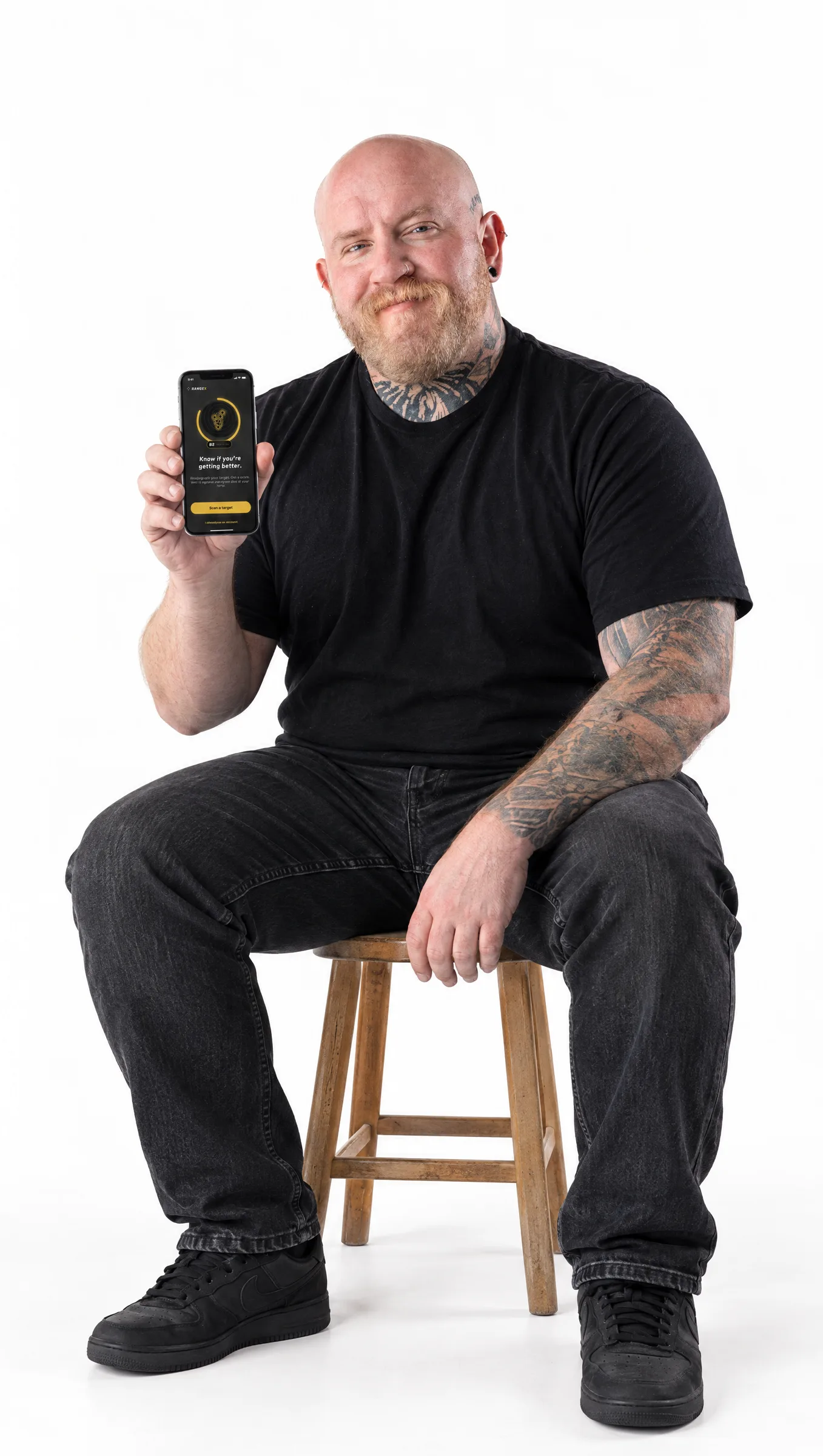
Chicago builds software that businesses buy, and the closest thing we have shipped is Dropify, an AI platform for e-commerce sellers. It reached $10K MRR in its first month, with more than 500 active users at launch and 85% retention in month one. The Dropify case study has the detail. RangeX shows the computer vision side: a phone photo of a paper target, scored about twenty seconds later. We wrote the scoring specification, designed a 22 screen prototype and are building the app and the computer vision pipeline behind it.
The week runs the same way for every founder:
- A thirty minute scoping call. You leave with a plan and a number.
- Design. Every screen approved in Figma before a line of code.
- Build. A new build each week on TestFlight or a live URL.
- Launch. The App Store, the web and the first month after.
We design and build iOS, Android, web and AI products with Chicago founders, about eight weeks to the App Store. The local pay figures, sectors and places to start are on our app development page for Chicago. If you have a product in mind and want a plan and a number, Book a free strategy call.