The Short Answer for Boston Founders
The app developers Boston founders want are mostly employed already. The metro has 42,310 software developers by the Bureau of Labor Statistics count for May 2025, and Clutch listed 251 app development companies in Boston in November 2026. For a first version, pick a team that can hand you an app to download and will put a fixed number in writing. Hire your own engineers once the product has users, and use a Northeastern co-op student to add hands to a team that already has a senior engineer, never to replace one.
Boston is a small market with deep pockets. The people who can build your app are being paid by biotech, robotics and two large consumer companies, and a Massachusetts statute decides what happens when you try to hire them away.

The pay figures, sectors and places to start are also on our Boston app development page, each with its source. For interview questions and contract terms that apply in any city, read how to hire an app developer.
What a Developer Costs in Boston
These are Bureau of Labor Statistics figures for May 2025, for software developers in the Boston, Cambridge and Newton metro, as republished by Wagedex.
- Median pay: $166,090 a year, or $79.85 an hour. The US median is $135,980.
- Mean pay: $162,440 a year.
- 10th percentile: $102,950.
- 25th percentile: $131,880.
- 75th percentile: $183,740.
- 90th percentile: $214,100.
The same page puts the Boston median 22.1% above the US median and ranks the metro 5th of 500 areas. Even the 25th percentile is $131,880, so there is no cheap half of the Boston market to shop in. A developer who has shipped to the App Store and can make decisions alone costs about what the median says, or more.
Those are salaries. Benefits, payroll taxes, a recruiter and equity come on top. Two developers at the median is twice that figure, and you still have no designer.
Postings now show the range
Massachusetts gives you a second way to read the market. Under Chapter 141 of the Acts of 2024, any employer "that employs 25 or more employees in the commonwealth" has to disclose the pay range in a job posting, and the range is what the employer "reasonably and in good faith expects to pay". The posting rule took effect on October 29, 2025, per Greenberg Traurig's summary.
Use it. Before you write an offer, read twenty current postings for mobile engineers from Boston employers and note the ranges. If your own company is under 25 people the rule does not bind you, but every candidate you talk to has seen the ranges, so post yours anyway.
What agencies in the city report
On Clutch's Boston list in November 2026, firms report hourly bands from "$25 - $49 / hr" at the bottom to "$150 - $199 / hr" at the top. Those are self-reported bands, and they are not quotes. A firm with a Boston address and a $25 to $49 band is telling you the code is written somewhere else. Fine, if they say so when you ask.
Who You Are Bidding Against
In most cities a startup competes with other startups for engineers. In Boston you compete with employers that have lab budgets.
- Life sciences. Biopharma companies headquartered in Massachusetts received $6.85 billion in venture funding in 2025, which the MassBio report published in January 2026 calls "the fewest venture capital dollars since 2019". It was still 26.2% of US biopharma venture funding, down from 28.3% the year before. Those companies hire software people to build the tools around the lab.
- Robotics. MassRobotics counts more than 500 companies "producing and utilizing robotics applications serving 11 different markets" in the region. A robot needs an app, a dashboard and a fleet backend, so mobile engineers who can talk to hardware have options here they would not have elsewhere.
- AI. Suno, the Cambridge AI music startup, raised $400 million in the second quarter of 2026 and Blitzy, an AI coding startup, raised $200 million, according to the Boston Globe's July 2026 report on PitchBook and National Venture Capital Association data. The same report has Massachusetts startups raising $10.2 billion in the first half of 2026.
- Two consumer companies with new leases. DraftKings is moving to 225 Franklin Street and Wayfair is consolidating its Boston staff at the 500 Boylston complex, where it is leasing 340,000 square feet. Both moves happen in 2027, per the Globe in December 2025. Both run large consumer apps, and both hire the mobile engineers you are looking for.

What this means for you depends on the product. If you are building software for a lab or a clinic, Boston has developers who already know the vocabulary, and you should pay for one. Our post on AI for biotech startups covers that kind of build. If you are building a consumer app, the local pool is thinner than the headcount suggests, because the 42,310 figure counts every kind of software developer, backend and scientific included, and shipping to a store is its own skill. Ask every candidate for a store link.
Four Ways to Get the App Built in Boston
Each of the four works for someone. The fields are the same for each, so you can compare them line by line.
1. Hire your own developers
- Good for: a product with users and a roadmap, and a company that wants the knowledge kept in the building.
- Watch for: months of recruiting before a line of code. One engineer is one skill. Design, QA and the launch still need an owner.
- In Boston: a single developer at the median is $166,090 a year. The candidate you want may have signed a noncompete with a Kendall Square employer, and state law decides whether it holds. That is covered below.
- Time to a first build: the slowest of the four.
2. A local agency
- Good for: a full team from the first week, and meetings in person if you want them.
- Watch for: hourly billing with no ceiling, and a sales office in Boston with the engineers somewhere they did not mention.
- In Boston: 251 listed companies is a short list for a metro this size. The good ones book out. Ask when they could start, and how many consumer apps they shipped in the last two years.
- Time to a first build: a few weeks from first call to kickoff, if they have room.
3. A freelancer
- Good for: one defined piece of work, started this week.
- Watch for: a single person covers a single skill. When they take a full-time offer, your context leaves with them, and in this market the offer will come.
- In Boston: with this many well-funded employers nearby, ask how long they plan to stay independent. Skip the noncompete in the contract. The state statute counts independent contractors as employees for that purpose, so the clause carries the same conditions it would for a hire.
- Time to a first build: the fastest start. Also the option most likely to stall halfway.
4. A product team
- Good for: a first version when nobody on your side writes code. Design, iOS, Android, web and AI come from one team, with a fixed number in writing before you commit.
- Watch for: they are not your staff. After launch you keep them on or you hire. It is not the cheapest line on this list either.
- In Boston: this is the option we are. We have no office in the city. Founders there work with us over calls and a demo every week on Eastern time.
- Time to a first build: a demo every week on TestFlight or a live URL once the design is approved.
We wrote the same comparison for a larger market in app developers in New York. The options are the same there. The trade-offs are different, and New York has nothing like the co-op supply described next.
The Northeastern Co-op, and What It Can and Cannot Do
Boston has a source of developers that almost no other city has, and founders from elsewhere tend to miss it. Northeastern's Khoury College of Computer Sciences places students in full-time paid jobs as part of the degree. Its page for employers says "most Khoury co-ops are full-time for four, six or eight months". Undergraduate terms start in January and run to the end of June, or start in the first week of July and run to the third week of December.
The college publishes what students were paid. For the 2025 to 2026 academic year the hourly averages on that page are:
- First undergraduate co-op: $27.00 on average, $34.00 for the top 25%.
- Second or third undergraduate co-op: $32.00 on average, $41.00 for the top 25%.
- Master's co-op: $38.00 on average, $58.00 for the top 25%.
Employers post the job through NUworks, the university's job site, and the page says there is no fee to post. It also says "two-thirds of Khoury undergraduate students are offered full-time positions by their co-op employers upon graduation". Six months of working with someone tells you more than any interview loop.
Now the limits. A co-op student is a student. They need a senior engineer to review their code, set the architecture and decide what ships. The calendar is fixed too, so a student who starts in July is gone in December whether or not you have launched. The model works when you already have a technical lead or an outside team and want more hands at a known hourly cost.
MIT is the other pipeline, and it produces founders more than employees. Its student accelerator, delta v, lists "$75K equity-free funding" on its program page as of November 2026 and asks teams to go to market by the end of the program. If you are in a program like that, the end date picks your build option for you.
Massachusetts Rules That Change the Hire and the Build
We are not lawyers and this is not legal advice. It is the list we would take to one before hiring in Massachusetts.
Noncompetes: Chapter 149, Section 24L
Massachusetts allows noncompetes and limits them hard. The statute says "in no event may the stated restricted period exceed 12 months from the date of cessation of employment", and it stretches to two years only if the employee breached a fiduciary duty or took the employer's property. The agreement has to be backed by garden leave, which means pay of "at least 50 percent of the employee's highest annualized base salary", or by other consideration both sides agreed to and wrote into the agreement. The rules apply to agreements entered into on or after October 1, 2018, under Section 71 of Chapter 228 of the Acts of 2018.
Three parts of it matter when you recruit.
- A noncompete is not enforceable against an employee who was terminated without cause or laid off. A developer who lost a job in a biotech funding cut is free to join you.
- It is not enforceable against students in an internship or short-term job while enrolled, which reads as covering a co-op term, or against employees classified as nonexempt under the Fair Labor Standards Act.
- The statute's definition of a noncompete leaves out agreements not to solicit employees or customers, confidentiality agreements and invention assignment agreements. Those survive. A candidate can be free to work for you and still barred from bringing two teammates along.
Ask every Boston candidate what they signed and when. If you want one in your own offers, it must reach the candidate by the earlier of the formal offer or ten business days before the start date, and garden leave is a cost most startups will not want to carry.
User data: 201 CMR 17.00
Massachusetts has its own data security regulation, and it names specific controls. Section 17.03 requires every person who owns or licenses personal information about a Massachusetts resident to "develop, implement, and maintain a comprehensive information security program that is written". It also requires you to hold your vendors to it "by contract". Section 17.04 requires "encryption of all transmitted records and files containing personal information that will travel across public networks" and "encryption of all personal information stored on laptops or other portable devices".
For an app, that turns into three things to get from whoever builds it: where personal information is stored, proof that it is encrypted in transit and on the developer's laptop, and a contract clause that says so. A developer who has built for Massachusetts users has been asked before.

Health and lab data
HIPAA is federal, so it is not a Boston rule. It comes up here often because so many products touch patients or trial data. If yours does, compliance work comes before the first feature.
What to Check Before You Sign
Run these on an employee, a freelancer, an agency and on us.
- A store link. An app you can install today and use for ten minutes. Ask which screens they built.
- What they signed with their last employer. A noncompete dated after October 1, 2018, a nonsolicit, an invention assignment. Get copies to your lawyer before the offer goes out.
- Who writes the code, by name. Meet the engineers on a call before the contract. A Boston address tells you where the sales team sits.
- Who owns the code and the accounts. The repository lives in your GitHub organization. The Apple and Google developer accounts are in your company's name. The contract assigns the work to you on payment.
- A fixed number in writing. Scope, price, date, and a written process for changes.
- The security answers. A written security program, encryption in transit and on laptops, and a contract clause, as 201 CMR 17.00 asks of you and your vendors.
- Who reviews the juniors' code. If an agency or a startup staffs your project with co-op students, ask for that person's name, and what happens when the term ends in June or December.
- A build every week. TestFlight or a live URL, on your phone. A slide deck in its place is a warning.
- Two founders you call yourself. Ask if problems were raised early, and if the app is still live.
The longer version of the agency checks, with how to read a proposal, is in how to vet a software development agency.
When an Agency or Product Team Is the Wrong Call
We build apps for a living, so read this with that in mind. Some Boston founders should not hire a team like ours.
- Your product is the science. If the hard part is a model, an assay or a robot, and the app is a thin window onto it, hire the scientist or the controls engineer first.
- You have a technical cofounder out of MIT or Northeastern who wants to write it. Let them. Add a co-op student for the January or July term and a contractor for the parts they have not done.
- You have raised enough to pay a founding engineer above the 75th percentile, $183,740, and you plan to ship every week for years. Hire that person and give them equity.
- You need someone in your office every day. We are not in Boston. If sitting next to the person writing code matters most to you, hire locally.
- The work is one integration or one bug. That is a freelancer's job.
- You are a hospital or a public company with a procurement process and a security team. You need a vendor set up for that paperwork.
The opposite case is the one we fit. You know the product, nobody on your side writes mobile code, and you need design, a backend and an app on one schedule with the cost known up front. At $166,090 for one developer, a wrong first hire in Boston costs more than most first versions.
How Boston Founders Work With Us
Here is what is true about us and Massachusetts. Community Run Camps runs summer sports camps in towns across Massachusetts and New York. We designed and built the site parents find them on, with a page for every camp, verified coach profiles and booking. It ranked in local search on day one and parents were booking the week it went live. The Community Run Camps case study has the detail.
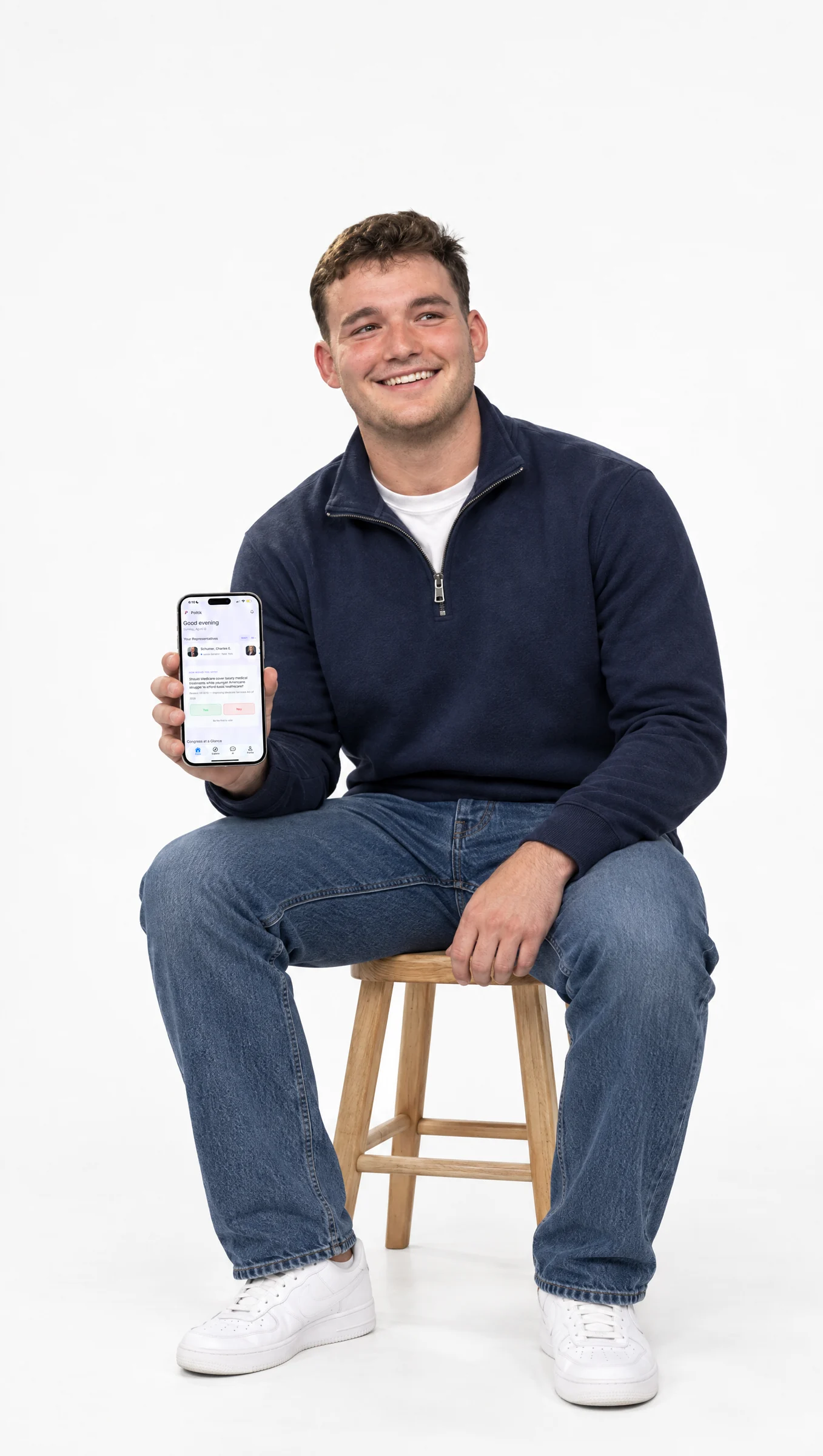
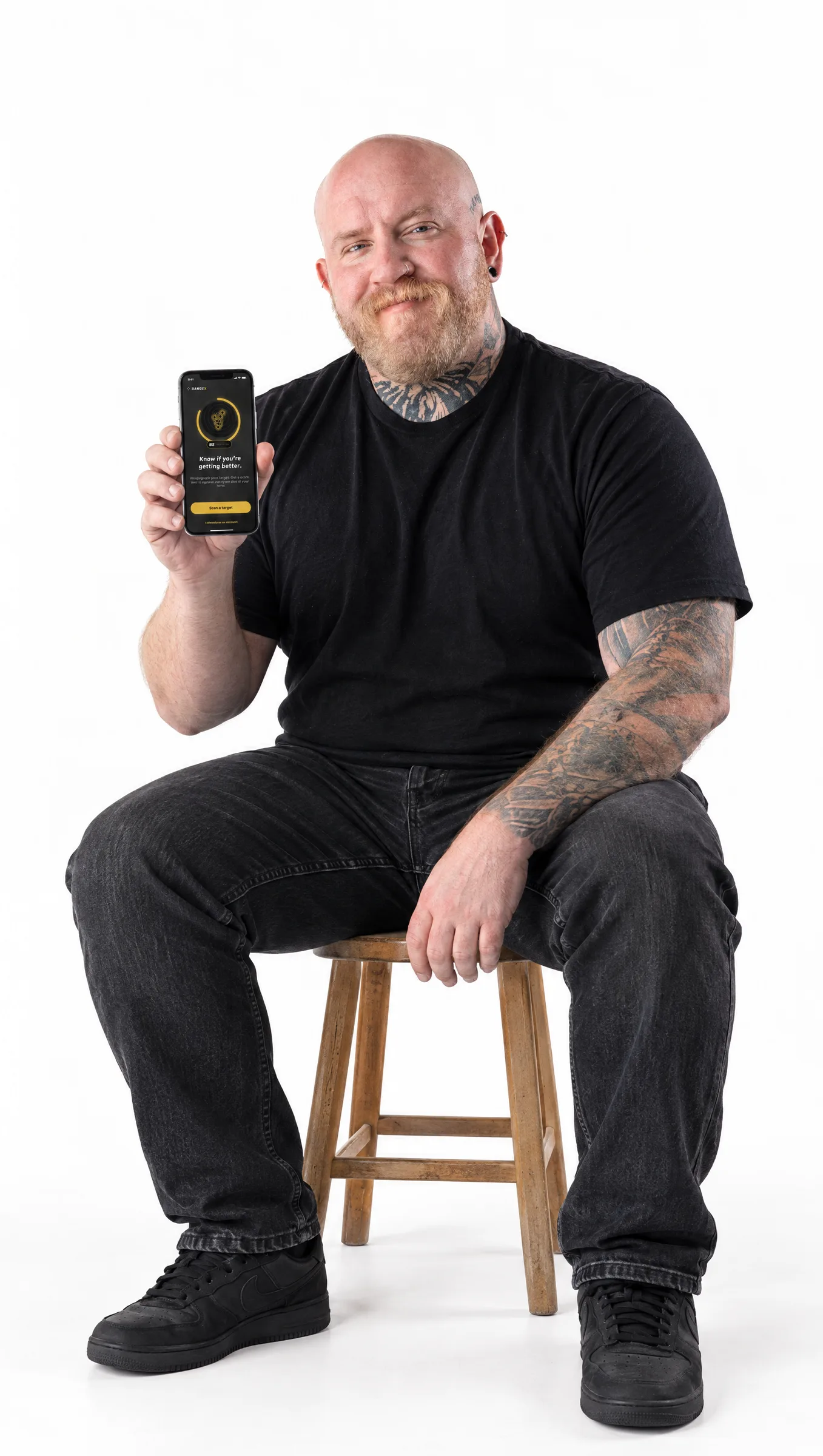
Two other builds are close to what Boston asks for. RangeX reads a photo of a paper target and returns a score in under twenty seconds. We wrote the scoring specification, designed a 22-screen prototype and are building the app and the computer-vision pipeline behind it. It is in development. Politik was built with three college founders who had never shipped software. It reached 4,000 users on launch day and #2 on the App Store within a week.
The week runs the same way for every founder:
- A thirty-minute scoping call. You leave with a plan and a number.
- Design. Every screen approved in Figma before a line of code.
- Build. A new build each week on TestFlight or a live URL, on Eastern time.
- Launch. The App Store, the web and the first month after.
We design and build iOS, Android, web and AI products with Boston founders, about eight weeks to the App Store. The local pay figures, sectors and places to start are on our app development page for Boston. If you have a product in mind and want a plan and a number, book a free strategy call.