Which store to launch on first
If your users are in the US and you sell a subscription, launch on the App Store first and ship Android a few weeks later. If most of your audience is outside the US or on Android phones, start on Google Play. Either way, open your Google Play developer account on day one, because a new personal account cannot publish anything until 12 testers have stayed in a closed test for 14 days straight.
That is the short version. The longer version is that the two stores now differ less on commission than they used to and more on paperwork, testing rules and timing. Google rewrote its US fee schedule on June 30. Apple is still in court over what it may charge on purchases made through links in US apps. Android developer verification started enforcement in four countries on September 30. Every one of those changes lands on a founder's launch plan, so this post walks through them with the numbers from Apple's and Google's own pages.
What a developer account costs on each store
The Apple Developer Program is 99 USD per membership year, or the local equivalent where Apple prices it in your currency. Nonprofits, accredited schools and government entities can request a fee waiver during enrollment. Everyone else pays every year, so put the renewal date on the company calendar.
Google Play charges a one-time 25 USD registration fee. You pick a personal or an organization account when you sign up, and that choice matters more than the fee. Google may ask for a government ID and a credit card in your legal name, and it does not refund the 25 dollars if that information fails verification. Personal accounts also have to verify access to a real Android device through the Play Console mobile app before they can publish.
My advice: if you have a company, register both accounts as an organization from the start. On Apple that means your company needs a D-U-N-S number from Dun and Bradstreet before you can enroll, so check for one or request it the week you incorporate. On Google, an organization account skips the 12-tester rule covered further down. A personal account saves you a form today and costs you two weeks later.
Commission rates and the small business tiers
This is where most comparisons online are out of date, because Google changed its US schedule this summer.
Apple
Apple's standard rate is 30% on paid apps and in-app purchases. Auto-renewing subscriptions drop to 15% once a subscriber has a year of paid service. The App Store Small Business Program cuts the rate to 15% on everything if your proceeds were no more than 1 million USD in the previous calendar year and stay under that line in the current one. You have to enroll, it is not automatic, and you have to list any associated developer accounts you control. Cross the line mid-year and the standard rate applies to future sales. New developers qualify from their first sale, so enroll before launch.
Google Play in the US
Since June 30, 2026, Google splits its fee into a service fee plus a 5% billing fee that applies when the buyer pays through Google Play Billing. For users in the US, UK and EEA the rates on Google's service fee page look like this:
- First 1 million USD of annual earnings: 10% plus the 5% billing fee, on subscriptions and one-time purchases alike.
- Auto-renewing subscriptions above that: still 10% plus 5%.
- Other purchases above 1 million USD: 20% plus 5% for users who installed the app on or after June 30, and 25% plus 5% for users who installed before it.
- Apps Experience or Games Level Up program members get 15% plus 5% on new installs and 20% plus 5% on existing ones for non-subscription purchases.
Outside those markets Google still runs the old model until its global rollout, which its own timeline puts at September 30, 2027 for most of the world: 15% on the first 1 million USD, 30% above it, and 15% on subscriptions regardless of revenue. Australia and Japan moved to the new model on September 30 of this year.
What that means for a real app
Take a 10 dollar monthly subscription sold to US users. Under the Small Business Program, Apple keeps 1.50 and so does Google. Below a million dollars the stores cost the same. Above a million, a first-year Apple subscriber costs you 3 dollars a month and a Google subscriber still costs 1.50. For a consumer subscription business at scale, that gap is the biggest commission difference left between the two stores.
Payment links in US apps after the Epic cases
Both stores now let US apps send users to a website to pay. The rules and the fees are not the same.
Apple
After the April 30, 2025 court order in Epic v. Apple, Apple's App Review Guidelines state that developers do not need an entitlement to include buttons, external links or other calls to action in their United States storefront apps. The guidelines were last updated on October 16, 2026 and still say that. So a US iOS app can put a "Subscribe on our website" button next to the in-app purchase.
What Apple can charge on those link-outs is still being fought over. On December 11, 2025 the Ninth Circuit upheld most of the order but said Apple can charge some commission on link-out purchases and can require the outside link to match the in-app purchase button in size, form and placement. It sent the case back to the district court to work out the details. Apple then asked the Supreme Court to review the case, and on June 30, 2026 the Court agreed to hear the question of the legal standard for civil contempt. All of this comes from Apple's latest annual report. As of late November no court has set a US link-out rate.
My read: build the link if your margin depends on it, but do not price your business on a zero fee. Assume a commission arrives within a year and check that your numbers still work at 10 to 15%.
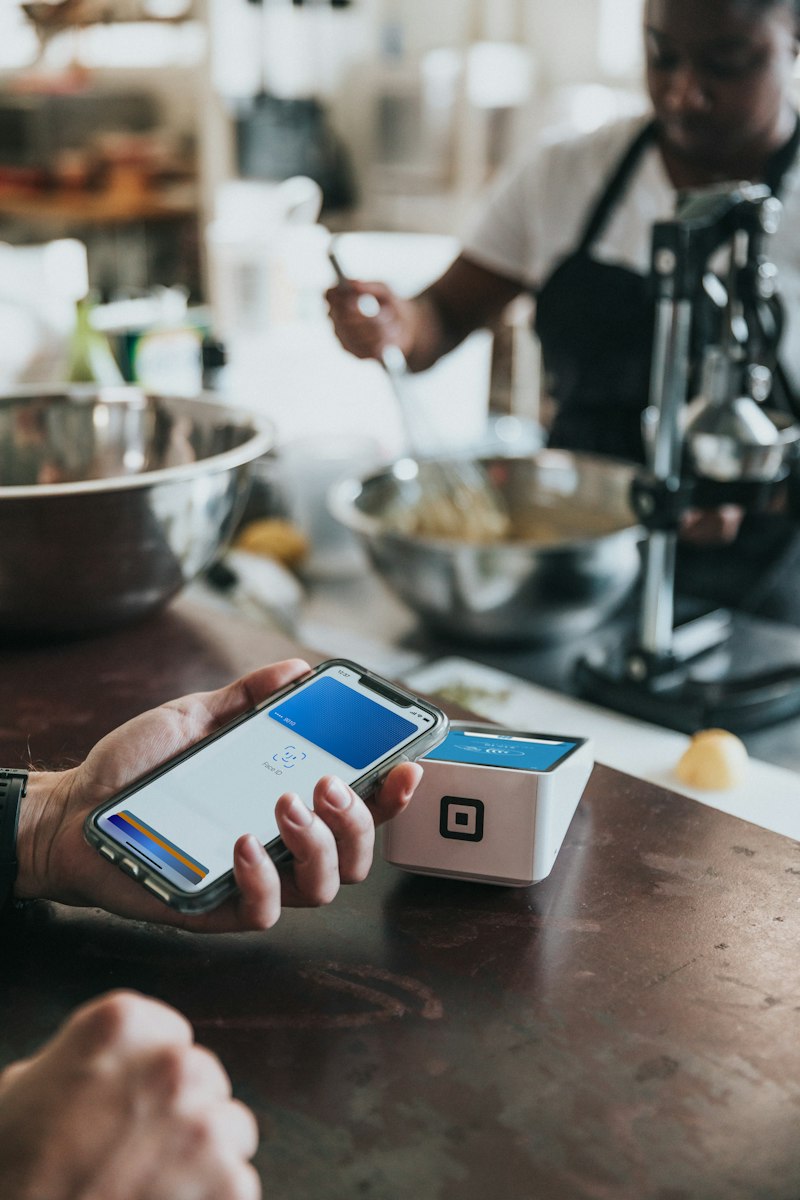
Google runs a US external content links program you have to enroll in. You integrate Google's external links APIs, which show users an information screen before they leave the app, and you take on refunds and support for anything sold outside Play. Fees apply to purchases completed within 24 hours of the link tap: 10% on recurring subscriptions, 10% on your first 1 million USD of annual earnings, and 20% on other purchases at the standard rate for users who installed on or after June 30. Linking out to download another app carries a fixed fee of 2.85 USD per install for apps and 3.65 USD for games.
Transaction reporting started on October 1. Google has since pushed the deadline to report app downloads and pay those fees to February 1, 2027. We covered the data you need to capture for those reports in our guide to Google Play's US billing rules.
The EU rules, briefly
Europe runs on its own terms under the Digital Markets Act. Apple's current EU schedule took effect on October 1, 2026. Apple In-App Purchase costs 26%, or 15% for Small Business Program members and for subscriptions after their first year. Alternative payment processing inside the app costs 20%, or 10% for the same groups. A link to an outside offer costs 15%, or 10%, and only on sales made within 7 days of the tap. Apps distributed outside the App Store pay a 5% Core Technology Commission.
Google opened its billing choice program in the EEA and the UK on June 30. It lets you offer your own billing inside the app or an external web link next to Google Play Billing, and it requires you to handle support and refunds for those sales. The EEA's older external offers program is still available.
If Europe is a small share of your revenue, the default App Store and Play setup is fine. If it is a large share, model each option after card fees and VAT before you change anything.
Review times and what gets rejected
Apple says App Review typically clears at least 50% of submissions in under 24 hours and 90% in under 48. Plan for more than that on a first submission, because a rejection and a resubmit restarts the wait. Apple also says that over 40% of unresolved issues fall under guideline 2.1, App Completeness: crashes, placeholder content, broken links and missing information.
The first-submission rejections that come up most often:
- No working demo account. If your app has a login, the reviewer needs credentials and a backend that is switched on.
- No in-app account deletion. Guideline 5.1.1(v) says that if you support account creation, you must offer account deletion inside the app. Google's User Data policy has the same requirement.
- Too thin. Guideline 4.2 rejects apps that feel like a repackaged website.
- A privacy policy link missing from App Store Connect or from the app itself.
Apple will expedite a review for a critical bug fix or an app tied to a dated event, if you ask and explain.
Google does not publish a typical review time. Its help center says that for certain developer accounts review can take up to seven days, or longer in exceptional cases. Plan for a week on a new account. The Play-specific trip wires are the Data safety form, which you fill in for every app and which has to match what your SDKs collect, and the account deletion questions inside it. Our App Store rejection guide walks through Apple's side in more detail, including how to answer a rejection without losing another week.
TestFlight, closed testing and the 12-tester rule
Beta testing works differently on each store, and on Google it is now a launch requirement for some accounts.
TestFlight lets you add up to 100 internal testers from your App Store Connect team and invite up to 10,000 external testers by email or public link. Each build stays testable for 90 days. The first build you send to external testers goes through App Review, so expect a short wait the first time. Apple's guidelines say betas belong on TestFlight, not on the store, and you cannot pay testers to join.
Google Play has internal testing, where builds reach a small trusted group within seconds, then closed testing, open testing and production. The catch: personal developer accounts created after November 13, 2023 must run a closed test with at least 12 testers who stay opted in continuously for 14 days. Only then can you apply for production access, and the application asks you to describe the test and summarize the feedback. Production and pre-registration stay locked until you pass.
Put that on your calendar. Fourteen days of testing, then an application review, then the app review itself. On a personal account the fastest realistic path from "the build is ready" to "live on Google Play" is about three weeks. Recruit the 12 testers before the build exists, and tell them that leaving early breaks the 14 continuous days.
Android developer verification
Google now requires developers to verify their identity before their apps can be installed on certified Android devices, including apps installed from outside Google Play. Enforcement started on September 30, 2026 for users in Brazil, Indonesia, Singapore and Thailand on devices running Android 8 or later. Google says it will expand verification to all apps on certified devices worldwide in 2027.
If you only distribute through Google Play, this is mostly handled for you. Google says Play registers 99% of apps automatically. It matters if you also hand out an APK directly, distribute through another Android store, or plan a sideloaded beta for a pilot customer. In those cases, register the app in Play Console or the Android Developer Console before the 2027 rollout reaches your users. Google has also launched limited distribution accounts that let students and hobbyists share an app with up to 20 devices without an ID or a registration fee. That is useful for a class project and too small for a company.
Refunds
On the App Store, customers request refunds through Apple's Report a Problem site and Apple makes the decision. You see the result in your reports and through App Store Server Notifications, and your backend should revoke access when a refund comes through.
On Google Play, the store tells buyers to contact the developer once more than 48 hours have passed since the purchase. You can issue full or partial refunds yourself in Play Console. Refunding the latest order on a subscription removes the user's access right away and cancels future renewals, while cancelling a subscription does not refund anything. Write a short support macro for each case before launch.
The moment you sell through your own checkout on either platform, refunds, chargebacks and fraud are yours. Google's US and EEA programs both require you to offer a refund method and a way to dispute unauthorized charges. Budget support time for it.
Side by side
| App Store | Google Play | |
|---|---|---|
| Account cost | 99 USD per year | 25 USD once |
| Rate under 1M USD | 15% with the Small Business Program | 10% plus 5% billing fee in the US |
| Subscriptions at scale | 30% in year one, 15% after | 10% plus 5% billing fee |
| US payment links | Allowed, no entitlement needed, fee pending in court | Enrollment required, 10% to 20% within 24 hours of the tap |
| Typical review | 90% of submissions in under 48 hours | No published time, up to 7 days for some accounts |
| Required testing | None | 12 testers for 14 days on new personal accounts |
| Beta tool | TestFlight, 10,000 external testers, 90-day builds | Internal, closed and open testing tracks |
| Refunds | Apple decides | Developer can refund in Play Console |
Which one for your product
Here is where I land for the products founders ask about most.
- A subscription fitness app in the US: App Store first. TestFlight gets you a beta in days with no tester quota, and below a million dollars the commission is the same 15% on both stores. Start the Google closed test in parallel so Android follows a few weeks behind.
- A consumer subscription app past 1 million USD a year: both stores, with a web checkout link on both. Google's 15% all-in on subscriptions beats Apple's 30% in year one. Apple's US link-out fee is still unset, so model it at 15% before you count the savings.
- A marketplace selling rides, food or physical goods: launch both at once. Neither store takes a commission on physical goods and services, so the choice is about where your buyers are, not fees.
- A B2B tool with a mobile companion: both, with sign-up and billing on the web. Make sure account deletion works in the app.
- A game or an app for a market like Brazil, India or Indonesia: Google Play first, on an organization account, with developer verification done before you plan any distribution outside Play.
If you build in React Native with Expo, the stack question mostly answers itself, because one codebase ships to both stores. That is how we built Vybes for iOS and Android, and how Politik, an iOS app, went from idea to the App Store in under three months with 4,000 users on launch day. The store rules then become a calendar problem: Apple's account paperwork early, Google's 14-day test early, and both review windows before your launch date. If you want real numbers for the build itself, our breakdown of how much it costs to build a mobile app covers the ranges and what drives them.
Kanopy helps founders pick a stack and build the product on it. If you are planning a launch and want the calendar worked out with someone who has done it, book a free strategy call.