

Why AI Note-Taking Is Different from Adding AI to Notion
Notion AI added a chatbot to a document editor. That is not what we are building here. A true AI note-taking app rethinks how notes are captured, organized, and retrieved. The AI is not a bolt-on feature; it is the core architecture.
The killer features that define this category: automatic transcription of meetings and voice notes with speaker identification, semantic linking that connects related notes without manual tagging, natural language search that understands "what did Sarah say about the Q3 budget" instead of keyword matching, automatic summarization and action item extraction, and a knowledge graph that surfaces connections you did not know existed.
Notion AI, Mem, Reflect, Granola, and Otter.ai each focus on different aspects of this vision. Granola nails meeting transcription. Mem focuses on automatic organization. Reflect emphasizes networked thinking. There is room for products that combine these capabilities or serve specific verticals (legal note-taking, medical dictation, research annotation).
Here is how to build one from a technical perspective.
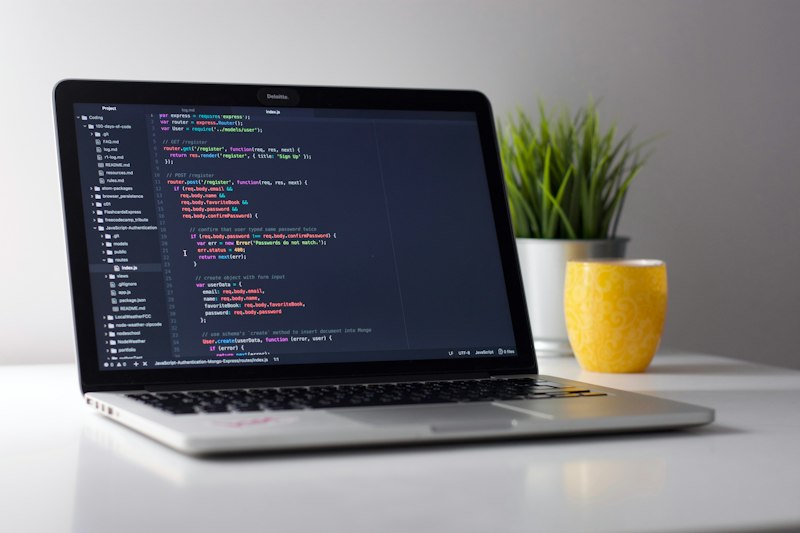
Architecture: Editor, AI Pipeline, and Knowledge Graph
An AI note-taking app has three major systems that interact constantly:
Rich Text Editor
The editor is where users spend most of their time, so it needs to be fast, reliable, and support rich content. Tiptap (built on ProseMirror) is the strongest choice in 2026: extensible, well-documented, and handles collaborative editing. Lexical (Meta) is a solid alternative with better performance on large documents. Avoid building your own editor from scratch. The complexity of cursor management, undo/redo, and rich text formatting will consume months.
AI Processing Pipeline
Every note gets processed through an AI pipeline: text is chunked and embedded, entities are extracted, summaries are generated, action items are identified, and semantic links to other notes are created. This pipeline runs asynchronously after each edit (debounced to avoid excessive API calls) and when new notes are created. Use a message queue to manage pipeline tasks and prevent API rate limiting.
Knowledge Graph
The knowledge graph connects notes through semantic relationships, entity mentions, and user-created links. This powers "related notes" suggestions, graph visualization (like Obsidian's graph view), and intelligent search that understands context across your entire note collection. PostgreSQL with recursive CTEs handles graph queries well for small to medium collections. For large knowledge bases, consider Neo4j or a dedicated graph layer.
Real-Time Transcription and Voice Notes
Voice input is the highest-value feature for AI note-taking because it captures information that would otherwise be lost: meeting discussions, voice memos, brainstorming sessions.
Transcription Providers
Deepgram is our recommended provider for real-time transcription: low latency, good accuracy, speaker diarization, and reasonable pricing ($0.0043/minute for streaming). AssemblyAI is a strong alternative with better entity detection. OpenAI Whisper is cheapest but only supports batch transcription, not real-time streaming.
Speaker Identification
For meeting transcription, speaker diarization (identifying who said what) is essential. Deepgram and AssemblyAI both offer diarization. Accuracy improves when users label speakers after the first few minutes. Store speaker profiles so the system improves over time for recurring meeting participants.
Streaming Architecture
For real-time transcription: capture audio from the device microphone using the Web Audio API or native audio frameworks, stream audio chunks to the transcription service via WebSocket, receive partial transcripts in real time, display them in the editor with a "live" indicator, and finalize the transcript when recording stops. The key UX requirement is that partial transcripts appear within 300 to 500ms of speech. Anything slower feels laggy.
Post-Processing
Raw transcripts are hard to read. After transcription completes, run a post-processing pipeline that: corrects common transcription errors using an LLM, adds punctuation and paragraph breaks, identifies action items and decisions, generates a structured summary, and extracts entities (people, dates, projects) for the knowledge graph. This is where the RAG architecture concepts apply directly.
Semantic Search and Retrieval
Keyword search is the baseline. Semantic search is what makes an AI note-taking app genuinely useful.
Embedding Pipeline
When a note is created or updated, chunk it into semantic sections (by heading or paragraph), generate vector embeddings using OpenAI's text-embedding-3-small ($0.02 per million tokens) or Cohere's embed-v3, and store embeddings in a vector database. For most note-taking apps, pgvector in PostgreSQL handles the scale (up to millions of chunks) without needing a dedicated vector database.
Hybrid Search
Pure semantic search misses exact matches ("show me the note titled Q3 Budget Review"). Pure keyword search misses conceptual queries ("what were our concerns about the marketing spend"). Combine both: run a keyword search against note titles and content, run a semantic search against embeddings, merge and re-rank results. This hybrid approach outperforms either method alone by 20 to 30% in retrieval quality.
Conversational Search
Let users ask questions in natural language: "What did we decide about the pricing change last week?" This requires: embedding the query, retrieving relevant note chunks, passing them as context to an LLM, and generating a natural language answer with source citations. This is standard RAG, and it works remarkably well for personal knowledge bases because the context is relatively small and homogeneous. The second brain app concept is essentially this architecture taken to its logical conclusion.
Search Performance
For a good user experience, search results need to appear within 200ms. Use Redis caching for recent and frequent queries. Pre-compute embeddings for common query patterns. Index note metadata (dates, tags, speakers) separately for fast filtering before semantic search kicks in.
Knowledge Graph and Automatic Linking
The knowledge graph is what transforms a collection of notes into a connected knowledge base.
Entity Extraction
Run entity extraction on every note to identify: people (Sarah, the marketing team), projects (Q3 launch, website redesign), concepts (pricing strategy, customer segmentation), dates and deadlines, and organizations. Use an LLM for extraction rather than traditional NER models, as LLMs handle context-dependent entities much better. Store entities as nodes in the knowledge graph with links back to the notes where they appear.
Semantic Linking
Automatically link notes that discuss similar topics. When a new note is created, compare its embedding against all existing note embeddings. Notes with similarity above a threshold (typically 0.75 to 0.85 cosine similarity) get linked with a "related" relationship. Display these links as suggestions: "This note might be related to 'Q3 Budget Planning' from last Tuesday."
Graph Visualization
Build a graph view (similar to Obsidian) that shows notes as nodes and relationships as edges. Use D3.js force-directed layout or react-force-graph for the visualization. Color-code nodes by type (meeting, voice memo, manual note), size nodes by connection count, and allow users to click into any node to read the full note. This visualization is a strong differentiator because it reveals connections that sequential note lists hide.
User-Created Links
Support bidirectional linking (like Roam Research's [[double bracket]] syntax). When a user types [[, show an autocomplete dropdown of existing notes. Creating a link from Note A to Note B automatically creates the backlink from B to A. These explicit links strengthen the knowledge graph and improve search relevance.
Sync and Offline Support
Notes are personal data that users expect to be available everywhere, instantly. Sync architecture is critical.
Real-Time Sync
Use CRDTs (Conflict-free Replicated Data Types) for real-time note syncing across devices. Yjs is the best CRDT library for rich text: it integrates directly with Tiptap and ProseMirror, handles offline edits gracefully, and resolves merge conflicts automatically. Store the CRDT document state in your backend and sync deltas through WebSocket connections.
Offline-First Architecture
Notes must work offline. Use IndexedDB for local storage (through Dexie.js for a friendlier API), queue edits when offline, and sync when connectivity returns. The CRDT approach handles this naturally because offline edits can be merged without conflicts when the device reconnects.
End-to-End Encryption
For privacy-focused users, offer end-to-end encryption where notes are encrypted on the client before syncing to the server. The tradeoff: server-side AI processing (search, summarization, entity extraction) cannot work on encrypted notes. You either process AI locally (slower, limited by device capability) or decrypt in a secure enclave on the server. Most apps choose to offer encryption as an option for sensitive notes while keeping standard notes server-processable.
Cross-Platform
Build for web first (Next.js), then native mobile (React Native), then desktop (Electron or Tauri). The web app covers most use cases. Mobile is essential for voice capture on the go. Desktop is a nice-to-have for power users who prefer native apps. Share the core sync and AI pipeline logic across all platforms.
Tech Stack, Costs, and Getting Started
Recommended tech stack:
- Editor: Tiptap (ProseMirror) with custom extensions for AI features
- Sync: Yjs for CRDT-based real-time sync
- Frontend: Next.js with TypeScript for web, React Native for mobile
- Backend: Node.js with TypeScript (Fastify or Hono)
- Database: PostgreSQL with pgvector for embeddings
- Transcription: Deepgram for real-time, Whisper for batch
- LLM: Claude for summarization and entity extraction, GPT-4o-mini for high-volume tasks
- Search: Hybrid keyword (PostgreSQL full-text) + semantic (pgvector)
- Graph: PostgreSQL with recursive CTEs, upgrade to Neo4j at scale
- Storage: S3 for audio files and attachments
Estimated Costs
An MVP with rich text editing, voice transcription, semantic search, and basic automatic linking takes 4 to 6 months with a team of 3 developers. Budget $120K to $200K for development, plus $500 to $3,000/month for AI API costs depending on user volume. The biggest recurring cost is transcription: at $0.0043/minute, a user who transcribes 20 hours of meetings per month costs $5.16 in transcription alone.
Start with the editor and semantic search. Add voice transcription in version 2 and the knowledge graph in version 3. The editor and search deliver immediate value and let you validate product-market fit before investing in the more complex features. If you are building an AI writing assistant, the editor and AI pipeline architecture overlap significantly.
We build AI-powered productivity apps with LLM integration and real-time sync. Book a free strategy call to scope your AI note-taking app.

Need help building this?
Our team has launched 50+ products for startups and ambitious brands. Let's talk about your project.