

What Separates a Second Brain from a Note-Taking App
Notion is a workspace. Obsidian is a file manager with linking. A second brain app is something different: a personal knowledge system where the connections between your ideas are as important as the ideas themselves.
The defining features are bidirectional linking (link note A to note B, note B automatically references note A), graph visualization that reveals hidden connections, and AI that understands the semantic meaning of your notes and can surface relevant context when you need it.
Users of second brain apps are demanding. They are researchers, writers, founders, and knowledge workers who have tried every note-taking tool and switched because none met their needs. They care about writing speed, linking friction, search quality, and data ownership. They will pay $15 to $30/month for a tool that genuinely helps them think better, but they will churn the moment the app feels slow or limited.
The technical challenge: you need a fast block editor, an efficient graph data model, real-time sync across devices, offline support, and AI features that feel like magic rather than a gimmick. Each of these is a substantial engineering effort. Combined, they represent 6 to 12 months of focused development. If you have explored building a Notion alternative, a second brain shares the block editor foundation but diverges significantly in the data model and AI layer.
Choosing Your Block Editor
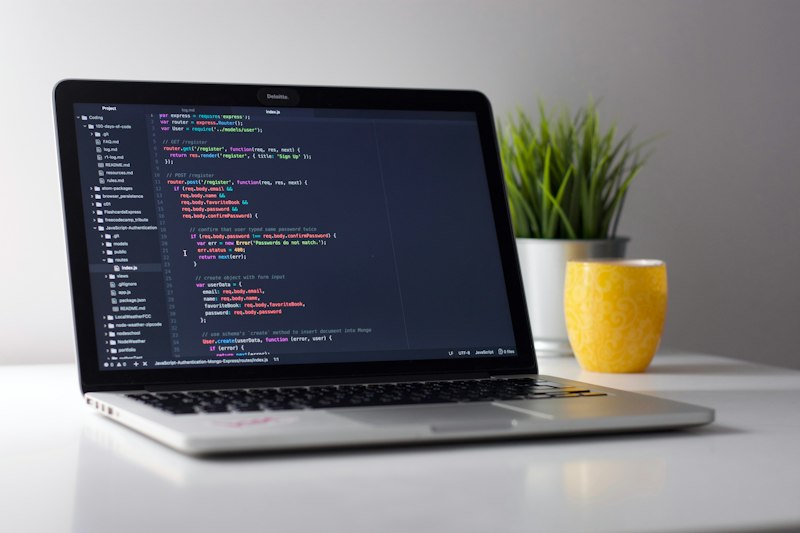
The editor is where users spend 90% of their time. It must feel instant, support rich content types, and handle documents with thousands of blocks without lag.
TipTap (ProseMirror-based)
The most battle-tested option for second brain apps. TipTap wraps ProseMirror in a cleaner API with an extension system for adding custom block types. Hocuspocus (TipTap's collaboration extension) adds real-time collaborative editing via Yjs CRDTs. Most Notion-like products use TipTap or ProseMirror directly. The ecosystem is mature with extensions for tables, code blocks, mentions, and slash commands.
Lexical (Meta)
Newer and faster than ProseMirror for large documents. Lexical uses a different architecture (declarative state updates rather than ProseMirror's transaction model) that simplifies custom node development. The trade-off: smaller community, fewer examples, and less battle-tested in production PKM apps. Choose Lexical if performance on massive documents is your priority.
Plate (Slate-based)
Plate provides 50+ pre-built plugins for Slate: tables, mentions, code blocks, drag-and-drop, and more. Good for getting to a feature-complete editor quickly. Slate's architecture can struggle with documents over 5,000 blocks, which matters for power users with daily notes spanning months of content.
Editor Performance Targets
Keystroke latency under 16ms (one frame at 60fps). Document load time under 200ms for a 1,000 block note. Slash command menu appears in under 50ms. These targets are achievable with TipTap and Lexical but require careful optimization: virtual rendering for long documents, lazy loading for embeds, and debounced state persistence.
Data Model: Blocks, Links, and Graph Storage
Your data model determines the performance of every feature: search, linking, graph rendering, and sync. Get this right from the beginning because migrating data models later is painful.
Block-Based Storage
Store each block as a separate record with: a unique ID, parent note ID, block type (paragraph, heading, list, etc.), content (structured JSON matching your editor schema), position within the note (using fractional indexing for efficient reordering), and timestamps for creation, modification, and sync. This granularity lets you sync, version, and reference individual blocks rather than entire notes.
Link Model
Store links as first-class entities: source block ID, target note ID (or block ID for block-level links), link text, and context (surrounding text for preview). Bidirectional linking means you need efficient queries in both directions: "what does this note link to?" and "what links to this note?" A separate links table with indexes on both source and target handles this efficiently in PostgreSQL.
Graph Storage Options
- PostgreSQL with a links table: Works for 90% of use cases. Use recursive CTEs for multi-hop traversal (finding notes connected within 2 to 3 link hops). Performance degrades beyond 50,000 notes with complex graph queries.
- Neo4j or ArangoDB: Native graph databases that excel at traversal queries and pattern matching. Add $15K to $25K in development but unlock features like "find all notes connected to this topic within 3 hops" with sub-second query times at any scale.
- Hybrid: PostgreSQL for note content and metadata, a graph index (Neo4j or an in-memory graph) for relationship queries. This is what Tana and Logseq use internally.
Bidirectional Linking and Backlink Panel
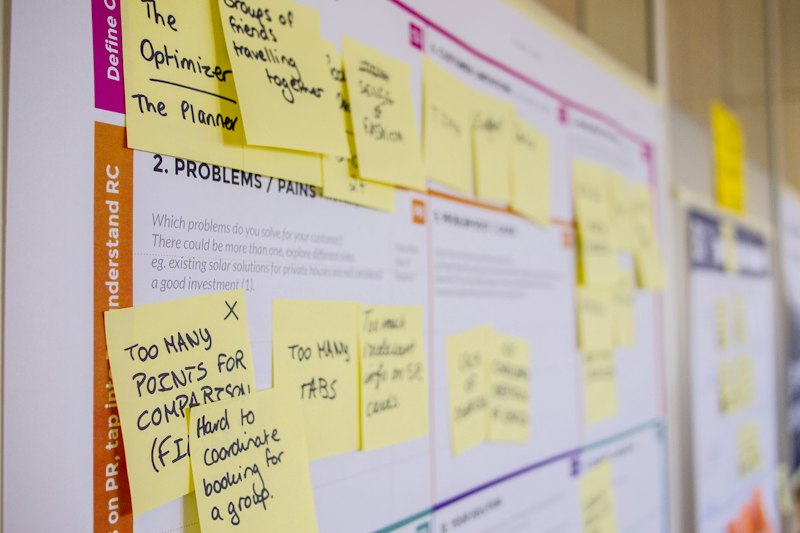
Bidirectional linking is the feature that defines second brain apps. When a user types [[Note Title]] or uses an inline mention, the system creates a link to that note and automatically registers a backlink on the target note.
Link Creation UX
Support multiple linking patterns: double bracket syntax ([[Note Title]]), slash command (/link), @mention syntax, and inline search (start typing and see matching notes). The autocomplete must be fast: query your note index in under 50ms and display results as the user types. Fuzzy matching (finding "Meeting Notes" when the user types "mtg notes") dramatically improves the linking experience.
Backlink Panel
On every note, display a panel showing all notes that link to it, with surrounding context (the paragraph where the link appears). This context is critical: knowing that "Project Alpha" links to "Budget Planning" is useful, but seeing the sentence "The Budget Planning process for Project Alpha needs to start by March" is far more valuable.
Unlinked Mentions
Scan all notes for text that matches existing note titles but is not yet linked. Display these as "unlinked mentions" that the user can convert to links with one click. This feature surfaces connections the user did not explicitly create. Implementation: run a background job that indexes note titles and searches for matches across all note content. Update the index when notes are created, renamed, or deleted.
Link Preview
When hovering over a link, show a preview of the target note's content (first 200 characters or the first paragraph). This lets users verify they are linking to the right note without navigating away from their current context. Implement with a popover component that fetches note content on hover with a 200ms delay to avoid flickering.
AI Features: Making the Second Brain Intelligent
AI transforms a note-taking app from a storage system into a thinking tool. The best AI features feel like having a research assistant who has read everything you have ever written.
Semantic Search
Keyword search finds notes containing exact words. Semantic search finds notes containing related concepts. Embed every note using OpenAI's text-embedding-3-small or Cohere's embed-v4, store vectors in pgvector or Pinecone, and retrieve notes based on meaning similarity. "That idea about pricing strategy for the new product" finds the right note even if those exact words never appear. For deeper technical detail, our AI search guide covers the full implementation.
AI-Suggested Links
When a user finishes writing a note, compute its embedding and find the top 5 to 10 most semantically similar existing notes. Present these as suggested links: "This note might be related to: [Note A], [Note B], [Note C]." The quality threshold matters: too aggressive and the suggestions feel spammy, too conservative and the feature is invisible. Start with a cosine similarity threshold of 0.75 and tune based on user feedback.
Q&A Over Your Knowledge Base
Build a chat interface where users ask questions and the AI answers using their notes as context. This is personal RAG: embed the question, retrieve relevant note chunks, inject them into a Claude or GPT-4o prompt, and generate a response with citations linking back to the source notes. Users love this feature because it turns months of accumulated notes into an instantly queryable knowledge base.
Daily Briefing
Each morning, generate a summary of notes from the past week that are relevant to the user's current projects or recently active topics. Use a combination of recency, link density (heavily linked notes are likely important), and semantic similarity to the user's most-edited notes. This feature is computationally light but feels magical: "Here is what is on your radar this week, based on what you have been thinking about."
Sync, Offline, and Multi-Device Architecture
Note-taking apps must work everywhere: desktop, tablet, phone, and airplane mode. This is where most second brain apps either excel or fail catastrophically.
Sync Architecture
The gold standard is local-first: every device has a complete local copy of all notes, edits happen locally (instantly), and changes sync to other devices in the background. Conflict resolution happens automatically. This architecture requires CRDTs (Conflict-free Replicated Data Types) for merging concurrent edits without data loss.
CRDT Options
- Yjs: The most mature JavaScript CRDT library. Pairs perfectly with TipTap for collaborative editing. Supports offline edits that merge cleanly when the device comes back online. Sub-document support for syncing individual notes independently.
- Automerge: Rust-based CRDT with JavaScript bindings. Better performance for large documents but less ecosystem support for rich text editors.
- PowerSync or ElectricSQL: Database-level sync that replicates PostgreSQL tables to local SQLite. Simpler mental model (just write to the database) but less granular conflict resolution for rich text content.
Sync Performance Targets
Local edit to screen: under 16ms (synchronous). Local edit to cloud: under 500ms (background). Cloud to other device: under 2 seconds (via WebSocket push). First sync for a new device: under 30 seconds for 10,000 notes (stream and render incrementally).
Storage and Encryption
Store encrypted note data on the device using SQLite (via wa-sqlite in the browser, native SQLite on mobile). End-to-end encryption (where the server never sees plaintext) is a strong selling point for privacy-conscious users but adds complexity to AI features (you cannot embed encrypted content server-side). Offer E2EE as an optional per-workspace setting.
Launch Strategy and Next Steps
The second brain market rewards opinionated products. Do not try to build "Notion plus Obsidian plus Reflect." Pick a specific user persona and build the best possible tool for them.
Promising Niches
- Academic researchers: PDF annotation, citation management, literature graph, and LaTeX export. Integrate with Zotero and Semantic Scholar.
- Startup founders: Meeting notes, decision logs, investor updates, and product research. Integrate with Linear, Notion, and Slack.
- Writers and journalists: Source management, story threading, interview notes, and publishing export. Focus on writing speed and distraction-free mode.
- Legal professionals: Case research, client matter notes, precedent tracking, and compliance documentation. End-to-end encryption is essential.
MVP Feature Set
For your first version, build: block editor with 10 core block types, bidirectional linking with autocomplete, basic search (full-text, not yet semantic), daily notes, cloud sync (not yet offline-first), and web app (mobile can wait). This is 3 to 4 months of development and lets you validate product-market fit before investing in AI features and offline support.
Growth Playbook
Second brain apps grow through community: build in public on Twitter/X and Reddit (r/PKMS, r/ObsidianMD), sponsor PKM YouTubers (Tiago Forte, Ali Abdaal, Nicole van der Hoeven), and create templates and workflows for your target niche. The users who adopt second brain tools are vocal evangelists when they find one they love.
Ready to build your second brain app? Book a free strategy call and we will help you define your niche, choose the right tech stack, and plan a realistic development timeline.
Need help building this?
Our team has launched 50+ products for startups and ambitious brands. Let's talk about your project.