
Why Food Halls Need Their Own Delivery Platform
Food halls have exploded across North American cities over the past five years. From Legacy Hall in Plano to Time Out Market in Miami, these curated collections of independent food vendors are pulling in foot traffic that traditional malls can only dream about. The format works because it solves a real problem: groups with different cravings can all eat together without compromise. One person grabs tacos, another gets ramen, a third orders poke bowls, and everyone sits at the same communal table.
The problem? That experience completely breaks down when you try to bring it online. Most food halls either don't offer delivery at all, or each vendor operates independently on DoorDash or Uber Eats. That means a family ordering dinner from three different vendors in the same food hall pays three separate delivery fees, waits for three separate drivers, and receives food at three different times. The entire value proposition of the food hall disappears.
A multi-vendor food hall delivery app solves this by letting customers browse every vendor in a single app, add items from multiple vendors to one unified cart, pay once, and receive everything in a single coordinated delivery. That is a fundamentally different product from a standard food delivery app, and the technical challenges are different too. You are not just connecting customers to restaurants. You are orchestrating simultaneous prep across multiple independent kitchens, synchronizing pickup timing, splitting payments to multiple vendors, and managing a shared fulfillment layer.
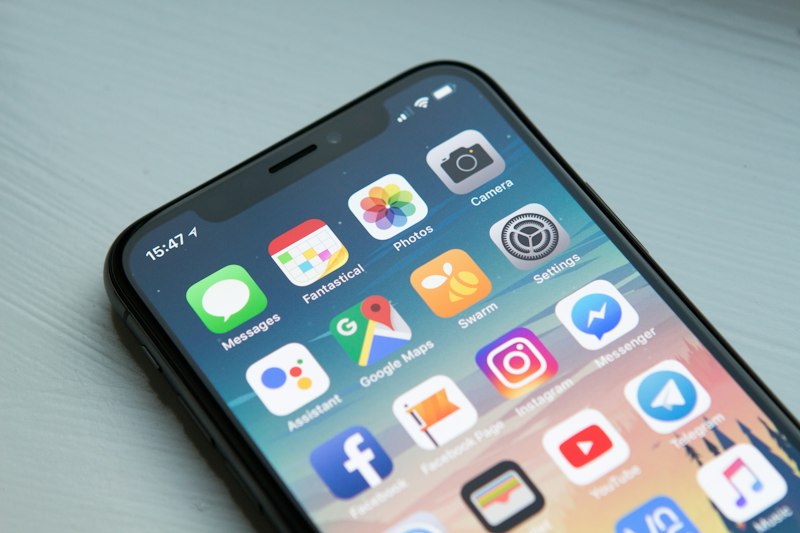
The market timing is strong. Food halls generated an estimated $3.2 billion in U.S. revenue in 2026, and digital ordering penetration for these venues sits below 15%. Compare that to the 35% to 40% digital penetration at traditional quick-service restaurants, and the gap is obvious. The operators who build a clean digital ordering experience first will capture disproportionate market share.
The Unified Cart: Core Architecture Challenge
The single most important technical feature of a food hall delivery app is the unified cart. Customers need to browse multiple vendors and add items from any of them into a single order. This sounds simple on the surface, but the data model and business logic underneath are significantly more complex than a standard single-vendor cart.
Data Model Design
Your cart needs a hierarchical structure. At the top level, you have an Order that belongs to a Customer and is associated with a FoodHall (the physical location). Inside that order, you have multiple VendorOrders, one for each vendor the customer is ordering from. Each VendorOrder contains line items specific to that vendor, along with vendor-specific metadata like prep time estimates and special instructions. This structure lets you treat the order as a single unit for the customer experience (one checkout, one delivery fee, one tracking screen) while managing it as multiple independent prep tickets on the vendor side.
Cart Validation and Availability
Things get tricky when vendors have different operating hours, different menu availability windows, or when a vendor runs out of an ingredient mid-order. Your cart needs real-time validation that checks each vendor's current status before allowing checkout. If the taco vendor closes at 9 PM but the pizza vendor stays open until 11 PM, and a customer adds items from both at 8:55 PM, your app needs to surface that conflict clearly rather than letting the order fail silently after payment.
Build your cart validation as a server-side pipeline that runs on every cart modification and again at checkout. Each step in the pipeline checks one thing: vendor availability, item availability, minimum order thresholds per vendor (some vendors require a $10 minimum), delivery zone eligibility, and promo code applicability. If any step fails, return a specific, actionable error message. "Bangkok Bowls closes in 5 minutes. Place your order now or remove those items to continue." That is a good user experience. A generic "checkout failed" message is not.
Prep Time Synchronization
Here is where food hall delivery gets genuinely hard. If a customer orders pad thai (12-minute prep) and a wood-fired pizza (8-minute prep) in the same cart, you need both items ready at approximately the same time so the delivery driver can pick everything up in one trip. Your system needs to stagger order transmission to each vendor based on their estimated prep time. Send the pad thai order to the kitchen immediately, but hold the pizza order for four minutes. This requires accurate, per-item prep time estimates from each vendor, and those estimates need to be calibrated regularly based on actual fulfillment data.
Start with vendor-provided estimates, then layer in machine learning adjustments as you collect data. A vendor might say their burger takes 10 minutes, but your data shows it actually averages 14 minutes during Friday dinner rush. Use the real number, not the optimistic one.
Vendor Management and Onboarding
Food hall vendors are not chain restaurants with IT departments. They are independent operators, often running a single counter with a small crew. Your vendor management system needs to be dead simple, because if it is not, vendors will ignore it, and your platform collapses.
Vendor Dashboard Requirements
Each vendor needs a tablet-based dashboard (we recommend dedicated Android tablets, around $120 each) that shows incoming orders with loud audio alerts, lets them accept or reject orders with a single tap, provides a clear queue view showing all active orders and their promised delivery times, and lets them mark items as "86'd" (unavailable) in real time. The 86'd functionality is critical. Food hall vendors run out of things constantly. A poke bowl vendor might exhaust their salmon supply by 7 PM. Your app needs to reflect that instantly so customers are not ordering items that do not exist.
Menu Management
Build a menu management system that works for non-technical operators. Photo upload with automatic cropping and optimization, drag-and-drop category ordering, modifier groups (size, toppings, protein choices) with clear pricing, and scheduled availability (lunch menu vs. dinner menu). The best approach we have seen is to assign a food hall operations manager who handles initial menu setup for all vendors using high-quality photos and accurate descriptions, then gives vendors editing access for prices and availability only. This keeps the customer experience consistent while giving vendors the control they actually need.
Onboarding Flow
Vendor onboarding should take less than 48 hours from signup to first order. That means your onboarding flow needs to collect business details (legal name, EIN, bank account for payouts), food safety documentation uploads, menu data (or an import tool that pulls from their existing DoorDash or Uber Eats listings), tablet setup instructions with a QR code that links directly to the vendor app, and a test order flow that walks them through accepting and fulfilling a simulated order. If onboarding takes longer than two days, vendors will lose interest. If onboarding requires an in-person visit for every vendor, your scaling costs will eat you alive. Automate everything you can, and reserve in-person visits for training and relationship building.
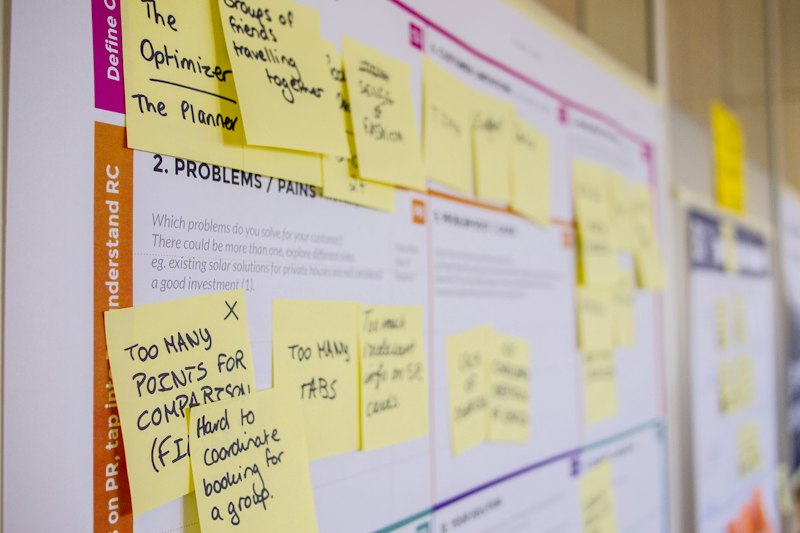
One pattern that works especially well for food halls: partner with the food hall operator (the company that manages the physical space) rather than onboarding each vendor individually. The operator has existing relationships with every vendor and can drive adoption from the top down. Offer the operator a revenue share on platform orders, and they become your sales team inside the building.
Payment Splitting and Financial Infrastructure
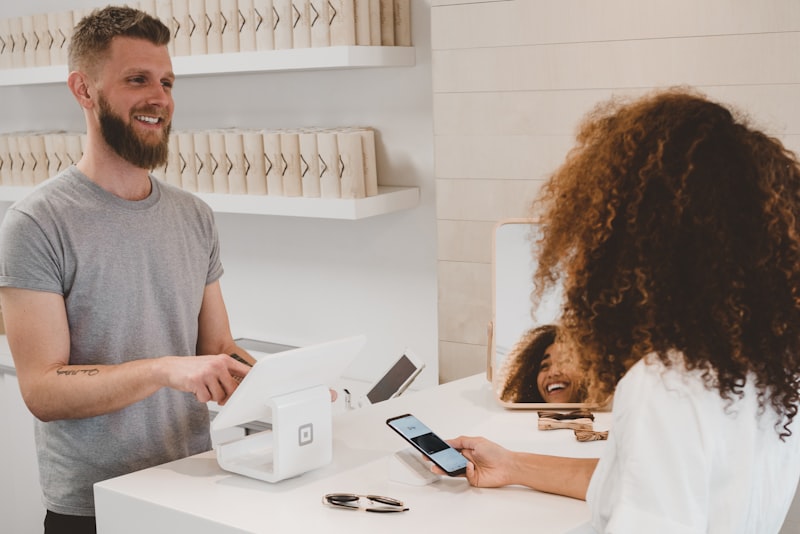
Payments in a multi-vendor food hall app are the most complex piece of the financial puzzle. A single customer checkout might need to split funds across three vendors, a delivery driver, the food hall operator, and your platform, each taking a different percentage or flat fee. Get this wrong and you will have angry vendors, compliance issues, or both.
Stripe Connect for Multi-Party Splits
Stripe Connect is the industry standard for marketplace payments, and it handles multi-vendor splits well. Set up each vendor as a Connected Account with Express onboarding (Stripe handles KYC and identity verification). When a customer checks out, create a single PaymentIntent for the full order amount, then use Stripe's transfer API to split funds to each vendor's connected account after deducting your platform fee and the food hall operator's cut.
A typical split on a $60 order from three vendors might look like this: Vendor A receives $18.20 (their $22 in food minus your 15% commission and a $1.50 processing offset), Vendor B receives $10.20 (their $12 minus the same structure), Vendor C receives $22.10 (their $26 minus fees), the delivery driver receives $6.50 (base pay plus distance bonus), the food hall operator receives $1.80 (3% platform royalty), and your platform retains the remainder after Stripe's processing fee. These numbers vary, but the point is that your payment system needs to handle five-way or six-way splits on every single transaction.
Refund Complexity
Refunds get messy fast. If a customer's pad thai arrives cold but the pizza is fine, you need to refund only the pad thai vendor's portion of the order, adjust the platform fee accordingly, and potentially keep the delivery fee intact since the driver did their job. Build vendor-specific refund logic from day one. A blanket "refund the whole order" approach will destroy your margins and create perverse incentives.
Vendor Payouts
Most food hall vendors prefer weekly payouts with clear reporting. Build an automated payout system that runs every Monday, generates a detailed statement showing each order, the gross amount, your commission deduction, any refund adjustments, and the net payout. Provide this as both an in-app view and a downloadable CSV. Transparency in payments builds vendor trust faster than anything else you can do. If vendors do not understand their payouts, they will call you constantly, and that does not scale.
For handling tips, route them directly to the delivery driver with zero platform take. This is both ethically correct and legally required in most U.S. jurisdictions. Use Stripe's separate transfer mechanism to move tips outside of your commission calculations entirely.
Delivery Logistics for Multi-Vendor Pickup
Standard food delivery logistics assume one pickup location and one drop-off location. Multi-vendor food hall delivery adds a twist: the driver might need to collect items from three different vendor counters within the same building before making a single delivery. This changes your driver app, your assignment algorithm, and your timing logic.
The Pickup Flow
When a multi-vendor order is ready, the driver needs a checklist showing which vendors they are picking up from and the status of each vendor's portion. The driver walks to Vendor A's counter, confirms pickup (scan a QR code or tap a button), walks to Vendor B, confirms, and so on. Only when all vendor portions are collected does the delivery leg begin. Your driver app needs to handle partial pickups gracefully, meaning if Vendor C is running three minutes behind, the driver should know to pick up from A and B first, then circle back.
Driver Assignment and Timing
Do not assign a driver until all vendor portions of the order are within two minutes of completion. Assigning a driver too early means they are standing around inside the food hall waiting, which burns their time and your money. Your system needs to track prep status from each vendor in real time and trigger driver assignment only when the slowest vendor is nearly done.
For food halls with a dedicated pickup area (many modern food halls have a staging shelf or counter for delivery orders), the flow is even cleaner. Vendors place completed items on the staging shelf with an order number label. The driver grabs everything labeled with their order number and confirms pickup. This eliminates the multi-stop walk through the food hall and cuts pickup time significantly.
Delivery Radius and Fees
Food hall delivery works best within a tight radius, typically 3 to 5 miles. The order values tend to be higher than single-vendor orders (because customers are ordering from multiple vendors), which justifies a slightly higher delivery fee. A typical structure is a $4.99 base delivery fee for orders under $30, dropping to $2.99 for orders between $30 and $60, and free delivery for orders over $60. These thresholds encourage the multi-vendor ordering behavior that makes your platform valuable.
At scale, you will want to consider using a mix of your own driver fleet and third-party fulfillment through services like DoorDash Drive or Uber Direct. Your own fleet gives you better control over the pickup experience (trained drivers who know the food hall layout), while third-party fulfillment handles overflow during peak hours. Build your delivery abstraction layer to support both from the start, even if you launch with only one option.
Tech Stack, Infrastructure, and Build Timeline
Building a multi-vendor food hall delivery app requires a tech stack optimized for real-time coordination, multi-tenancy, and geographic flexibility. Here is what we recommend based on platforms we have built in this space.
Frontend
React Native for the customer app and the driver app. One codebase targeting iOS and Android reduces your development cost by 30% to 40% compared to native builds. For the vendor dashboard, build a responsive web app with Next.js that runs on the dedicated tablets. Web-based vendor dashboards are easier to update (no app store approval cycles) and work across any tablet hardware.
Backend
Node.js with TypeScript for the API layer, structured as microservices: order service, vendor service, delivery service, payment service, and notification service. Use PostgreSQL with PostGIS as your primary database for geospatial queries (delivery radius calculations, driver proximity matching). Redis for caching vendor availability, active order states, and driver locations. Socket.io for real-time WebSocket connections that push order updates to all three client apps simultaneously.
Key Integrations
- Payments: Stripe Connect for multi-party payment splits and vendor payouts
- Mapping: Google Maps Platform for routing, distance calculations, and delivery ETAs
- Notifications: Firebase Cloud Messaging for push notifications, Twilio for SMS order confirmations
- Analytics: Mixpanel or Amplitude for product analytics, Metabase for vendor-facing reporting
- Image management: Cloudinary for menu photo optimization and CDN delivery
Development Timeline and Cost Estimates
Phase 1: MVP with pickup only (10 to 14 weeks), $70K to $110K. Customer app with unified cart, vendor dashboard with order management, payment processing with multi-vendor splits, and basic food hall admin panel. No delivery in Phase 1. Launch with in-hall ordering and customer pickup to validate the unified cart concept.
Phase 2: Delivery and driver app (8 to 12 weeks additional), $60K to $100K. Driver app with multi-vendor pickup flow, delivery assignment algorithm, real-time GPS tracking, and delivery fee logic. Total cumulative investment at this point: $130K to $210K.
Phase 3: Growth features (ongoing), $40K to $80K per quarter. Loyalty programs, vendor analytics and reporting, multi-location support (expanding to additional food halls), marketing tools like promo codes and referral programs, and API integrations with third-party delivery providers for overflow capacity.
Monthly operating costs at moderate scale (5 food halls, 1,000 orders per week)
- Cloud infrastructure (AWS): $1,500 to $4,000/month
- Stripe processing fees: 2.9% + $0.30 per transaction
- Google Maps API: $800 to $2,500/month
- Twilio SMS and Firebase: $300 to $1,000/month
- Monitoring and error tracking (Datadog, Sentry): $200 to $500/month
These numbers assume an experienced development team. If you are building with a less experienced team or an offshore agency without marketplace experience, expect both timelines and costs to increase by 40% to 60%. Multi-vendor payment splitting and prep time synchronization are areas where inexperience creates expensive bugs. Working with a team that has built multi-vendor platforms before will save you significant rework.
Launch Strategy and Scaling to Multiple Food Halls
The biggest mistake founders make with food hall delivery apps is trying to launch across multiple locations simultaneously. Food halls are hyperlocal businesses. Each one has different vendors, different customer demographics, different peak hours, and different physical layouts that affect your pickup flow. Launch in one food hall, get the experience right, then expand.
Your First Food Hall
Pick a food hall with at least 8 to 10 vendors, strong foot traffic, and an operator who is excited about digital ordering. Ideally, the food hall is in a dense urban area with a large delivery-friendly population within a 3-mile radius. Negotiate an exclusive digital ordering partnership with the operator for 12 to 18 months. This gives you time to prove the model without a competitor launching in the same venue.
Onboard every vendor in the food hall before launch. A food hall delivery app with only 4 out of 12 vendors feels incomplete and undermines the core value proposition. Get full participation, even if it means subsidizing the onboarding process or waiving commission fees for the first 90 days.
Customer Acquisition
Your first customers are the people already eating at the food hall. Place table tents at every communal table with a QR code linking to the app. Offer a "first order free delivery" promotion. Partner with the food hall operator to promote the app on their social media channels and email list. Run a launch event with vendor sampling and app download incentives. The conversion funnel from "person eating at the food hall" to "person ordering delivery from the food hall" is short, because they already know and love the vendors. You just need to show them that the delivery experience is just as good.
Scaling Playbook
Once your first food hall is generating consistent order volume (target: 150+ orders per week within 90 days of launch), start conversations with operators at other food halls in the same city. Your pitch is simple: "We increased digital revenue by X% at [Food Hall A], and here is the data to prove it." Food hall operators talk to each other. Success at one venue opens doors at others.
When expanding to a new city, you need local operations support. Hire or contract a city launcher who handles vendor onboarding, driver recruitment, and local marketing for the first 60 days. Template everything: onboarding checklists, vendor training materials, driver training videos, launch marketing playbooks. The goal is to compress each new food hall launch from 8 weeks down to 3 weeks as your playbook matures.
Building a multi-vendor food hall delivery app is one of the more technically challenging projects in the food tech space, but the payoff is significant. You are creating a platform that solves a real coordination problem for customers, vendors, and operators alike. The key is starting focused, building the unified cart and payment splitting infrastructure correctly from the beginning, and expanding methodically. If you are ready to move forward on a food hall delivery concept, book a free strategy call and we will map out the right technical approach for your specific market.