
Why Food Delivery Is Still Wide Open
The global food delivery market crossed $300 billion in 2025. DoorDash, Uber Eats, and Grubhub dominate the headlines, but they don't dominate every market. Regional players thrive. Niche players thrive. Platforms focused on specific cuisines, dietary needs, or underserved geographies regularly carve out profitable positions that the giants ignore.
Here's what most people get wrong about food delivery apps: they think it's one app. It's not. It's three apps stitched together with real-time coordination. You need a customer-facing ordering app, a restaurant management dashboard, and a driver app for pickups and deliveries. Each one has its own UI, its own logic, and its own user expectations. The magic happens when all three work in concert.
The good news? You don't have to build all three on day one. Many successful delivery platforms started as restaurant-only ordering systems where restaurants handled their own delivery. They added the driver network later, once order volume justified the investment. That's a proven path, and it's the one we recommend to most founders entering this space.
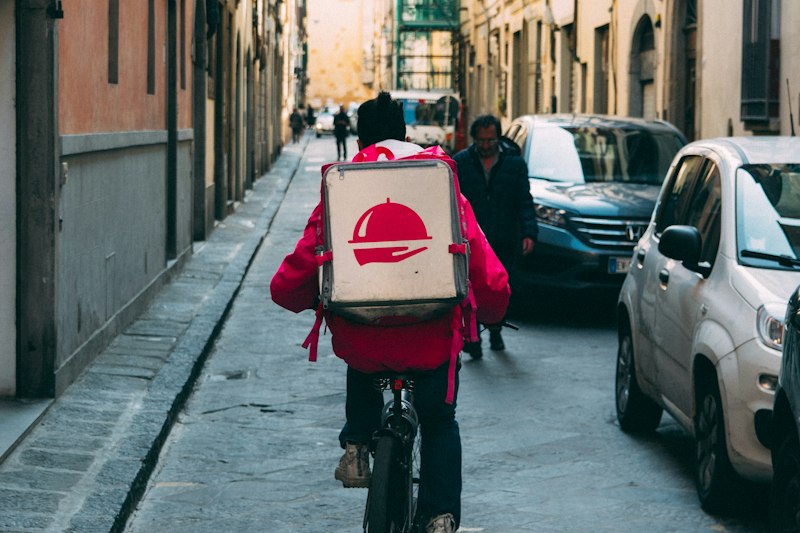
The Three-Sided Marketplace Architecture
Food delivery is fundamentally a coordination problem. When a customer places an order at 7:14 PM, a chain of events must fire in sequence and in parallel. The restaurant needs to confirm. The kitchen needs a prep time estimate. The system needs to find a driver who can arrive at the restaurant right when the food is ready. The customer needs to see all of this happening on a live map. Any break in the chain and the experience falls apart.
Let's break down what each side actually needs:
The Customer App
This is the revenue engine. It needs to feel fast, simple, and trustworthy. Core features include location-based restaurant discovery with filters for cuisine, price, rating, delivery time, and dietary restrictions. Menu browsing has to feel intuitive, with categorized items, photos, customization options (sizes, toppings, special instructions), and accurate pricing. The cart and checkout flow needs to handle promo codes, tip selection, delivery instructions, and multiple payment methods (card, Apple Pay, Google Pay).
Two features are non-negotiable for retention: one-tap reordering from order history and real-time tracking from confirmation through delivery. These aren't nice-to-haves. They're the reason people come back.
The Restaurant Dashboard
Restaurants are busy. Your dashboard has to work during a Friday night rush with greasy hands and zero patience. That means big buttons, loud notification sounds, and a brutally simple order queue. Restaurants need to accept or reject orders instantly, set preparation times, manage their menu (prices, photos, availability, hours), and pause incoming orders when they're slammed. On the backend, they want revenue analytics and payout history.
The Driver App
Drivers care about money and efficiency. Show them available delivery requests with earnings estimates, distance, and restaurant info. Let them accept or decline with an auto-assignment timeout. Provide turn-by-turn navigation to the restaurant and then to the customer. Include proof of delivery (photo or PIN confirmation), an earnings dashboard with daily and weekly breakdowns, and a simple online/offline toggle.
The technical challenge is coordinating all three in real-time. A customer places an order. The restaurant confirms and starts prepping. The system finds the closest available driver with capacity. The driver navigates to the restaurant, picks up, then navigates to the customer. The customer watches all of it on a live map. That's a lot of moving parts, and latency kills the experience.
Real-Time Tracking and Driver Logistics
The real-time tracking system is the technical heart of any food delivery app. Get this wrong and everything else is window dressing.
GPS tracking: Driver locations need to update every 5 to 10 seconds via a persistent WebSocket connection. But continuous GPS polling drains batteries fast. Use significant location change monitoring on mobile, which triggers updates based on cell tower and Wi-Fi changes, then switch to high-accuracy GPS only during active deliveries. This keeps battery consumption manageable while maintaining the real-time feel customers expect.
Driver assignment algorithm: Start simple. When an order is ready for pickup, find the nearest available driver and offer them the delivery. Factor in proximity to the restaurant, current delivery load, driver rating, and estimated completion time of any active deliveries. A basic nearest-driver algorithm works fine for your MVP. You can layer in machine learning optimization later when you have the data to train on.

ETA calculation: This is where users judge your app most harshly. Your ETA needs to account for restaurant preparation time plus driver travel time to the restaurant plus travel time from the restaurant to the customer. Use the Google Maps Directions API or Mapbox for accurate routing that factors in real-time traffic. Pad your estimates slightly. Being early delights people. Being late makes them furious.
Order batching: At scale, you'll want to batch multiple deliveries per driver from the same restaurant or nearby restaurants. This reduces your cost per delivery significantly, but it adds complexity. Customers need to understand that their order might be the second stop. Transparency here prevents bad reviews.
The tech stack for real-time: WebSockets (Socket.io or native WebSocket) for live updates, Redis for caching driver locations with sub-millisecond reads, PostGIS for geospatial queries ("find all available drivers within 3 km of this restaurant"), and Google Maps or Mapbox for routing and distance calculations.
Payment Processing and Revenue Model
Money flow in a food delivery app is more complex than a standard e-commerce checkout. You're splitting every transaction three or four ways: the restaurant gets the food cost, the driver gets their delivery fee, your platform takes a commission, and the customer might have added a tip that goes directly to the driver.
Stripe Connect is the standard solution for marketplace payments. It handles the complexity of multi-party splits, seller onboarding with KYC verification, and automated payouts. For food delivery specifically, you'll want:
- Instant checkout: Saved payment methods are essential. Nobody wants to type their card number when they're hungry. Support Apple Pay, Google Pay, and stored cards for one-tap ordering.
- Dynamic pricing: Surge pricing during peak hours and high-demand zones. This is controversial but effective at balancing supply and demand. Be transparent about it.
- Tip handling: Let customers tip before or after delivery. Pre-delivery tipping increases driver acceptance rates. Post-delivery tipping rewards good service. Some platforms offer both.
- Promo codes and credits: Essential for customer acquisition. Build a flexible promo engine that supports percentage discounts, flat dollar amounts, free delivery, and first-order bonuses.
- Restaurant payouts: Weekly or biweekly automated payouts with detailed transaction reports. Restaurants want to see exactly what they earned, what the platform took, and what adjustments were made for refunds or promotions.
The typical commission structure ranges from 15% to 30% of the order value. That sounds healthy, but margins are razor-thin after you account for driver pay, customer acquisition costs, refunds, and infrastructure. Unit economics matter more than top-line GMV. Track your cost per order obsessively from day one.
Tech Stack and Infrastructure
Choosing the right tech stack for a food delivery app means optimizing for real-time performance, geographic scalability, and rapid iteration. Here's what works:
Mobile apps: React Native is the pragmatic choice for startups. One codebase, two platforms, faster time to market. For the driver app, you may need native modules for background location tracking and battery optimization. Flutter is a solid alternative if your team prefers Dart.
Backend: Node.js with TypeScript gives you excellent real-time capabilities (native WebSocket support, event-driven architecture) and a large ecosystem of packages for mapping, payments, and push notifications. Python with FastAPI is a strong choice if you're planning to build ML-powered features like demand forecasting or dynamic pricing. Either way, structure your backend as a set of microservices: order service, driver service, restaurant service, payment service, notification service. This lets teams work independently and scale bottlenecks individually.
Database: PostgreSQL with PostGIS for your primary data store. PostGIS handles all the geospatial queries you'll need: finding nearby restaurants, matching drivers to orders, calculating distances. Redis for caching hot data like driver locations, restaurant availability status, and active order states. You need sub-millisecond reads for real-time features.
Real-time communication: Socket.io for WebSocket connections between the server and all three client apps. Every order status change, driver location update, and restaurant confirmation flows through this layer. At scale, use Redis Pub/Sub to coordinate WebSocket messages across multiple server instances.
Infrastructure: AWS or Google Cloud. Use managed services wherever possible: RDS for PostgreSQL, ElastiCache for Redis, ECS or Cloud Run for containerized services, CloudFront or Cloud CDN for static assets. Budget for multi-region deployment if you're targeting multiple cities; latency matters when people are tracking their food in real-time.
Mapping: Google Maps Platform for routing, distance matrix, and geocoding. It's more expensive than Mapbox but more accurate in most markets. At high volume, Mapbox can save you 40-60% on API costs with comparable quality.
Building for Growth: Retention and Network Effects
Getting users to download your app is expensive. Getting them to order a second time is where the business actually works. Retention is everything in food delivery.
Push notifications that don't annoy: Personalized restaurant suggestions based on order history, time-sensitive promotions during your slow hours, and order status updates. The status updates are the most opened notifications in any delivery app. Use them well, but don't spam. A user who mutes your notifications is a user you've lost.
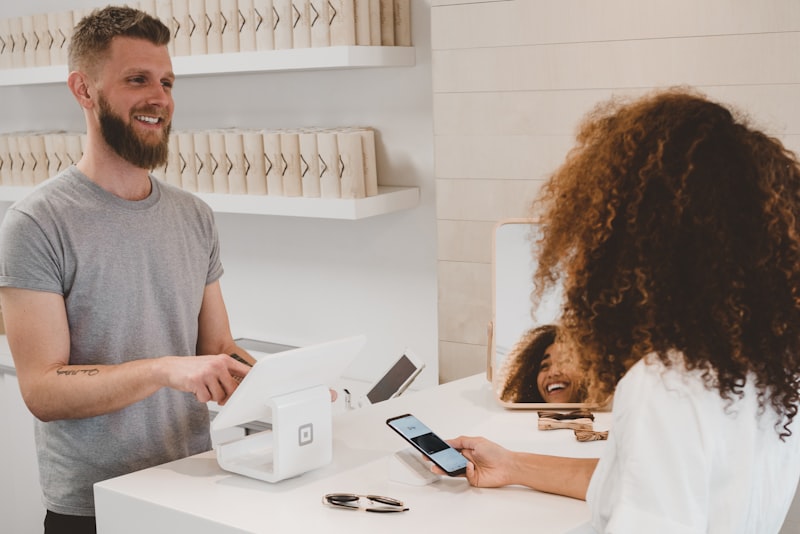
Loyalty programs: Points per order, free delivery after X orders, exclusive restaurant deals for loyal customers. These programs increase order frequency by 20-30% based on industry benchmarks. Keep the mechanics simple. If users can't understand how to earn and redeem rewards in 10 seconds, the program is too complicated.
Ratings and reviews: Let customers rate food quality, delivery speed, and driver experience separately. This granular feedback helps you identify and fix specific problems. A restaurant with great food but slow prep times needs a different intervention than one with fast service but mediocre quality.
Network effects: The more restaurants on your platform, the more customers come. The more customers ordering, the more restaurants want to join. The more orders flowing, the more drivers are available, which speeds up delivery times, which brings more customers. This flywheel is what makes marketplace businesses so powerful once they hit critical mass. Your job is to get that flywheel spinning in one neighborhood before expanding to the next.
Cost Breakdown and Development Timeline
Let's talk real numbers. Food delivery apps are expensive to build because you're building three interconnected products. But you can stage the investment smartly.
Phase 1: Customer App MVP (8 to 12 weeks), $60K to $100K
Restaurant listings, menu browsing, ordering, payments, and basic order tracking. No driver app yet. Restaurants handle their own delivery or you use a third-party fleet service like DoorDash Drive or Uber Direct as a bridge. This lets you validate demand without the full logistics build.
Phase 2: Full Platform with Driver Network (16 to 22 weeks), $130K to $220K
All three apps fully built. Real-time GPS tracking, driver assignment algorithm, restaurant dashboard with order management, analytics dashboards for all user types, and a basic admin panel for your operations team.
Phase 3: Scaled Platform (6+ months), $250K to $450K+
Order batching, dynamic surge pricing, loyalty programs, multi-city support, advanced analytics and reporting, ML-powered demand forecasting, and marketing automation tools.
Ongoing monthly costs at moderate scale
- Mapping APIs (Google Maps or Mapbox): $1,000 to $5,000/month
- SMS and push notifications: $500 to $2,000/month
- Cloud infrastructure: $2,000 to $8,000/month
- Payment processing: 2.9% + $0.30 per transaction
- Driver incentives and bonuses: highly variable
Here's the truth most tech guides won't tell you: the biggest cost isn't the technology. It's driver acquisition and restaurant onboarding. You need boots on the ground, people visiting restaurants, signing them up, training them on the tablet, and recruiting drivers in each market. Budget for a local operations team or contractor to handle supply-side growth from the start.
Building a food delivery app is a serious investment, but the market rewards platforms that solve the coordination problem well. Let's talk about your delivery app concept and figure out the right starting point.