
Why people will pay to use their phones less
The average American spends over four hours a day on their smartphone outside of work. That number has climbed every year since 2015, and the mental health consequences are no longer debatable. Anxiety, sleep disruption, attention fragmentation, and compulsive checking behaviors are all well documented in the clinical literature. What is newer, and more interesting from a product perspective, is that consumers are now willing to spend real money on tools that help them reclaim that time.
Opal raised $4.3 million and grew to over a million users by positioning itself as the "screen time coach you actually listen to." One Sec, a small indie app that inserts a breathing pause before opening addictive apps, quietly built a profitable subscription business with a single clever mechanic. Apple and Google have both shipped native screen time dashboards, but the consensus among users is that these tools are too easy to bypass and too gentle to change behavior. That gap between platform defaults and what people actually need is where your product lives.
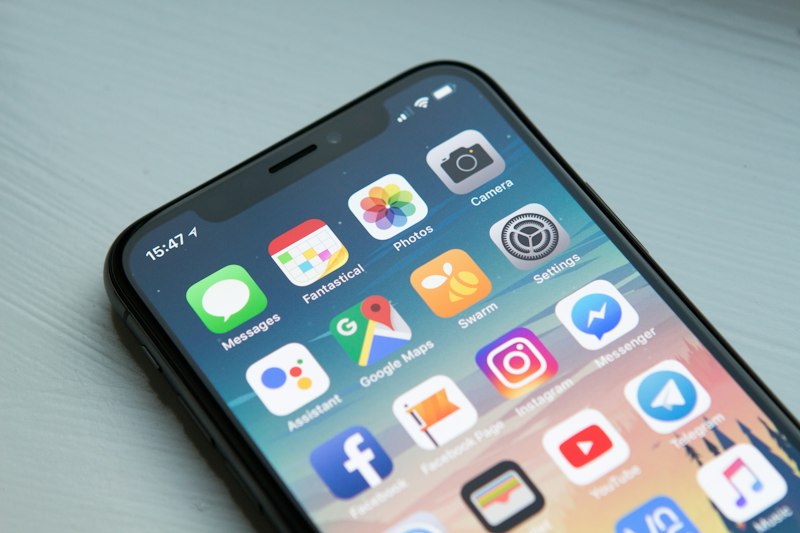
The total addressable market is enormous. The digital wellness app category reached $1.2 billion in 2025 and is projected to grow at 15 percent annually through 2030. Parents managing children's screen time, knowledge workers trying to do deep work, students preparing for exams, and people recovering from social media addiction all represent distinct segments with different willingness to pay. A well positioned digital detox app can charge $9.99 to $14.99 per month because the value proposition is concrete: you get hours of your life back every single week.
Platform APIs: iOS Screen Time and Android UsageStats
The foundation of any screen time management app is the ability to see what the user is doing on their device and, ideally, to intervene. Both iOS and Android provide APIs for this, but they work very differently and impose very different constraints on what your app can actually do.
On iOS, the key framework is Screen Time API, introduced in iOS 15 and significantly expanded in iOS 16 and 17. It consists of three modules. DeviceActivityMonitor lets your app register for callbacks when the user exceeds a configured time threshold on specific apps or categories. ManagedSettings lets you shield apps behind a blocking overlay, restrict web content, and lock device settings. FamilyControls provides the authorization model and is required even for individual use cases, because Apple routes all screen time permissions through the Family Controls capability.
The iOS approach is privacy-first to an extreme degree. Your app never sees which specific apps the user has installed or how long they spent in each one. Instead, Apple provides opaque application tokens that represent apps or categories. The user picks which apps to manage through an Apple-provided UI picker, and your app receives tokens it can use to set shields or monitor usage without ever knowing the app names.
On Android, the story is more open but more fragmented. The UsageStatsManager API gives you detailed per-app usage data including foreground time, launch counts, and last used timestamps. The user must explicitly grant the PACKAGE_USAGE_STATS permission through a system settings screen, which creates onboarding friction but gives you far richer data than iOS allows. For app blocking, you use the AccessibilityService or a Device Policy Controller to detect app launches and overlay a blocking screen. Google has tightened AccessibilityService policies repeatedly, so you need to carefully justify your use in the Play Store listing or risk rejection.
A practical architecture decision you will face early: do you build native on both platforms, or use a cross-platform framework? For this category, I strongly recommend native Swift and Kotlin. The Screen Time API on iOS and UsageStats/AccessibilityService on Android are deeply platform-specific, require background execution that cross-platform bridges handle poorly, and demand tight integration with system UI. If budget forces a choice, start with iOS, because iOS users have higher willingness to pay for subscriptions and the Screen Time API is more cohesive than Android's patchwork of permissions.
App blocking mechanisms and focus modes
App blocking is the feature that sells your product. Users download a screen time app because they want something to stand between them and Instagram at 11 p.m. on a Tuesday. The quality of your blocking mechanism determines whether users stick around or uninstall after a week.
On iOS, blocking works through the ManagedSettings framework's ShieldConfiguration. When a user hits their time limit or enters a focus session, your app applies a shield to the selected apps. You can customize the shield's appearance with your branding, a motivational message, and action buttons. Products like Opal have found that giving users a friction-heavy override, requiring them to type a phrase or wait 30 seconds, reduces bypass rates by 80 percent compared to a simple tap-to-dismiss.

On Android, the typical approach uses an AccessibilityService that monitors window state changes. When the user launches a blocked app, your service detects the foreground activity switch and immediately overlays your blocking screen. This works well but has edge cases: some OEMs kill background services aggressively (Xiaomi, Huawei, and Samsung are the worst offenders), and you need workarounds like foreground service notifications and battery optimization exemptions. The site dontkillmyapp.com is your essential reference.
Focus modes are where your product moves from "app blocker" to "productivity system." A focus mode is a named configuration that bundles blocked apps, allowed apps, notification filters, and a time schedule. Think of it as profiles: "Deep Work" blocks social media and news but allows Slack. "Wind Down" blocks everything except meditation and reading apps after 9 p.m. "Study Mode" blocks everything except educational apps and gives the user a Pomodoro timer overlay. Let users create custom modes and share them with friends, which creates a lightweight network effect.
Schedule-based automation is critical. Users should be able to set "Deep Work" to activate automatically Monday through Friday from 9 a.m. to noon. On iOS, use DeviceActivitySchedule. On Android, use AlarmManager with exact alarms. Location-based triggers are a premium feature worth building: automatically enter "Study Mode" when the user arrives at the library, or "Wind Down" when they get home after 8 p.m.
Gamification, streaks, and behavioral design
The irony of building a screen time app is that you are using the same behavioral psychology toolkit that makes phones addictive in the first place, but aiming it in the opposite direction. Streaks, rewards, progress visualization, and social comparison all work just as well for reducing usage as they do for increasing it.
Streaks are the most powerful single mechanic. A "focus streak" counts consecutive days where the user stayed within their screen time budget. The loss aversion of breaking a 30-day streak is remarkably effective at keeping people committed. But be careful: if a single slip resets a 90-day streak, users feel punished and quit. Implement a "streak freeze" system, similar to Duolingo's, where users get one or two free passes per week.
Progress visualization should make the abstract concrete. Show how many hours the user reclaimed this week, this month, and since joining. Translate that into something tangible: "You saved 12 hours this month. That is enough time to read two books or learn 30 guitar chords." Pair the number with a personalized goal from onboarding. If they said they wanted to read more, show a bookshelf that fills up as they accumulate saved hours. This connection between screen time reduction and positive life outcomes is what separates your app from a guilt-inducing usage tracker.
Levels and milestones create a long-term progression arc. Define tiers like "Beginner Detoxer" through "Digital Minimalist" based on cumulative focus hours and consistency. Each tier unlocks cosmetic rewards: new app themes, custom shield designs, or premium focus mode templates. Users who reach higher tiers churn at dramatically lower rates because they have invested identity in the system. If you are building a companion habit tracking feature, the guide on how to build a habit tracking app covers the behavioral science foundations in more depth.
Social accountability and group features
Individual willpower is unreliable. Social accountability is the multiplier that turns a personal tool into a sticky product with organic growth. When users can see their friends' progress and make commitments visible to others, adherence rates roughly double compared to solo usage.
The simplest version is a shared leaderboard among friends. Users connect with three to five friends and can see each other's daily screen time, focus streak, and weekly savings. Frame it as "accountability partners" rather than a ranked competition to reduce anxiety. Show the group's collective progress ("Together you saved 47 hours this week") alongside individual stats.
Co-focus sessions are a premium feature with high engagement. Two or more users start a synchronized focus session, like a virtual study hall. Each person can see that their friends are currently in a session, creating gentle social pressure not to break focus. Implement it with a lightweight WebSocket connection through Supabase Realtime or Ably, where each client publishes session state and subscribes to their group's updates.
Family plans deserve first-class treatment. Parents managing children's screen time represent a large, high-willingness-to-pay segment. Apple's Family Controls API lets a parent's device manage settings on a child's device through iCloud family sharing. On Android, you will need your own device pairing mechanism, typically through a QR code that establishes a Firebase Cloud Messaging channel for remote configuration. Price the family plan at $19.99 per month for up to five devices.
Notification management and mindfulness prompts
Notifications are the number one trigger for compulsive phone pickups. Research from the University of Texas found that the mere presence of a smartphone in the same room reduces cognitive capacity, and notifications are the mechanism through which the phone pulls attention even when it is face down. Any serious screen time app needs to give users meaningful control over their notification environment.
On iOS, you cannot programmatically silence notifications from other apps, but you can integrate with the Focus system introduced in iOS 15. Use the INFocusStatusCenter API to detect when a system Focus is active and sync your app's focus mode accordingly. On Android, with a NotificationListenerService, your app can read, dismiss, and batch notifications from any app. Batch non-urgent notifications and deliver them as a digest at user-configured times. Let users set per-app rules: always allow messages from their partner, batch group chats, and suppress social media during work hours.
Mindfulness prompts are the softer complement to hard blocking. When a user picks up their phone outside of a scheduled session, show a gentle full-screen prompt: "You have picked up your phone 23 times today. What are you looking for right now?" Give them quick-tap options like "Something specific," "Just checking," and "Bored." If they tap "Just checking" or "Bored," suggest an alternative: a one-minute breathing exercise or a reminder of their daily intention. This is the mechanic One Sec popularized, and it works because it breaks the unconscious phone-to-hand-to-app pipeline by inserting a moment of conscious choice.
Build a simple 60-second box breathing animation (inhale 4 seconds, hold 4, exhale 4, hold 4) with haptic feedback on each transition. Users who complete a breathing exercise before deciding whether to continue using their phone reduce their subsequent session length by an average of 40 percent. For a deeper look at building wellness features, see the companion guide on how to build a digital wellness app.
Subscription monetization and pricing strategy
Screen time apps are one of the cleanest subscription businesses in consumer software. The value is recurring, the willingness to pay is strong, and the feature surface is deep enough to support a meaningful free-to-premium ladder.
The standard three-tier model works well. A free tier gives users basic usage tracking, one focus mode, and a daily screen time report. A Premium tier at $9.99 per month (or $59.99 per year, pushed hard with a "save 50%" badge) unlocks unlimited focus modes, app blocking, streak tracking, detailed analytics, and mindfulness prompts. A Family tier at $19.99 per month covers up to five devices and adds parental controls and family challenges. Annual subscribers churn at roughly one-third the rate of monthly subscribers, so make the annual plan your default recommendation during onboarding.
Paywall placement matters more than pricing. Let users set up their first focus mode, complete their first session, and see their first daily report before showing any premium prompt. The ideal moment to present the upgrade is after a successful focus session, when users feel a small win. A soft paywall that lets users try premium features for 7 days converts at 8 to 12 percent in this category, well above the consumer app average of 2 to 5 percent.
Use RevenueCat as your subscription management layer. It handles receipt validation, cross-platform entitlements, trial management, and analytics across both app stores. Beyond subscriptions, consider enterprise licensing for companies deploying your app to employees with centralized management and aggregate analytics, and affiliate partnerships with complementary products like blue-light glasses, analog alarm clocks, and meditation apps.
Privacy, data ethics, and compliance
A digital detox app sits in an extraordinarily sensitive position. You are asking users to grant permissions that expose their most intimate digital behaviors: which apps they use, how often they pick up their phone, and what times they are active. Handle this data carelessly and you betray people who trusted you with information that could be used to surveil or embarrass them.
Start with a privacy-first architecture. Process usage data on-device whenever possible. The user's detailed per-app usage history should never leave their phone. Sync only aggregated metrics (total screen time, focus session completions, streak counts) to your backend. Apple's Screen Time API enforces this by design. On Android, where UsageStats gives you detailed data, impose this constraint on yourself even though the platform does not.
For family features involving children, you are squarely in COPPA territory in the US and equivalent frameworks internationally. COPPA requires verifiable parental consent before collecting data from children under 13 and limits what data you can collect. Integrate a compliant consent flow through a provider like Privo or SuperAwesome. The FTC has issued fines of $170 million and $520 million for COPPA violations, and they are actively targeting apps in the parental controls space.
GDPR and CCPA apply to your adult users. Implement real data export, genuine account deletion within 30 days, and a privacy policy that is specific about what you collect and why. Users of digital wellness apps are more privacy-conscious than average, so a transparent privacy stance is a genuine competitive advantage, not just a compliance checkbox.
Development timeline and getting started
Building a production-quality digital detox app is a 5 to 8 month effort for a focused team. The cost ranges from $120,000 to $250,000 depending on platform scope, feature depth, and whether you include family features at launch.
Phase 1: Foundation (weeks 1 through 8). Build the core native modules: Screen Time API integration on iOS, UsageStats and AccessibilityService on Android. Implement basic usage tracking, a single focus mode with app blocking, and a daily dashboard. Set up the backend with Supabase for user accounts and push notifications via Firebase Cloud Messaging. Ship an internal beta.
Phase 2: Behavioral layer (weeks 9 through 16). Add streak tracking, gamification, multiple custom focus modes, schedule-based automation, and mindfulness prompts. Build notification management for Android. Implement the subscription paywall with RevenueCat and design the onboarding flow. Run a closed beta with 100 to 200 external users from digital wellness communities.
Phase 3: Social and polish (weeks 17 through 24). Add friend connections, shared leaderboards, co-focus sessions, and community challenges. Build the family plan with parental controls. Polish the UI, fix device-specific bugs (especially on Android), optimize battery usage, and prepare store listings. Complete your COPPA compliance review if you support children.
The biggest technical risks are platform policy changes and background execution reliability. Apple has modified the Screen Time API's behavior in every major iOS release, sometimes breaking existing functionality. On Android, you will spend more time than expected fighting OEM battery optimizations that kill your monitoring service. Test on at least 10 physical Android devices from different manufacturers before launch.
The competitive window in digital wellness is still open but narrowing. The apps that establish trust, build genuine community, and nail the behavioral science will own this category. We work with founders building health and wellness apps from architecture through App Store launch, and we have direct experience with the Screen Time API and UsageStats integrations covered in this guide.