
Why the Digital Wellness Market Is Exploding Right Now
Average daily screen time crossed 7 hours in 2026, and the number keeps climbing. That is nearly half of every waking hour spent staring at a phone, tablet, or laptop. People feel it. They feel the brain fog after a two-hour doom-scrolling session. They notice their kids cannot sit through dinner without reaching for a device. And they are actively looking for solutions.
Apple and Google both recognized this years ago when they shipped Screen Time and Digital Wellbeing as built-in features. But here is the thing: those native tools are blunt instruments. They show you the data and let you set basic limits, but they do nothing to change behavior. It is the equivalent of putting a scale in your bathroom and expecting to lose weight. Awareness alone does not drive change.
The apps that are winning in this space take a fundamentally different approach. They use gamification, social accountability, and habit loop mechanics to make "putting your phone down" feel rewarding instead of punishing. Opal, one.sec, and Forest have proven the model works. Digital detox apps that gamify healthy phone habits see 40% higher retention than apps that rely purely on restriction and shaming. That retention gap is the business opportunity.
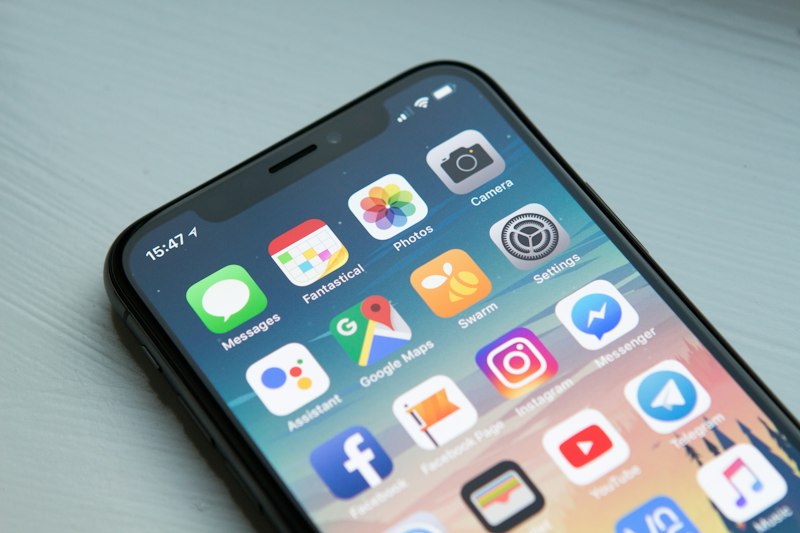
The total addressable market is enormous. Parents managing kids' screen time, remote workers fighting notification overload, students trying to focus during study sessions, and adults who simply want to reclaim their evenings. Each of these segments has different needs, and most existing apps only serve one or two of them well. There is room for a product that nails the experience across multiple use cases.
Platform APIs: iOS Screen Time and Android Digital Wellbeing
Before you write a single line of feature code, you need to understand what the operating systems give you to work with, because the platform APIs are both your biggest enabler and your biggest constraint.
iOS: Screen Time API and DeviceActivityMonitor
Apple introduced the Screen Time API as part of the Family Controls framework in iOS 15 and has expanded it significantly since then. The key components you will use are:
- DeviceActivityMonitor: Lets your app observe usage patterns without accessing the specific apps or websites a user visits. Apple is extremely privacy-conscious here. You get opaque tokens representing apps, not app names or bundle IDs, unless the user explicitly selects them.
- ManagedSettings: Allows your app to set shields (blocking overlays) on apps the user wants to restrict. You can customize the shield UI with your own branding and messaging.
- FamilyControls: Required for authorization. The user grants your app permission through a system-level prompt, and you receive an authorization token. This is the gatekeeper for all Screen Time API functionality.
- DeviceActivityReport: Provides SwiftUI-based reporting views that render inside your app. You can show usage data without Apple ever exposing raw usage data to your server.
The critical limitation: Apple processes all Screen Time data on-device. Your server never sees which apps a user opened or for how long. This is great for privacy but makes server-side analytics nearly impossible. Plan your architecture around on-device processing using App Extensions, specifically DeviceActivityMonitor extensions that run as separate processes.
Android: Digital Wellbeing and UsageStatsManager
Android gives developers significantly more flexibility. The UsageStatsManager API provides detailed app usage data including foreground time, launch counts, and last-used timestamps. You need the PACKAGE_USAGE_STATS permission, which requires the user to toggle access in system settings (not a simple dialog prompt).
- UsageStatsManager: Query usage data for any time interval. You get actual package names, usage durations, and event timestamps. Far more granular than what iOS offers.
- UsageEvents: A stream of individual events (app opened, app closed, configuration changed) that you can process for detailed behavioral analysis.
- AccessibilityService: Some apps use this to detect and block app launches in real time. Google has cracked down on this approach, so use it cautiously. Your Play Store listing could be rejected if Google determines you are misusing accessibility APIs.
- DND and Focus Mode APIs: Android's Do Not Disturb and Focus Mode APIs let your app trigger system-level notification silencing and app restriction.
The platform asymmetry between iOS and Android is one of the biggest architectural challenges in this space. On iOS, you are working within a tightly controlled sandbox where Apple handles the heavy lifting but limits your access. On Android, you have raw data and more control but also more responsibility for privacy and battery optimization. Your app architecture needs to account for both models from day one, or you will end up with two completely different codebases that are painful to maintain.
Core Features That Drive Retention
Most screen time apps fail because they treat the problem as purely informational. They show you a bar chart of your usage and hope you feel guilty enough to change. That does not work. The apps with 40% higher retention rates succeed because they apply behavioral psychology, specifically the habit loop framework of cue, routine, and reward.
Intelligent Focus Sessions
Let users schedule distraction-free blocks where selected apps are blocked. But do not just lock apps and call it done. Build in positive friction: when a user tries to open a blocked app, show a brief breathing exercise or a motivational prompt before giving them the option to override. one.sec pioneered this pattern, and it works because it interrupts the automatic behavior loop without making users feel trapped.
- Customizable focus session durations (15 minutes to 4 hours)
- App-specific block lists with "always allow" exceptions for essential apps
- Scheduled recurring sessions (every weekday 9am to 12pm, for example)
- Location-based triggers: automatically start a focus session when the user arrives at the office or library
- Break reminders during long focus sessions with stretching or eye-rest prompts
Usage Dashboard with Context
Raw numbers are meaningless without context. "You spent 3 hours on Instagram" tells the user nothing they did not already suspect. Instead, show comparative data: "You spent 45 minutes less on social media this week than last week." Show trends, streaks, and progress toward goals. Frame the data around improvement, not judgment.
Smart Notifications
Send nudges when a user has been on a specific app for longer than their self-set threshold. The key word is "self-set." Users who define their own limits feel ownership over the process. Users who have limits imposed on them feel controlled, and they uninstall your app. Let users configure which apps to monitor, what the thresholds are, and how aggressive the nudges should be.
Bedtime Wind-Down Mode
Screen time before bed is the single most common behavior users want to change. Build a wind-down mode that gradually restricts app access in the hour before the user's configured bedtime. Start by greyscaling the screen (where the OS allows it), then block social media, then block everything except phone calls and messaging. The gradual ramp feels natural instead of abrupt.

Gamification That Actually Works
Gamification in wellness apps has a bad reputation because most implementations are shallow. Slapping a badge on everything does not create lasting behavior change. Effective gamification taps into intrinsic motivation, not just extrinsic rewards. Here is how to do it right.
The Forest Model: Visual Progress
Forest lets users "grow a tree" during focus sessions. If they leave the app to check social media, the tree dies. It sounds simple, almost silly, but it works because it externalizes the abstract concept of "staying focused" into something tangible and visual. The psychological principle at play is loss aversion: people are more motivated to avoid losing a tree they have been growing for 45 minutes than they are to earn a new badge.
Your version does not need to be trees. It could be building a city, nurturing a pet, filling a jar, or painting a landscape. The mechanic that matters is: sustained focus creates something beautiful, and breaking focus destroys or diminishes it.
Streak Systems with Forgiveness
Streaks are the most powerful retention tool in habit tracking apps, but they are also the most dangerous. A broken streak causes users to abandon the app entirely because the "all or nothing" psychology kicks in. Build forgiveness into your streak system:
- Allow one "free pass" per week where the streak survives even if the user misses their goal
- Offer streak freezes that users can earn through consistent behavior
- Show "longest streak" and "current streak" separately so a broken streak does not erase past accomplishments
- Celebrate streak milestones (7 days, 30 days, 100 days) with shareable achievement cards
Social Challenges and Leaderboards
Let friend groups compete in weekly challenges: "Who can keep their screen time under 4 hours per day?" Leaderboards drive engagement, but only when the groups are small enough that users feel they have a real chance. Global leaderboards with millions of users are demotivating. Private leaderboards with 5 to 10 friends are incredibly sticky.
XP and Level Systems
Award experience points for completing focus sessions, meeting daily goals, and helping friends stay on track. Users level up and unlock cosmetic rewards (new themes, custom app icons, exclusive backgrounds). The key is making sure the XP economy is balanced so that consistent moderate effort levels users up steadily. Do not make it so easy that levels feel meaningless or so hard that casual users feel left behind.
Social Accountability and Community Features
Accountability is the secret weapon of every successful wellness app. When someone knows their friend will see that they spent 5 hours on TikTok yesterday, they think twice before opening the app for the twentieth time. But accountability only works when it is voluntary, supportive, and non-judgmental. Shame-based accountability backfires every time.
Accountability Partners
Let users pair up with a friend or family member. Each partner can see the other's daily screen time summary (not app-specific data, just total time and whether goals were met). Partners can send encouragement or gentle nudges. This mirrors the "workout buddy" dynamic that has been proven effective in fitness app design.
Family Dashboard
Parents are one of the largest customer segments for screen time apps. Build a family mode where parents can:
- View children's screen time summaries with age-appropriate detail levels
- Set device-wide or app-specific time limits for each child
- Approve or deny extra screen time requests
- Schedule device-free times (homework hours, family dinner, bedtime)
- Receive alerts when limits are reached or overridden
Apple's Family Sharing and Google's Family Link APIs provide the technical foundation, but your app should add value on top of these by offering better reporting, customizable rules, and a friendlier interface than the bare-bones system settings.
Community Challenges
Monthly community-wide challenges ("No Social Media Sundays" or "2-Hour Max Challenge") create a sense of collective momentum. Users who participate in group challenges retain at 2x the rate of solo users. Show a community progress bar so participants can see how the group is doing collectively, not just individually.
One important design decision: default all social features to opt-in, not opt-out. Screen time data feels personal and potentially embarrassing. Users need to actively choose to share before any data becomes visible to others. Getting this wrong will generate negative reviews faster than almost any other mistake.
Privacy-First Architecture and Tech Stack
Usage data is sensitive. People do not want their employer, their partner, or an advertiser knowing that they spent 90 minutes on a dating app at 2am. If your app collects and stores granular usage data on your servers, you are creating a privacy liability that will eventually blow up. The better approach: process as much data as possible on-device and only sync aggregated, anonymized summaries to your backend.
Recommended Tech Stack
- Mobile framework: React Native with Expo for the main app UI, plus native modules (Swift for iOS Screen Time API, Kotlin for Android UsageStatsManager). Flutter is a viable alternative, but the Screen Time API integration requires native Swift extensions either way, so React Native's mature native module ecosystem gives it a slight edge here.
- Backend: Node.js with Express or Fastify, deployed on AWS Lambda or Google Cloud Functions. Your backend is lightweight in this architecture because most processing happens on-device. The server primarily handles user accounts, social features, leaderboard calculations, and push notifications.
- Database: PostgreSQL on Supabase or AWS RDS for relational data (users, groups, challenges). Redis for leaderboard calculations and real-time rankings.
- On-device storage: SQLite via WatermelonDB (React Native) or Room (native Android) for local usage data. Core Data for iOS-specific Screen Time extension data.
- Push notifications: Firebase Cloud Messaging for Android, APNs for iOS. Use OneSignal or Knock as an abstraction layer if you want a unified notification management dashboard.
- Analytics: PostHog (self-hosted) or Mixpanel for product analytics. Avoid sending raw usage data to third-party analytics platforms. Track feature engagement, not user behavior patterns.

Privacy Architecture Principles
Your privacy stance is not just an ethical obligation. It is a competitive advantage. Apple has been tightening privacy controls every year, and users increasingly choose apps that respect their data. Build your architecture around these principles:
- On-device processing by default: All app-level usage data stays on the device. Only sync aggregate metrics (total screen time, goal completion percentage, streak length) to your server.
- Zero-knowledge social: When users share data with accountability partners, encrypt it end-to-end. Your server should relay the data without being able to read it.
- Minimal data collection: Do not collect data you do not need. If a feature can work with less data, use less data. Document exactly what you collect and why in a plain-language privacy policy.
- Data retention limits: Auto-delete server-side data after a defined period (90 days is reasonable for aggregated usage summaries). Let users export and delete all their data at any time.
- No third-party data sharing: Never sell or share usage data with advertisers. This should be a core company value, not just a policy, because the temptation to monetize behavioral data will come up as you scale.
For a deeper look at how privacy-first architecture applies to health and wellness data, check out our mental health app guide, which covers HIPAA considerations that may apply if your app tracks wellness-related health metrics.
Monetization Models That Scale
Digital wellness apps have a unique monetization challenge: your product's success means users spend less time on their phone, which means less time in your app. You need a business model that rewards outcomes, not engagement time.
Freemium with Premium Tiers
This is the dominant model in the space, and for good reason. It works. Structure it like this:
- Free tier: Basic screen time tracking, one focus session per day, daily usage summary, single accountability partner. Give users enough value to form the habit of opening your app daily.
- Premium ($6.99 to $9.99/month): Unlimited focus sessions, detailed analytics with weekly and monthly reports, advanced gamification features (custom themes, rare achievements), unlimited accountability partners, family mode for up to 5 devices.
- Annual plan ($49.99 to $79.99/year): Offer a 30 to 40% discount for annual commitment. Annual subscribers have dramatically lower churn and higher lifetime value.
The conversion trigger that works best in wellness apps: let free users experience premium features during a 7-day trial, then show them a comparison of their behavior during the trial versus before. "You reduced your screen time by 1.5 hours per day this week" is the most compelling upsell message you can deliver.
B2B and Enterprise
Corporate wellness programs are a massive opportunity. Employers spend an average of $150 per employee per year on wellness benefits, and digital wellness is increasingly part of that budget. Offer an enterprise plan that includes:
- Team-wide focus session scheduling for meeting-free deep work blocks
- Aggregated (never individual) team usage reports for managers
- Integration with Slack and Microsoft Teams for focus mode status syncing
- Admin dashboard for IT teams to configure company-wide defaults
- SSO integration via Okta or Azure AD
Price enterprise plans at $3 to $8 per employee per month, depending on company size and feature requirements. Land your first 5 to 10 enterprise customers through direct outreach to HR and wellness program managers. Once you have case studies showing productivity improvements, the sales cycle shortens dramatically.
In-App Purchases and Cosmetics
Sell cosmetic items within your gamification system: premium tree species (Forest model), exclusive pet skins, custom themes, and animated backgrounds. This works especially well with younger demographics. Keep cosmetic purchases in the $0.99 to $4.99 range and offer seasonal limited-edition items to drive urgency.
Development Timeline and Cost Breakdown
Building a digital wellness app is a 4 to 7 month process for an MVP, depending on your team size and how deeply you integrate with platform APIs. Here is a realistic breakdown:
Phase 1: Foundation (Weeks 1 to 6)
- User authentication, onboarding flow, and profile setup
- iOS Screen Time API integration (DeviceActivityMonitor, ManagedSettings, FamilyControls authorization)
- Android UsageStatsManager integration and permission handling
- Basic usage dashboard with daily and weekly views
- Local data storage and on-device processing pipeline
- Estimated cost: $20,000 to $35,000
Phase 2: Core Experience (Weeks 7 to 14)
- Focus session scheduling with app blocking and custom shields
- Gamification engine (streaks, XP, achievements, visual progress)
- Smart notification system with user-configured thresholds
- Bedtime wind-down mode
- Goal setting and progress tracking
- Estimated cost: $25,000 to $45,000
Phase 3: Social and Growth (Weeks 15 to 22)
- Accountability partner system with privacy-first data sharing
- Social challenges and private leaderboards
- Family dashboard with parental controls
- Premium subscription with in-app purchase integration
- Onboarding optimization and referral system
- Estimated cost: $20,000 to $40,000
Phase 4: Polish and Launch (Weeks 23 to 28)
- Performance optimization and battery usage testing (critical for background monitoring)
- App Store and Play Store submission, including Screen Time API entitlement review
- Analytics setup and A/B testing framework
- Marketing website and launch campaign preparation
- Estimated cost: $10,000 to $20,000
Total MVP cost: $75,000 to $140,000 for a polished, dual-platform app with gamification and social features. A simpler single-platform app focused only on usage tracking and basic focus sessions can be built for $30,000 to $50,000, but you will be competing directly with free built-in OS tools at that feature level.
One major variable: Apple's Screen Time API entitlement review process. Apple requires a manual review to grant access to the Screen Time API, and approval can take 2 to 6 weeks. Apply for the entitlement before you start development, not after. If Apple rejects your application, you need to know early so you can adjust your approach.
Ready to build your digital wellness app? The market is growing fast, the technology is mature, and users are actively searching for better solutions than what their phones ship with by default. The teams that move now will establish brand loyalty before the space gets crowded. Book a free strategy call and let's map out your product roadmap, tech stack, and go-to-market plan.