
Why Adaptive UI Projects Are Hard to Price
Most founders hear "make it work on all devices" and assume it is a simple CSS exercise. It is not. Adaptive multi-device UI development is one of the most underestimated line items in a software budget because the scope expands in directions people do not anticipate until they are deep into the build.
When you design for a single device, you solve one layout problem. When you design for phones, tablets, desktops, foldables, and wearables, you are solving five or more layout problems, each with its own input model, screen density, navigation pattern, and user context. A phone user taps with one thumb while walking. A desktop user clicks with a mouse and has a keyboard. A foldable user might switch from a 4-inch outer screen to a 7.6-inch inner display mid-session. A wearable user needs glanceable information in under three seconds. These are fundamentally different design problems, and treating them as variations of a single layout is how projects go over budget.
At Kanopy, we have built adaptive interfaces for SaaS dashboards, consumer apps, healthcare platforms, and e-commerce products. The projects that stay on budget share one trait: the team understood the real scope before writing a single line of code. This guide gives you that understanding.
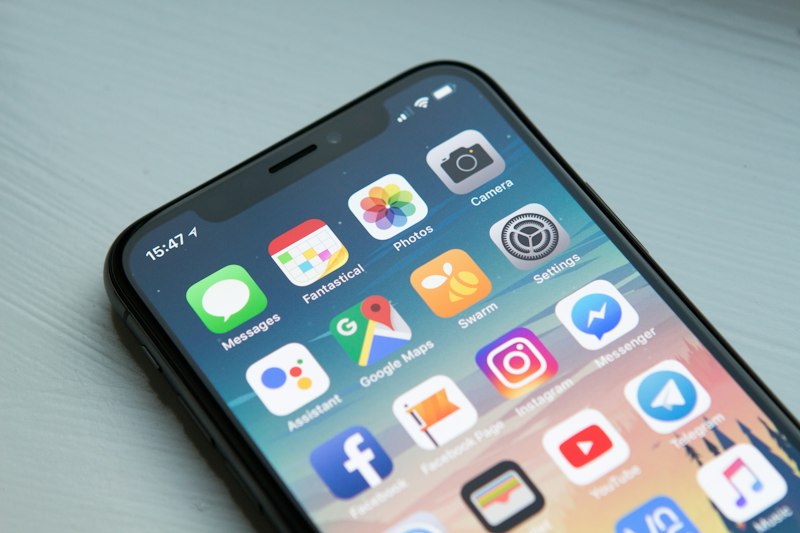
Responsive vs. Adaptive: The Cost Difference Matters
Before talking numbers, you need to understand the distinction between responsive and adaptive design, because the approach you choose has a massive impact on your budget.
Responsive Design: $10,000 to $40,000
Responsive design uses fluid grids and flexible images to reflow a single layout across screen sizes. You write one set of components, and CSS media queries handle the rest. This works well when your app has relatively simple layouts and the user experience does not change dramatically between devices. A content-heavy website, a basic dashboard, or a simple CRUD app can get away with a responsive approach.
The cost stays lower because you are designing one layout that stretches and compresses. You still need breakpoint-specific adjustments, but the underlying component structure stays the same.
Adaptive Design: $30,000 to $150,000+
Adaptive design serves fundamentally different layouts to different devices. A phone might show a simplified single-column view with bottom navigation. A tablet might display a master-detail layout. A desktop might present a multi-panel workspace with keyboard shortcuts. Each variant is intentionally designed for the device context, not just reflowed.
The cost is higher because you are designing, building, and testing multiple distinct experiences. But the result is dramatically better usability on each device. Apps like Slack, Figma, and Spotify use adaptive approaches because their users expect device-native interactions, not a shrunken desktop layout on a phone.
When to Use Each
If 80% of your users will access your app on a single device category (say, desktop), responsive is usually enough. If your analytics show a meaningful split across phones, tablets, and desktops, or if your product inherently serves different use cases on different devices, adaptive is worth the investment. The per-device UX improvement translates directly into engagement, retention, and revenue.
Most of the projects we scope at Kanopy land somewhere in the middle. The core layout is responsive, but key workflows get adaptive treatment for the two or three most important device categories. That hybrid approach typically runs $40,000 to $80,000 and gives you 90% of the benefit at 50% of the cost of going fully adaptive across every breakpoint.
Cost Breakdown by Device Category
The number of device categories you support is the primary cost multiplier. Here is what each one adds to a typical project:
Phone (iOS and Android): $15,000 to $40,000
This is your baseline. Touch-first navigation, single-column layouts, thumb-zone optimization, and gesture support. You are designing for screens between 5.4 and 6.9 inches with varying aspect ratios. If you are building a native mobile app, this cost overlaps with your mobile app development budget. For a web app that needs to work well on phones, budget $15,000 to $25,000 for the responsive/adaptive layer on top of your existing desktop design.
Tablet: $10,000 to $30,000
Tablets are the most neglected device category, and neglecting them is a mistake if your analytics show 10%+ tablet traffic. Tablet design is not just "bigger phone." Users hold tablets differently, often in landscape mode, and they expect more information density than a phone but less complexity than a desktop. Split-view layouts, sidebars that appear contextually, and touch targets sized for fingers (not thumbs) all require dedicated design work.
Desktop: $15,000 to $35,000
Desktop layouts take advantage of wide screens, hover states, keyboard shortcuts, and multi-column layouts. If your product is a SaaS tool, desktop is likely your primary target and the design investment here should be proportionally larger. Complex data tables, drag-and-drop interfaces, and multi-panel workspaces all add cost but are table stakes for desktop productivity apps. For a deeper look at what drives web app development costs, see our full guide.
Foldable Devices: $8,000 to $20,000
Samsung Galaxy Z Fold, Google Pixel Fold, and similar devices introduce a unique challenge. Your app needs to handle dynamic screen size changes mid-session as the user folds and unfolds the device. Android's window size classes and Jetpack Compose's adaptive APIs help, but you still need to design and test both configurations. The cost is lower than a full device category because foldables share most of their UI with phones and tablets, but the transition states and continuity testing add meaningful effort.
Wearable (watchOS, Wear OS): $10,000 to $25,000
Wearable UIs are a completely different design discipline. Screens are 1.5 to 2 inches. Interactions are glances and quick taps. Content must be ruthlessly prioritized. If your product has a wearable component (fitness tracking, notifications, quick actions), you are essentially designing a separate micro-app. The development cost depends heavily on whether you are building native watch apps or just extending notifications.

Design System and Component Library Costs
A design system is the single biggest factor in whether your adaptive UI project stays on budget over time. Without one, every new feature requires custom layout work for each device category. With one, your team assembles new screens from pre-built, pre-tested components that already know how to behave on every device.
Adaptive Component Library: $20,000 to $60,000
This is a set of UI components (buttons, cards, navigation, data tables, forms, modals) built with adaptive behavior baked in. Each component has defined behavior at every breakpoint. A data table might render as a full table on desktop, a condensed table with horizontal scroll on tablet, and a stack of cards on phone. Building this library is a significant upfront investment, but it pays for itself within two to three feature releases.
The tooling matters here. If you are building with React, libraries like Radix UI and shadcn/ui give you accessible primitives that you can extend with adaptive behavior. For React Native, Tamagui and NativeWind handle cross-platform styling with responsive tokens. Flutter's LayoutBuilder and MediaQuery make adaptive layouts relatively straightforward. Choosing the right foundation saves $5,000 to $15,000 in custom component work.
Design Tokens and Theming: $5,000 to $15,000
Design tokens are the variables (colors, spacing, typography, shadows, border radii) that define your visual language. For adaptive UIs, you also need device-specific tokens: touch targets should be 44px minimum on mobile but can be smaller on desktop. Font sizes scale differently on a watch than on a tablet. A well-structured token system in Figma (using variables) synced to your codebase (using Style Dictionary or Tokens Studio) costs $5,000 to $10,000 to set up and saves thousands on every subsequent design iteration.
Full Design System with Documentation: $40,000 to $100,000
This includes the component library, tokens, Storybook or Chromatic documentation, usage guidelines for each device category, accessibility specifications, and contribution workflows for your team. If you are building a product that will grow beyond 30 screens and involve multiple designers or frontend developers, this investment is not optional. It is how you prevent your adaptive UI from becoming an unmaintainable mess within 12 months.
For a broader view of design system pricing across all project types, our UX/UI design cost guide covers the full spectrum from lightweight component libraries to enterprise-grade systems.
Breakpoint Strategy and Testing Costs
Breakpoints are the screen widths where your layout changes behavior. A naive approach uses three breakpoints (phone, tablet, desktop) and calls it done. A production-grade adaptive UI needs a more nuanced strategy, and testing it properly is where many teams underbudget.
Breakpoint Design and Implementation: $5,000 to $20,000
A solid breakpoint strategy for 2026 typically includes five to seven breakpoints: small phone (320 to 374px), standard phone (375 to 479px), large phone / small tablet (480 to 767px), tablet (768 to 1023px), small desktop (1024 to 1279px), standard desktop (1280 to 1535px), and large desktop (1536px+). Each breakpoint needs layout decisions for every major component and page template.
The newer approach, and one we strongly recommend, is to combine fixed breakpoints with container queries. Container queries let components respond to their own container's width rather than the viewport width. This means a card component placed in a sidebar behaves like its "narrow" variant, while the same component in the main content area uses its "wide" variant, regardless of the overall screen size. Container queries landed in all major browsers in 2023 and are now the standard approach for truly adaptive component design.
Cross-Device Testing: $8,000 to $25,000
Testing is where adaptive UI projects either prove their quality or expose their shortcuts. You need to test on real devices, not just browser dev tools with a resized viewport. Chrome DevTools will not show you that your dropdown menu is unreachable on a Samsung Galaxy S24 because the virtual keyboard pushes it off-screen, or that your hover tooltip is permanently invisible on an iPad.
A thorough testing matrix covers 15 to 25 device/browser combinations. Cloud testing platforms like BrowserStack ($29 to $199/month) and LambdaTest give you access to real devices remotely. But you still need a physical device lab for the edge cases that emulators miss. Budget $2,000 to $5,000 for a basic physical device collection (2 iPhones, 2 Android phones, an iPad, and a budget Android tablet).
Automated visual regression testing with tools like Chromatic ($149+/month), Percy, or Playwright's screenshot comparison catches unintended layout changes before they hit production. Setting up these tests costs $3,000 to $8,000 initially, but prevents the slow erosion of UI quality that happens when teams push changes without checking every breakpoint.
Performance Testing Across Devices: $3,000 to $8,000
A layout that looks perfect but takes four seconds to render on a mid-range Android phone is a failed layout. Performance testing means measuring render times, interaction responsiveness (INP scores), and memory usage across your device matrix. Lighthouse, WebPageTest, and real-device profiling in Chrome and Safari DevTools are the primary tools. Budget for both the initial audit and ongoing performance monitoring integration.
Accessibility and Its Impact on Adaptive UI Cost
Accessibility is not a separate line item you can defer. It is woven into every layer of adaptive UI development, and treating it as an afterthought costs two to three times more than building it in from the start.
Baseline Accessibility (WCAG 2.2 AA): $8,000 to $20,000
Meeting WCAG 2.2 AA across all your device categories means proper semantic HTML, keyboard navigation on desktop, screen reader compatibility, sufficient color contrast, touch target sizing on mobile (minimum 44x44px per WCAG 2.5.8), focus management during layout transitions, and meaningful alt text for all images. For an adaptive UI, the complexity multiplies because you need to verify accessibility at every breakpoint. A navigation pattern that is accessible on desktop (keyboard-navigable sidebar) might be completely inaccessible on mobile if the hamburger menu implementation traps focus incorrectly.
Enhanced Accessibility (WCAG AAA, Specialized Needs): $15,000 to $40,000
If you serve users with cognitive disabilities, motor impairments, or low vision, you need to go beyond AA compliance. This includes reduced motion alternatives for every animation, customizable text sizing that does not break your layouts, high contrast modes, switch device compatibility, and voice control support. Each of these adds development and testing effort at every breakpoint.
Accessibility Testing and Auditing: $5,000 to $15,000
Automated tools (axe, Lighthouse, WAVE) catch roughly 30% of accessibility issues. The rest require manual testing with screen readers (VoiceOver on iOS/macOS, TalkBack on Android, NVDA on Windows), keyboard-only navigation, and testing with users who have disabilities. An external accessibility audit from a specialist firm typically runs $5,000 to $15,000 and is worth every dollar if your product serves regulated industries or public-facing audiences.
The business case is straightforward. In 2026, the European Accessibility Act is in full enforcement, ADA-related digital accessibility lawsuits in the US continue to climb, and roughly 15% of the global population has some form of disability. Accessibility is not charity. It is a legal requirement, a market opportunity, and, frankly, good engineering.

Real-World Budget Scenarios
Abstract cost ranges are useful, but concrete scenarios are better. Here are three adaptive UI projects we have scoped recently, with real numbers:
Scenario 1: SaaS Dashboard, Phone + Desktop ($35,000 to $55,000)
A B2B analytics platform needed their desktop dashboard to work well on phones so sales reps could check metrics on the go. The desktop layout was a multi-panel workspace with data tables, charts, and filters. The phone layout collapsed everything into a single-column feed with simplified charts and swipeable filter chips. We built a shared component library with 28 adaptive components, implemented five breakpoints, and tested on 12 device/browser combinations. Design took four weeks. Development took six weeks. The entire adaptive layer, on top of the existing desktop app, cost $42,000.
Scenario 2: Consumer App, Phone + Tablet + Desktop ($70,000 to $100,000)
A fitness platform wanted a unified experience across all three major device categories. Phone users needed quick workout logging and progress tracking. Tablet users wanted immersive workout videos with a side panel for exercise lists. Desktop users needed a full training plan builder with drag-and-drop. Each device category had distinct navigation, layout, and interaction patterns. We built a design system with 45 adaptive components, device-specific navigation systems, and a comprehensive testing pipeline. Total adaptive UI investment: $88,000 over four months.
Scenario 3: Healthcare Platform, All Devices Including Wearable ($120,000 to $160,000)
A telehealth startup needed their platform to work on phones (patient-facing), tablets (clinician-facing in exam rooms), desktops (clinician-facing for detailed charting), and Apple Watch (medication reminders and vitals). HIPAA compliance added accessibility and security requirements at every breakpoint. The wearable component was essentially a separate micro-app. The design system included 60+ components with accessibility documentation for each device variant. Total: $145,000 over six months, including the watchOS companion app.
Notice the pattern. The cost does not scale linearly with device count. Going from one device to two roughly doubles the adaptive UI cost. Going from two to five devices adds 50 to 80% more. Each additional device category shares more of the underlying component architecture, so the marginal cost decreases.
How to Reduce Costs Without Cutting Corners
If the numbers above feel steep, here are the strategies that actually work to reduce adaptive UI costs without sacrificing quality:
- Start with two device categories, not five. Check your analytics. If 85% of your users are on phone and desktop, build adaptive layouts for those two first. Tablet and wearable support can come later, and your component library will make the expansion significantly cheaper.
- Invest in the design system early. A $25,000 component library might feel expensive on a $60,000 project, but it cuts the cost of every feature you build afterward. Teams without a design system spend 30 to 50% more time on each new screen because they are solving adaptive layout problems from scratch every time.
- Use container queries instead of only viewport breakpoints. Components that adapt to their container width are reusable in any layout context. This reduces the number of component variants you need to build and test.
- Leverage existing component libraries. Do not build adaptive data tables, modal systems, or navigation patterns from zero. Start with proven open-source foundations (Radix, Headless UI, shadcn/ui) and customize them for your brand and breakpoint strategy. This saves $10,000 to $30,000 compared to building everything from scratch.
- Automate visual regression testing from day one. The cost of catching a layout regression in production (user reports, hotfix development, reputational damage) is ten times higher than catching it in CI with Chromatic or Playwright screenshots.
- Phase your rollout. Ship desktop first if that is your primary audience. Add phone adaptive layouts in the next sprint. Layer in tablet support when you have real usage data. Each phase benefits from the component work done in previous phases.
The most expensive mistake we see is teams who try to save money by skipping the design system and building one-off responsive layouts for each page. It feels faster in week one. By month three, they have 40 slightly different implementations of the same card component, each breaking on different devices in different ways. The cost of untangling that mess always exceeds what the design system would have cost upfront.
If you are planning an adaptive UI project and want a clear, honest estimate based on your specific product and device requirements, we are happy to help. At Kanopy, we have built adaptive interfaces for startups and scale-ups across every device category covered in this guide. We will walk you through the trade-offs, help you prioritize the right device targets, and give you a budget that reflects reality, not wishful thinking. Book a free strategy call and let us map it out together.