
What Scope Creep Actually Looks Like (It Is Not What You Think)
Most founders picture scope creep as the moment someone says "while we are at it, let's add a chat feature." That obvious version is easy to catch. The dangerous kind is quieter. It is the designer who adds a third color theme to the style guide because it "felt incomplete." It is the developer who builds a custom admin dashboard when a simple database query would have worked. It is you, the founder, casually mentioning during a standup that "it would be cool if users could also export to CSV."
Each of those additions sounds small. None of them individually will blow your budget. But they compound. We tracked one client project where 47 "minor" additions over 12 weeks added $38,000 to a $90,000 build. Not one of those additions was formally approved. Not one had a written requirement. They just happened, one conversation at a time.
Scope creep is not a single event. It is a pattern of uncontrolled expansion in your project requirements, timelines, or deliverables. It happens because humans are naturally optimistic, because saying "yes" feels collaborative, and because the true cost of small additions is invisible until you get the invoice.
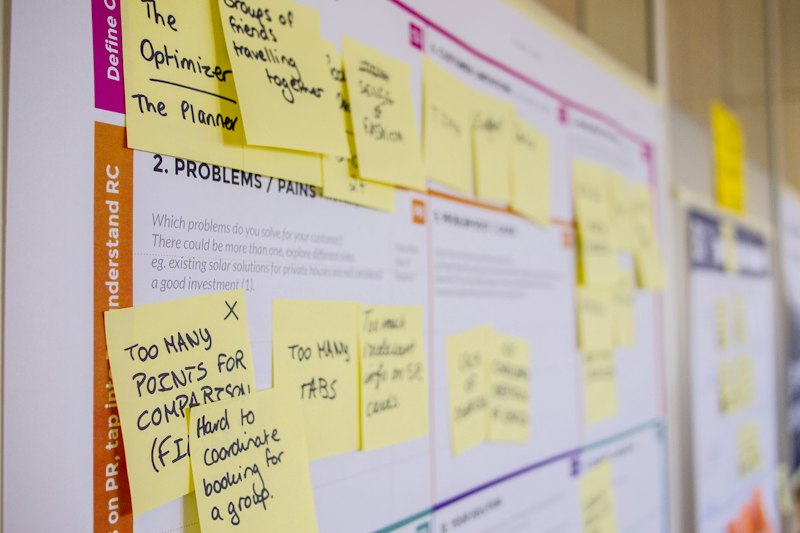
The PMI reports that 52% of projects experience scope creep, and that projects with poorly defined scope are 60% more likely to fail. For a startup burning through a $150K seed round, that failure rate is existential. You cannot afford to treat scope management as a "nice to have." It is the single most important discipline in your build process.
The Five Root Causes of Scope Creep in Software Builds
Before you can prevent scope creep, you need to understand where it comes from. After running hundreds of software projects, we see the same five causes over and over again.
1. Vague or Missing Requirements
This is the biggest one. If your technical spec says "users should be able to manage their profile," you have given your developers a blank check. Manage how? Edit their name? Upload a photo? Change their subscription? Connect social accounts? Each interpretation adds work, and developers will fill the ambiguity with their best guess, which is often more complex than what you actually need.
A requirement like "users can update their display name and email address from a settings page" leaves almost no room for creative expansion. Specificity is your first line of defense.
2. Stakeholder Additions After Kickoff
Your co-founder sits in on a demo and says "we should add Stripe integration before launch." Your investor mentions that a competitor has a referral program. Your early beta tester asks for dark mode. Every stakeholder interaction is a potential scope event. Without a formal process for handling these requests, they bypass your plan and go straight to the developer's to-do list.
3. Technical Discoveries During Development
Sometimes scope grows because the team uncovers complexity that nobody anticipated. The third-party API you planned to use does not support the data format you need. The database schema needs a migration that adds two weeks. The payment provider requires PCI compliance steps that were not in the original estimate. These are not optional additions. They are necessary work that was invisible during planning.
4. Gold Plating by the Development Team
Good developers want to build good software. Sometimes that means they build more than you asked for. They add error handling for edge cases you did not specify. They build a caching layer "for performance" when your app has 50 users. They refactor working code to be "cleaner" during a sprint that was supposed to ship a feature. Gold plating comes from good intentions, but it costs real money.
5. The Founder Who Cannot Stop Iterating
This one stings, but it is the most common cause we see. You get excited about your product, you talk to users, you read a competitor's blog post, and suddenly your MVP has 40 features instead of 12. You are the biggest scope risk on your own project. Acknowledging that is the first step toward controlling it.
Building a Bulletproof Scope Document Before You Write Any Code
The best time to prevent scope creep is before development starts. A well-structured scope document acts as a contract between you, your team, and reality. Here is how to build one that actually works.
Define Your "In Scope" and "Out of Scope" Lists
Every scope document needs two lists. The "in scope" list describes what you will build in this phase. The "out of scope" list describes what you will not build, even if it is a good idea. The second list is more important than the first. It creates a written record of intentional exclusions, which makes it much harder for anyone to argue those items back into the project later.
For example, if you are building an e-commerce app: "In scope: product catalog, shopping cart, Stripe checkout, order confirmation email. Out of scope: wishlist, product reviews, loyalty program, inventory management, multi-currency support." When someone suggests adding product reviews mid-sprint, you point to the document. It is not a debate. It is a decision that was already made.
Attach Effort Estimates to Every Feature
Scope feels abstract until you attach hours and dollars to it. If your developer estimates the shopping cart at 40 hours ($6,000 at $150/hour) and someone wants to add "save for later" functionality, you can immediately say "that is an additional 16 hours and $2,400. Do we want to add $2,400 to the project or keep it for Phase 2?" Numbers turn emotional discussions into business decisions.
Write a Strong PRD Before Kickoff
Your product requirements document is the foundation of scope control. It should include user stories with acceptance criteria, wireframes or mockups for every screen, data models and API requirements, third-party integrations with specific endpoints, and performance requirements with measurable thresholds. The more detail in your PRD, the less room for interpretation during development. Every ambiguity in your PRD is a door that scope creep walks through.

Set a Contingency Budget (And Protect It)
Every software project should have a 15-20% contingency budget. If your estimated build cost is $80,000, budget $96,000. But here is the critical part: the contingency is for unknowns, not for new features. It covers the API that does not work as documented, the performance issue that requires a different architecture, the accessibility requirement you missed. If you spend your contingency on "nice to have" features, you have no safety net when real problems appear.
The Change Control Process That Saves Projects
You will never prevent every scope change. Requirements evolve, markets shift, and sometimes a new feature genuinely is more important than something already in the plan. The goal is not to freeze scope forever. The goal is to make every scope change intentional, evaluated, and approved.
Step 1: Capture the Request
Every scope change request goes into a single location. We use a dedicated Slack channel or a simple spreadsheet. The request must include: what is being asked for, who is asking, why it matters, and the perceived urgency. No verbal requests. If it is not written down, it does not exist. This alone eliminates about 30% of scope additions, because many ideas feel less important when you have to write them out.
Step 2: Estimate the Impact
Your technical lead (or development partner) estimates the cost of every change request in hours, dollars, and timeline impact. "Adding CSV export will take 12 development hours ($1,800), 4 QA hours ($400), and will push the launch date by 3 days." This estimate must account for downstream effects. A new feature is never just the feature itself. It includes testing, documentation, design updates, deployment, and ongoing maintenance.
Step 3: Evaluate Against Priorities
Ask three questions about every change request. First, does this support our primary launch goal? Second, will users notice if we ship without it? Third, can this wait until Phase 2 without meaningful business impact? If the answer to the first question is "no" and the answer to the third question is "yes," the request goes to the backlog. Period.
Step 4: Trade, Do Not Just Add
This is the rule that separates disciplined teams from undisciplined ones. If you add something to the scope, you must remove something of equal effort. Want to add CSV export (12 hours)? Remove the notification preferences page (14 hours). This forces a real prioritization conversation. It is easy to say "yes, add it" when there is no cost. It is much harder when adding means removing something you already committed to.
Step 5: Get Written Approval
The person with budget authority (usually the founder or product owner) approves every scope change in writing. An email, a Slack message with an explicit "approved," a signed change order. This creates a paper trail and ensures nobody can claim they did not know the scope was changing. We have seen disputes between founders and dev agencies that were resolved entirely by this documentation.
Tools and Tactics for Real-Time Scope Monitoring
A scope document and change control process are only as good as your ability to monitor what is actually happening during development. Here are the tools and habits that keep scope visible.
Sprint-Level Scope Tracking
If you are running two-week sprints (and you should be), every sprint should have a defined scope that maps back to your overall project scope. Use Jira, Linear, or even a well-organized Notion board to track stories. At the end of each sprint, compare what was planned versus what was delivered. If stories are consistently carrying over, or if new stories are appearing mid-sprint, scope is creeping.
We recommend a simple "scope health" metric: count the number of stories added to the sprint after it started. Zero is ideal. One or two for genuine emergencies is acceptable. More than that and you have a process problem.
Burn Rate Monitoring
Track your actual spend against your budget weekly, not monthly. If you budgeted $20,000 for Month 2 and you have spent $14,000 by the halfway point, that is a signal. Something is taking longer than estimated, or work is being done that was not in the plan. Catching budget overruns at the two-week mark gives you time to course correct. Catching them at the monthly invoice does not.
Weekly Scope Review Meetings
Dedicate 30 minutes per week to a scope review. Not a standup, not a demo, not a "check-in." A dedicated meeting where you review the change request log, compare current progress to the original timeline, and flag anything that looks like it is drifting. The attendees should be limited: the founder, the project manager, and the technical lead. Larger groups turn scope reviews into brainstorming sessions, which is exactly what you are trying to avoid.

The "Parking Lot" for Good Ideas
Create a visible backlog for ideas that are good but not right for this phase. Call it a "Phase 2 list," a "parking lot," or a "someday/maybe" board. When someone suggests a great feature that is out of scope, add it to this list immediately and visibly. People are much more willing to defer a request when they see it being captured rather than rejected. This backlog also becomes your planning input for the next phase, which means good ideas are never lost, just deferred.
What to Do When Scope Creep Has Already Started
Maybe you are reading this article too late. You are three months into a build, the budget is 40% over, and the launch date has slipped twice. Here is how to regain control.
Stop and Audit
Pause all new feature development for one week. Yes, a full week. Use that time to document exactly what has been built, what is in progress, what was originally planned, and what was added. Create a side-by-side comparison. This audit usually reveals that 20-30% of completed work was not in the original scope. That is not a number you can fix by "trying harder." It requires structural changes.
Reprioritize Ruthlessly
Take your remaining budget and remaining timeline. List every unfinished feature. Force-rank them by business impact: "must have for launch," "important but not blocking," and "nice to have." Cut everything in the third category. Move 50% of the second category to Phase 2. This is painful. You will feel like you are shipping a lesser product. But a shipped product with 60% of the features beats a canceled project with 90% of the features every time.
Renegotiate with Your Development Partner
If you are working with an agency or contractor, have an honest conversation about the budget situation. Good development partners, the ones worth keeping, will work with you to find a path forward. That might mean reducing scope, adjusting the timeline, or restructuring the payment schedule. What you should not do is pretend the problem does not exist and hope it resolves itself. We have seen founders avoid this conversation until they literally run out of money. By then, there are no good options.
One of the most common app development mistakes is treating scope overruns as a cost problem when they are actually a process problem. Throwing more money at a project with no scope controls just means you will overspend by a larger amount. Fix the process first, then discuss the budget.
Implement Controls Going Forward
Use the change control process outlined in Section 4 of this article for all remaining work. Lock the sprint scope. Require written approval for any addition. Track your burn rate weekly. It will feel bureaucratic, especially if you have been running loosely. But the alternative is continuing to bleed money and time with no end in sight.
The Founder's Scope Creep Prevention Checklist
After years of managing software builds for startups, we have distilled scope management into a checklist. Print this out. Tape it to your monitor. Review it every Monday morning before your first meeting.
Before Development Starts
- Written scope document with explicit "in scope" and "out of scope" lists, signed off by all stakeholders.
- Detailed PRD with user stories, wireframes, acceptance criteria, and data models. No ambiguity in the requirements.
- Effort estimates attached to every feature, reviewed and agreed upon by the development team.
- 15-20% contingency budget reserved for unknowns, not features.
- Change control process documented and understood by everyone on the project.
During Development
- Sprint-level scope tracking with zero tolerance for mid-sprint additions except genuine blockers.
- Weekly burn rate monitoring comparing actual spend to budgeted spend.
- Change request log capturing every proposed addition with cost and timeline impact.
- 30-minute weekly scope review with founder, project manager, and technical lead.
- "Trade, do not add" rule enforced for every approved scope change.
When Scope Changes Are Proposed
- Written request with rationale and urgency.
- Technical estimate of hours, cost, and timeline impact (including downstream effects).
- Evaluation against launch goals and Phase 2 deferral potential.
- Written approval from budget authority before any work begins.
- Corresponding scope removal if adding net-new work.
Scope creep is not inevitable. It is the result of missing structure, unclear requirements, and undisciplined decision-making. Every project we have run with these controls in place has shipped on time and within 10% of the original budget. Every project without them has overrun by at least 25%. The math is not subtle.
If you are planning a software build and want to start with a scope framework that prevents these problems from day one, we can help. Book a free strategy call and we will walk through your project requirements, flag the highest-risk areas for scope creep, and build a plan that keeps your build on track and on budget.