
Why Push Notifications Make or Break Retention
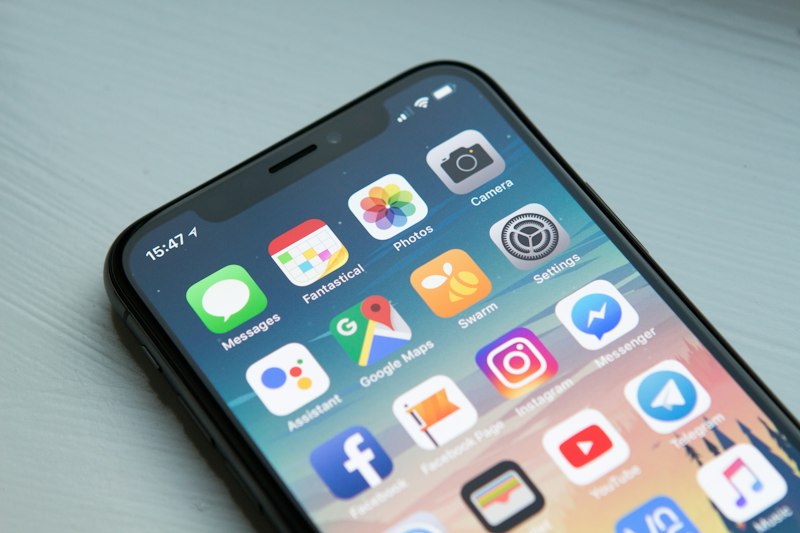
Push notifications drive more re-engagement than any other mobile channel. Done right, they outperform email on open rates by 4x to 8x. Industry benchmarks from Airship and CleverTap consistently show average push open rates between 5% and 15%, with top-performing apps hitting 20% or higher. Compare that to email's 2% to 3% average mobile open rate, and the case for investing in push is obvious.
The impact on daily active users is real and measurable. Apps that run a disciplined push strategy see 25% to 40% higher DAU compared to apps that rely entirely on organic re-opens. For subscription and e-commerce apps, that difference compounds quickly into revenue. A single well-timed notification pulling a lapsed user back into the purchase funnel is worth more than a week of social ads targeting cold audiences.
Here is the problem: the same channel that drives retention is the one that gets you uninstalled. Localytics data shows that 52% of users find push notifications annoying, and 46% will disable them after receiving what they consider irrelevant messages. Over-sending is the single most common reason users opt out. Sending to everyone at the same time is the second. Sending generic, untargeted content is the third.
The apps that win with push are not the ones sending the most notifications. They are the ones sending the right notification to the right user at the right moment. That requires a strategy, not just a broadcast tool. If you are currently using push as a blast channel, you are leaving retention on the table and accelerating churn at the same time. This playbook will show you how to fix that.
Optimizing Your Opt-In Strategy
iOS requires explicit permission before you can send push notifications. Android 13 and above introduced the same requirement. This shift means your opt-in rate is now one of the most important metrics in your entire growth funnel. If you blow the permission ask, you lose the channel permanently for that user unless they manually re-enable it in settings, which almost no one does.
The default approach, showing the system permission dialog immediately after first launch, converts at roughly 40% to 50% on iOS. Apps that use pre-permission priming consistently see opt-in rates of 60% to 75%. Pre-permission priming means showing your own custom screen before the system dialog, explaining the specific value the user will get from enabling notifications. "Get notified when your order ships" converts far better than "App would like to send you notifications."
Timing the ask matters as much as the copy. Do not ask on first launch before users have experienced any value. The best trigger points are: after a user completes their first meaningful action, after they have viewed a feature that would naturally benefit from notifications, or after they have returned to the app a second time. Tools like Braze and OneSignal let you gate the permission prompt behind these behavioral triggers with minimal engineering lift.
Android users historically opted in at much higher rates because the permission was implicit. With the Android 13 requirement, your Android opt-in rates will drop unless you apply the same pre-priming strategy. Audit your current opt-in funnel on both platforms separately. If your iOS rate is below 55% or your Android rate has dropped since your last major release, your priming screen needs work. Test different value propositions, different timing triggers, and different visual designs. A 10-point lift in opt-in rate compounds significantly over the lifetime of your user base.
Segmentation: Stop Blasting Everyone
Sending the same notification to your entire opted-in user base is the fastest way to train users to ignore you. Every notification that lands for a user who has no reason to care about it is a small erosion of trust. Enough of those and they disable notifications or uninstall entirely. Segmentation is how you prevent that erosion.
Start with lifecycle stage segmentation. New users in their first week need onboarding nudges, not promotional offers. Active users who have purchased in the last 30 days need retention messaging. Lapsed users who have not opened the app in 14 to 30 days need re-engagement hooks with clear value propositions. Users who have not returned in 60-plus days need your strongest win-back offer, and users past 90 days are statistically unlikely to return from push alone. Treat these segments with completely different messaging strategies.
Behavioral segmentation goes deeper. Build segments around specific in-app actions: users who have viewed a product category but not purchased, users who have added items to a cart and abandoned, users who have used a specific feature, users who have completed a streak or milestone. CleverTap and MoEngage both offer event-based segmentation that can trigger notifications based on real-time user behavior without manual list management.
RFM segmentation (recency, frequency, monetary value) is particularly powerful for e-commerce and subscription apps. High-frequency, high-value users deserve a different notification cadence and tone than low-frequency users who have made one small purchase. You are not just managing segments, you are managing relationships with different types of users. The copy, the offer, and the frequency should reflect that. Start with four to six segments and add complexity as you validate what moves the needle for each group.
Personalization Beyond First Name

Inserting a user's first name into a push notification is table stakes at this point. Users have become blind to it, and it does not meaningfully move open rates anymore. Real personalization is about content relevance, not just name insertion. If your personalization strategy starts and ends with "Hey Sarah," you have work to do.
Content personalization means using what users have actually done in your app to determine what you show them. If a user spent 20 minutes browsing hiking boots last Tuesday, a notification about a sale on hiking gear is relevant. A notification about discounted kitchen appliances is not. Platforms like Iterable and Klaviyo support product recommendation blocks inside push notifications driven by browse and purchase history. This is not complex to implement if your data pipeline is clean, and the lift in click-through rates is significant, often 2x to 3x over generic promotional messages.
Location-based personalization is underused by most apps outside of retail. If you have location permission, you can trigger notifications based on proximity to a store, a competitor, or even a specific neighborhood. A coffee app notifying a user who just entered a city center about the nearest location drives conversion in a way that a daily "Good morning, here is your reminder" notification never will. Geofence triggers through tools like Radar or the native geofencing APIs are worth adding to your stack if location is relevant to your use case.
Behavioral triggers are the most powerful form of personalization. A notification sent within two hours of a cart abandonment converts at 3x to 5x the rate of a batch promotional send. A notification congratulating a user on completing a streak is more engaging than any offer. Map out the key behavioral moments in your app and build notification triggers around them. You are not broadcasting, you are responding to what users are already doing.
Timing and Frequency: The Science of When to Send
Sending a notification at 2 AM in a user's local timezone is not just ineffective. It is a trust violation. Timezone optimization is non-negotiable if you have any meaningful user base outside your home market. Every major push platform supports send-time optimization by stored user timezone. There is no excuse for not enabling it.
Beyond timezone, optimal send times vary significantly by app category. For news and media apps, morning commute hours (7 to 9 AM) and evening wind-down (8 to 10 PM) consistently outperform midday. For e-commerce, Tuesday through Thursday afternoons drive higher conversion than weekends for most categories, though flash sales see higher weekend engagement. For fitness apps, early morning before the typical workout window sees the best activation. Run your own send-time tests against your specific user base rather than relying purely on industry averages, because your users may behave differently.
Frequency capping is where most teams underinvest in configuration. A sensible default cap for most apps is two to three notifications per week per user. Some high-intent use cases, like daily active apps or news services where users explicitly want daily updates, can support higher frequency. But the cap should be deliberate, not absent. Without frequency capping, your automated triggers and manual campaigns can stack up on a single user in the same day, which is one of the fastest paths to opt-out.
Quiet hours should be set as a hard rule, not a suggestion. Block notifications between 9 PM and 8 AM in the user's local time for all non-transactional messages. Transactional notifications, like a shipping update or a two-factor auth code, are exceptions. Quiet hours are a basic respect signal that users notice when violated. Build them into your platform configuration and enforce them at the segment level, not just the campaign level.
Notification Types That Drive Action
Not all push notifications serve the same purpose, and conflating them leads to muddled strategy. Understanding the distinct types and when to use each one is the foundation of a mature notification program.
Transactional notifications have the highest open rates of any type, often 50% or above, because users are actively waiting for them. Order confirmations, shipping updates, appointment reminders, payment receipts, and two-factor authentication codes all fall into this category. These are the notifications users want. Treat them as a premium experience: clear, accurate, timely, and deep-linked directly to the relevant content. Never delay transactional notifications to batch with promotional sends.
Promotional notifications are the highest risk category. They carry a lower baseline open rate (typically 3% to 8%) and the highest opt-out risk if overused. The key to making promotional notifications work is specificity and scarcity. "25% off everything this weekend" is weak. "The jacket you saved is 25% off, today only" is strong. Use promotional pushes sparingly, target them tightly with segmentation, and always ask whether the value proposition is compelling enough to be worth a slot in your frequency cap.
Social proof and milestone notifications are an underused category that drives strong engagement with minimal opt-out risk. Notifying a user when a friend joins the app, when content they created gets likes or comments, or when they hit a usage milestone creates positive associations with the notification channel. Apps like Duolingo have built streak notifications into a core retention mechanic. The lesson is that notifications tied to in-app progress feel rewarding rather than interruptive.
Re-engagement notifications target lapsed users and require the strongest value hook. The message needs to give a genuinely compelling reason to return. A time-limited offer, new content directly aligned with their past behavior, or a "you are about to lose your streak" urgency trigger all outperform generic "we miss you" messages. Test two or three re-engagement variants per segment and kill underperformers quickly.
Rich Notifications and Deep Linking
Text-only notifications are leaving conversion on the table. Rich notifications with images consistently outperform plain text by 25% to 40% on click-through rate. iOS and Android both support image attachments in push payloads, and the implementation is straightforward if you are using a modern push platform. For e-commerce, showing the product image directly in the notification removes friction from the consideration phase. For media apps, showing a thumbnail gives users immediate context and drives more taps than a text headline alone.
Action buttons are another rich notification feature most apps underutilize. iOS supports up to four notification action buttons. Android supports up to three. These buttons let users take a direct action from the notification without opening the app. "Add to Cart," "Mark Done," "Accept," and "View Details" are all examples of action buttons that reduce the friction between notification and conversion. Design your action buttons to match the specific intent of each notification type. A re-engagement notification might have "See What's New" and "Remind Me Later." A cart abandonment notification might have "Complete Purchase" and "Save for Later."
Deep linking is the single highest-leverage technical investment you can make in your push program. A notification that drops users on the app home screen after promising to show them something specific destroys conversion and trust. Every notification should deep link directly to the relevant content, whether that is a specific product, a piece of content, a user's cart, or a settings screen. Deep link mapping requires coordination between your marketing and engineering teams, but it is not optional if you want your notifications to perform.
Interactive notifications, which allow users to respond, rate, or take action directly from the notification shade, are still emerging but worth experimenting with for high-engagement use cases. Feedback prompts, quick poll responses, and one-tap confirmations all reduce the steps between notification and action. If you are on Braze or Iterable, these interactive formats are available without custom builds.
Measuring and Iterating on Your Strategy
A push notification strategy without a measurement framework is just guessing with extra steps. The core metrics you need to track at the campaign and segment level are: delivery rate, open rate, click-through rate, conversion rate (defined by the specific action you want), and opt-out rate. Each tells you something different about what is and is not working.
Delivery rate problems, anything below 95%, usually indicate stale tokens or platform-side throttling. Audit your token refresh logic if you see this. Low open rates on a well-segmented campaign point to a copy or timing problem. Low click-through rates with high open rates mean your notification is compelling but your deep link or landing experience is not. High opt-out rates on a specific campaign type are a clear signal that the segment or the message is wrong. Do not average these metrics across all campaigns. Break them down by type, by segment, and by user lifecycle stage to surface the specific problems.
A/B testing in push is simpler than most teams make it. You do not need to test everything at once. Start with the highest-leverage variable: subject line or notification copy. Run a clean two-variant test with a minimum sample size of 1,000 users per variant to reach statistical significance on open rate. Once you have a winner, move on to testing send time, then action button copy, then personalization tokens. Build a testing calendar so you always have one active test running and a backlog of hypotheses ready to go.
Cohort analysis is your early warning system for retention impact. Compare 30-day and 60-day retention rates for users who are opted into push versus those who are opted out. If opted-in users are retaining at meaningfully higher rates, your strategy is working. If there is no difference, you are not using the channel effectively. If opted-in users are churning faster, you have a notification quality problem that needs immediate attention.
Review your push performance data monthly at minimum. Benchmark your open and opt-out rates against your vertical: e-commerce, media, finance, and fitness apps each have different norms. Platforms like Airship publish annual benchmark reports that give you a realistic sense of where you stand. If you want help building a push strategy that actually moves your retention numbers, Book a free strategy call and we will walk through your current setup together.