
What an MVP Actually Is (Most Founders Get This Wrong)
A Minimum Viable Product is the smallest thing you can build that lets real users complete a real task and give you real feedback. That is it. Not a prototype. Not a pitch deck with screenshots. Not a bloated V1 that took nine months to ship.
The word "viable" does the heavy lifting here. Your MVP has to work. Someone has to be able to sign up, use it, and get value from it. But "minimum" means you strip away everything that is not directly tied to proving your core hypothesis.
Here is the hypothesis format that keeps founders honest: "We believe [specific user] will [specific action] because [specific reason]." If a feature does not help you test that statement, it does not belong in your MVP.

Some MVPs that shaped billion-dollar companies:
- Dropbox started with a three-minute demo video and a waitlist. No working product. They got 75,000 signups overnight and proved demand before writing backend code.
- Airbnb was three air mattresses on a floor during a San Francisco conference. The founders manually handled every booking.
- Zappos photographed shoes at local stores, listed them online, and bought inventory at retail only when orders came in.
- Buffer launched as a landing page with a pricing table. No product behind it. Just a form that collected email addresses.
Every one of these validated demand before the founders spent serious money on engineering. That is the entire point.
MVP vs Prototype vs Proof of Concept: Know the Difference
These three terms get thrown around interchangeably, and that confusion costs founders time and money. Each serves a different purpose at a different stage.
Proof of Concept (PoC)
A PoC answers one question: "Is this technically possible?" It is internal, ugly, and not meant for customers. If you are building an AI product that needs to process medical images in under two seconds, a PoC tells you whether your architecture can handle it. Nothing more.
Prototype
A prototype is a clickable simulation of the user experience. It looks real but does nothing under the hood. Figma mockups, InVision flows, even coded front-ends with hardcoded data. Prototypes are for user testing and investor demos. They help you validate that people understand how to use your product before you build it.
MVP
An MVP is functional software. Real users log in, complete real tasks, and (ideally) pay real money. It is deployed, it handles edge cases well enough not to break, and it generates data you can learn from.
The typical path is PoC, then Prototype, then MVP, then Full Product. But you can skip steps. If the technical feasibility is obvious (you are building a SaaS dashboard, not a quantum computer), jump straight to a prototype or MVP.
At Kanopy Labs, our Discovery Sprint helps founders figure out which stage they actually need. Sometimes a sharp prototype is enough to close a seed round. Other times, investors want to see paying users, which means you need a working MVP.
Deciding What Goes In (And What Gets Cut)
Scope is where MVP projects live or die. Every founder has a vision for the full product. Your job right now is to ignore 80% of that vision and focus on the core value loop.
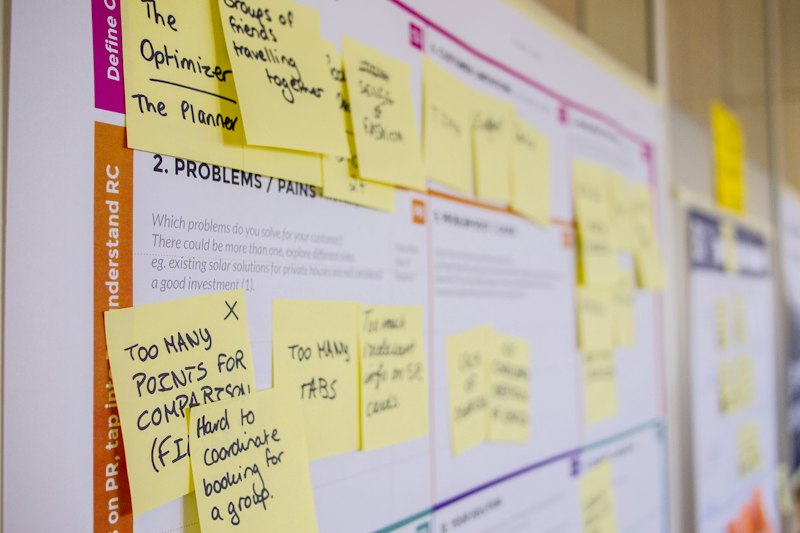
We use a three-tier framework with every client:
Tier 1: Must Have (the core loop)
- The single feature that solves the core problem
- User authentication (if the product requires accounts)
- The primary user flow from entry to completed task
- Payment processing (if you are charging from day one)
Tier 2: Should Have (include if budget allows)
- Email notifications for key events
- Basic usage analytics visible to the user
- Profile customization
- Simple search functionality
Tier 3: Cut Ruthlessly (save for V2)
- Social features like sharing, comments, reactions
- Admin dashboards (query the database directly for now)
- Multi-language support
- Advanced settings and preferences
- Third-party integrations beyond the one essential connection
- Native mobile apps (start with a responsive web app)
Here is the test: if removing a feature means a user cannot complete the core value loop, it stays. Everything else goes into the backlog. No exceptions. The founders who ship fastest are the ones willing to be embarrassed by how little their V1 does.
A practical tip: write down every feature you want. Then cut the list in half. Then cut it in half again. Whatever survives is probably your MVP scope.
The MVP Development Process, Week by Week
Here is the process we follow at Kanopy Labs to take a founder from idea to launched product. Timelines vary by complexity, but this is the general shape for a typical MVP engagement.
Weeks 1 to 2: Discovery and Strategy
- Define the core problem and the specific user you are solving it for
- Analyze competitors and identify your differentiation
- Map the single most important user flow (one flow, not five)
- Choose the tech stack based on your product requirements
- Create wireframes for essential screens only
- Agree on success metrics: what does "working" look like?
Weeks 3 to 4: Design Sprint
- High-fidelity designs for core screens
- Design system setup so future features build faster
- Clickable prototype for user testing
- Two rounds of feedback and iteration
Weeks 5 to 8: Build Sprint
- Backend API development and database setup
- Frontend implementation following the approved designs
- Payment integration if needed
- Automated testing for critical paths
- QA, bug fixes, and deployment to production
Weeks 8 to 10: Soft Launch
- Release to a small group of early adopters (50 to 200 people)
- Monitor error logs, performance metrics, and user behavior
- Conduct five to ten user interviews in the first week
- Fix critical bugs and friction points before wider release
Total timeline for most MVPs: 8 to 12 weeks. If someone tells you it will take six months, your scope is too large or your team is too slow. Both are fixable problems.
MVP Costs: Honest Numbers
Founders always ask about cost first. Here are realistic ranges based on what we have seen across 50+ MVP builds:
Simple MVP: $25K to $50K
A web application with user authentication, one core feature, and a clean UI. Examples: a landing page builder, a niche SaaS tool, a content curation platform. Timeline: 6 to 8 weeks.
Medium MVP: $50K to $100K
A mobile app or complex web platform with multiple user roles, real-time features, or payment flows. Examples: a two-sided marketplace, a social platform, a fintech tool with Plaid integration. Timeline: 8 to 12 weeks.
Complex MVP: $100K to $150K
Products with AI/ML components, healthcare compliance (HIPAA), or multi-platform requirements. Examples: a telehealth application, an AI-powered analysis tool, a logistics platform with real-time tracking. Timeline: 12 to 16 weeks.

These numbers include design, development, QA, and deployment. They do not include ongoing hosting, marketing spend, or post-launch iteration cycles.
How to stretch every dollar
- Launch web-only first. Skip native iOS and Android apps until you have proven product-market fit.
- Use existing services: Stripe for payments, Clerk or Auth0 for authentication, Resend for transactional email, Vercel for hosting.
- Skip the admin panel. Use database tools like Retool or direct SQL queries until you have enough operations volume to justify a custom admin experience.
- Design only the screens users will see in the core flow. Settings pages, help centers, and onboarding tours can wait.
Choosing the Right Tech Stack
Your tech stack matters less than you think at the MVP stage, but a bad choice can still slow you down. Here is what we recommend for most startups in 2026:
Frontend: Next.js with TypeScript. Server-side rendering for SEO, React Server Components for performance, and the largest ecosystem of UI libraries and developer talent.
Backend: Node.js with TypeScript (or Next.js API routes if your backend is simple). For more complex backends, consider Python with FastAPI, especially if your product involves AI/ML.
Database: PostgreSQL through Supabase or Neon for relational data. MongoDB only if your data is genuinely unstructured. Redis for caching and real-time features.
Hosting: Vercel for the frontend. Railway or Render for backend services. AWS only if you have specific infrastructure requirements or a DevOps person on the team.
Payments: Stripe. There is no serious alternative for startups. Their documentation is excellent, their React components are solid, and their fee structure is straightforward.
The guiding principle: use boring, proven technology. Your MVP is not the place to experiment with the newest framework or the most clever architecture. Pick tools with large communities, good documentation, and easy hiring pipelines. You can always migrate later when you have revenue and a larger team.
Seven MVP Mistakes That Burn Through Cash
After building products with dozens of founders, these are the patterns that consistently lead to wasted time and money:
1. Building too much. This is the number one killer. Founders keep adding "just one more feature" until the timeline doubles and the budget is gone. Set a hard feature freeze date and stick to it.
2. Skipping user research. You are not your customer. Talk to at least 20 people in your target market before you write any code. If you cannot find 20 people who care about the problem, that is a signal worth listening to.
3. Premature scaling. Do not architect for a million users when you have zero. Build for 1,000 users. When you hit that number, you will have revenue to invest in scaling. Kubernetes, microservices, and multi-region deployments are problems you want to have later.
4. Picking exotic technology. That new Rust web framework looks incredible. It is also impossible to hire for. Use tools where you can find contractors and full-time engineers quickly. React, Node.js, PostgreSQL. Boring works.
5. Launching without analytics. If you cannot see what users are doing inside your product, you cannot learn. Set up Mixpanel, PostHog, or even basic Google Analytics before your first user signs up. Track the core flow completion rate at minimum.
6. Building in a vacuum. Going dark for four months and then launching to silence. Ship something small early. Get it in front of people. The feedback you get in week three is more valuable than the feature you planned for week twelve.
7. Neglecting design. You do not need a beautiful product. You need a clear product. If users cannot figure out how to complete the core action in under 30 seconds, your UX is failing. Invest in information architecture and flow design, not visual polish.
The common thread: discipline. Set a deadline, define a scope, and refuse to let either expand. The founders who launch fastest are not the ones with the best ideas. They are the ones who make decisions and commit to them.
After Launch: The First 90 Days
Launching your MVP is the starting line, not the finish. What you do in the first 90 days determines whether your product survives.
Days 1 to 14: Watch and Listen
- Observe how users actually behave (it will surprise you)
- Track completion rates for the core user flow
- Conduct five to ten user interviews. Ask open-ended questions. Do not lead the witness.
- Monitor error rates, page load times, and server health daily
Days 15 to 30: Find the Patterns
- Where do users drop off in the funnel?
- What is the most common support question or complaint?
- Which feature gets requested repeatedly?
- Are users willing to pay, or pay more than your current price?
Days 30 to 60: Fix and Improve
- Address the single biggest friction point in the core flow
- Add the most-requested feature (if it aligns with your hypothesis)
- Improve onboarding based on where new users get confused
- Start testing one acquisition channel: content, ads, or outbound
Days 60 to 90: Decide Your Next Move
- If engagement is strong and growing, double down. Build V2 features, raise funding, hire.
- If users sign up but do not return, you have a retention problem. Fix the core experience before adding anything new.
- If nobody cares, be honest with yourself. Either pivot the solution or revisit the problem entirely.
The data from your MVP should dictate your roadmap. Not your gut. Not your investors. Not what your competitor just launched. Follow the signal from the people actually using your product.
Ready to build? Book a free strategy call and we will help you define the shortest path from idea to launched MVP.