

Why the Scheduler Category Is Wide Open Again
Buffer, Hootsuite, Later, and Sprout Social built a $3B category on top of a simple insight: social media teams need one place to draft, schedule, and measure posts across multiple platforms. That insight is still true. What changed in 2024 and 2025 is that AI-native tools (Typefully for threads, Postwise for X growth, Taplio for LinkedIn, ContentStudio, Hypefury) are winning customers by making content generation and optimization the center of the product instead of an add-on.
The opportunity for new entrants is not to build Buffer plus AI. It is to build an AI-first scheduler for a specific platform or vertical. LinkedIn creators want a different product than YouTube creators. A B2B SaaS content team wants a different product than a solo creator. Pick a niche. Win it. Expand later.
This guide walks through the exact architecture for a modern AI social scheduler. The engineering is harder than it looks because social platform APIs are hostile, rate limits are brutal, and content moderation is an existential risk.
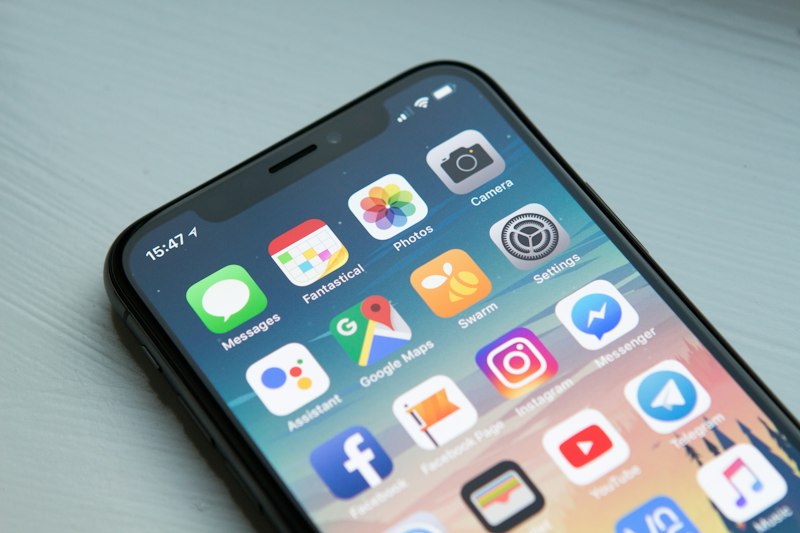
Platform Coverage: Which APIs to Support
Every social platform has its own API, its own quirks, its own rate limits, and its own terms of service. Supporting all of them at launch is a trap. Pick two or three and do them well.
LinkedIn. The highest-value platform for B2B. The LinkedIn Marketing API supports posting text, images, videos, and polls, but requires a partner program approval that takes weeks. The personal API is more limited but easier to get. Typefully and Taplio both grew up here for a reason. Rate limit: 500 requests per day per user. Posts per day: 25.
X (formerly Twitter). The X API v2 is aggressively priced ($200/month minimum for the Basic tier, $5000/month for Pro) and limits are tight. The Basic tier allows 3,000 posts per month. Most AI scheduler customers on X want threads, scheduled posts, and analytics. Budget this line item carefully: X API costs pass through to customers.
Instagram. Requires the Meta Graph API and a Business or Creator account connected to a Facebook Page. Instagram blocks most automation unless you go through the official API, which supports scheduled posts, Reels, Stories, and insights. The approval process is slow but necessary.
Facebook. Same Graph API as Instagram. Still meaningful for local businesses and older audiences. Less relevant for B2B.
TikTok. The TikTok Content Posting API launched in 2024 and is now usable for scheduling. Requires partner approval and an app review. Video upload is bandwidth-heavy.
YouTube Shorts. YouTube Data API v3 supports uploads, metadata, and scheduled publishing. Quota limits are tight (10,000 units per day per project, uploads cost 1,600 units each).
Threads, Bluesky, Mastodon. All have APIs. Threads is behind Meta Graph API. Bluesky has a simple AT Protocol API. Mastodon is ActivityPub. Cover the ones your target customers care about.
Our SaaS platform build guide covers the OAuth, multi-tenancy, and billing patterns that apply across all these platform integrations.
OAuth, Token Management, and the Reconnection Problem
Every platform uses OAuth 2.0 for account connections, and every platform handles tokens differently. Getting this wrong means customers constantly re-authenticating and blaming you for posts that never went out.
OAuth flow. Store client secrets in a secure vault (AWS Secrets Manager, GCP Secret Manager, or HashiCorp Vault). Implement PKCE for browser-initiated flows. Handle the redirect callback on your backend, exchange the code for tokens, and store them encrypted in Postgres.
Token refresh. LinkedIn tokens expire in 60 days. X tokens expire in 2 hours (with refresh). Meta tokens expire in 60 days. YouTube tokens expire in 1 hour. You need a background job that refreshes tokens before they expire. If a token fails to refresh, notify the customer immediately (email and in-app) so they can reconnect.
Secret rotation. Platforms occasionally invalidate tokens because the user revoked access, changed their password, or the platform revoked the app's permissions. Detect this via 401 errors and trigger a reconnect flow that preserves scheduled posts.
Multi-account support. A single customer might connect 5 LinkedIn personal accounts, 3 LinkedIn company pages, 2 X accounts, and 1 Instagram business account. The data model needs to support multiple accounts per user per platform.
Team permissions. Enterprise customers will want one team member who can draft but not publish, another who can schedule, and a manager who approves. Build a role-based permission system per account from day one.
AI Content Generation That Actually Works
AI is the differentiator. Generic LLM-written posts have killed the organic reach of every team that leaned on them in 2024. The bar is higher now. Here is what works in 2026.
Platform-specific generation. A LinkedIn post, an X thread, and an Instagram caption have completely different structures and rhythms. Your prompt library needs platform-specific templates. Use the same underlying facts but adapt tone, length, formatting, and hook style per platform.
Voice matching. The single biggest AI feature customers will pay for is "sound like me." Let users paste 5 to 20 of their own posts. Use them as few-shot examples in the generation prompt, or fine-tune a small model per user on their voice. Typefully and Postwise both do this well and it is table stakes now.
Hook generation. The first line of every post determines its performance. Build a dedicated hook generator that produces 5 to 10 hook options and lets the user pick. Train it on high-performing posts in the relevant niche.
Repurposing. Paste a blog post URL, a YouTube video, or a podcast transcript. Generate 10 to 20 social posts across platforms. This is the feature that turns AI schedulers into content factories. Use a combination of scraping (Firecrawl, ScrapingBee), transcript APIs, and LLM summarization.
Visual content. Generate images with DALL-E 3, Stable Diffusion, or Midjourney via API. Generate short videos with Runway, Luma, or Google Veo. Integrate with Canva API for templates. Visual content is where AI scheduling actually saves meaningful time.
Hashtag and time optimization. Use embeddings and historical performance data to suggest hashtags and optimal post times per platform. This is simple but high-value.
If you are building AI content generation as a broader product, our AI content generation platform guide covers the wider architecture.
The Scheduling Engine
Scheduling sounds simple until you try to build one that handles 100,000 posts per day across 10 platforms reliably. Here is what a production scheduler actually needs.
Queue architecture. Use a reliable job queue like Temporal, BullMQ, or AWS Step Functions. Every scheduled post is a job with a future execution time. Jobs must be durable (survive a crash) and retryable (handle transient API failures).
Time zone handling. Customers schedule posts in their local time zone. You store in UTC. The display layer converts back. This sounds obvious but is the source of bug tickets forever.
Rate limit management. Every platform has per-account rate limits. Your queue needs to respect them. If a customer schedules 50 LinkedIn posts in one hour but LinkedIn only allows 25, your system should delay them automatically and warn the customer. Never silently fail.
Retry and backoff. Platform APIs fail constantly. Transient failures (500 errors, timeouts) should retry with exponential backoff up to 5 attempts. Permanent failures (401, 403, 422) should stop retrying and alert the customer.
Preview rendering. Show customers exactly how their post will look on each platform before it goes out. Character counts, image cropping, URL shortening, hashtag rendering. Every platform is slightly different.
Best-time suggestions. Analyze historical engagement and suggest optimal posting times per platform per audience. Use simple statistics, not fancy ML. The signal is noisy enough that moving averages work as well as anything else.
Bulk scheduling. CSV upload, calendar view, drag-to-reschedule, copy-to-another-platform. These are the features power users demand and that separate hobby tools from professional ones.

Analytics and Reporting
Posting is only half the product. Customers want to know what worked, why it worked, and what to do more of. Analytics is where you lock in retention.
Data collection. Pull engagement metrics from each platform's API after each post. Most platforms expose impressions, clicks, likes, comments, shares, and follows gained. Store time-series snapshots because metrics keep updating for hours or days after a post.
Unified metrics. Normalize across platforms so customers can compare performance. Impressions, engagement rate, and click-through rate are the big three. Do not invent new metrics; follow platform conventions.
Post-level insights. For each post, show performance relative to the customer's average. Highlight outliers. Let them filter by content type, hashtag, posting time, and platform.
Competitor tracking. Let customers track competitors' public posts and engagement. This is a premium feature that drives upgrades.
Report generation. Weekly and monthly PDF reports with the top 5 posts, engagement trends, and recommendations. Use a service like Gotenberg or Puppeteer for PDF rendering.
Data export. CSV and API exports for customers who want to analyze in their own tools. Do not lock data in.
Content Moderation and Compliance
Content moderation is the boring but existential concern. If your tool is used to post spam, harassment, or illegal content, platforms will revoke your API access and you will lose your entire business overnight.
Pre-publish moderation. Run every post through OpenAI's moderation API or Perspective API before sending to the platform. Block or flag content that violates policies. This is cheap (free or pennies per check) and saves you from cascading failures.
Brand safety. Detect misspellings of brand names, competitor mentions, and tone mismatches. Warn the customer before publishing. A single tweet with the wrong brand name can cost a customer their job.
Account health monitoring. Track post success rates, platform warnings, and account status. If a customer's account gets shadow-banned or flagged, pause their scheduling and notify them immediately.
Platform TOS compliance. Every platform has automation rules. LinkedIn prohibits scraping. X has a strict automation policy. Instagram limits posting velocity. Know the rules, build them into your product, and never let a customer cross a line that gets their account suspended.
GDPR and data deletion. Customers can request deletion of their data at any time. Build a clean deletion workflow that removes connected account tokens, scheduled posts, and analytics history.
If you are building a writing-focused tool as part of the scheduler, our AI writing assistant build guide covers prompt patterns and editor UX that apply here.
Tech Stack and How to Ship v1
Here is the production stack we recommend for a new AI social scheduler in 2026, plus the sequence to get to paying customers in 4 to 6 months.
Frontend. Next.js 15 with React 19, Tailwind, shadcn/ui. TanStack Query for data fetching. Rich text editor (Tiptap) for post composition with platform-specific live previews.
Backend. Node.js with Fastify or Hono for the API, TypeScript everywhere. Separate service for the scheduling engine running Temporal for durable workflows. Postgres (Supabase or Neon) for relational data. Redis for caches and pub/sub.
Queue. Temporal is the right tool for scheduled posts because of its durable workflow model. BullMQ is a lighter-weight alternative if Temporal is overkill.
AI providers. Claude Sonnet and GPT-4o for content generation. Gemini Flash or Haiku for cheaper moderation and simple formatting. OpenAI DALL-E 3 or Flux for image generation. Runway or Luma for video.
Storage. Cloudflare R2 for user media (avoid S3 egress costs). Supabase Storage for smaller teams.
Auth. Clerk or WorkOS. Both handle team management and SSO out of the box.
Billing. Stripe with usage-based pricing for AI generation and platform API costs. Pass through variable costs transparently.
Observability. Sentry for errors, Grafana Cloud or Datadog for metrics, Logtail or Axiom for logs. Track post success rate per platform as your North Star metric.
Launch sequence. Month 1 to 2: LinkedIn and X integrations, basic scheduler, AI generation with 3 voice styles, single-user accounts. Month 3 to 4: Instagram, analytics, team accounts, bulk scheduling. Month 5 to 6: TikTok or YouTube Shorts depending on target audience, advanced AI features, paid launch.
Team size. 2 backend engineers, 1 frontend engineer, 1 AI/ML engineer, 1 designer, 1 founder handling product and GTM. Cost to ship a credible v1: $250K to $600K depending on team seniority and scope.
The winners in this category will be teams that pick a platform or vertical, nail the AI content quality for that niche, and build a scheduler that never drops a post. Feature breadth is not the moat. Reliability and content quality are.
If you are scoping an AI social scheduler or trying to decide between building in-house and partnering with an existing tool, we help founders make these decisions every week. Book a free strategy call and we will walk through the architecture and trade-offs for your specific use case.
Need help building this?
Our team has launched 50+ products for startups and ambitious brands. Let's talk about your project.