
What Event and Festival Companion Apps Actually Do
Festival companion apps are not just digital schedules. They are the operating system for an attendee's entire event experience, from the moment they arrive at the parking lot until the last encore ends. The best ones replace paper maps, printed schedules, physical cash, and even the "where are you?" text messages that clog cell networks when 50,000 people share three towers.
Coachella, Bonnaroo, Lollapalooza, and Tomorrowland all invest heavily in custom apps. Smaller festivals and multi-day conferences are catching up because attendees now expect the same level of digital convenience they get from Uber or DoorDash. If your event doesn't have an app, you are competing with one hand tied behind your back.
The scope of what these apps do has expanded quickly. Five years ago, a festival app was a schedule and a static map. Today, attendees expect personalized lineup recommendations, real-time set time changes pushed to their lock screen, cashless wristband integration, social features to find friends in a crowd, and turn-by-turn wayfinding across a 200-acre venue. Each of those features has a different cost profile, and understanding the breakdown before you start building is the difference between a successful launch and a budget overrun.
We have built companion apps for events ranging from 2,000-person conferences to multi-day music festivals. The numbers in this guide come from those real projects, not from industry averages or theoretical estimates.
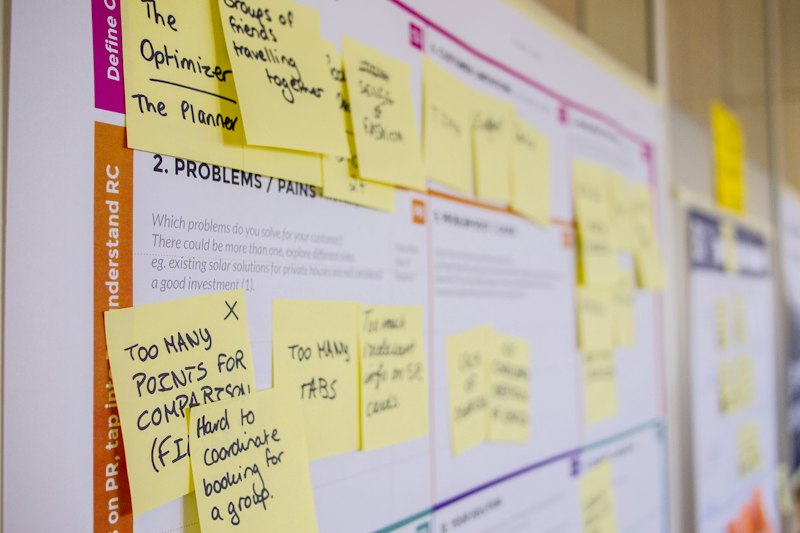
Core Features and What Each One Costs
Every feature you add to a festival app has a direct cost impact. Here is how the core feature set breaks down:
Interactive Venue Maps
Static maps are cheap ($3,000 to $5,000). Interactive, zoomable maps with GPS overlay, pin drops for stages, food vendors, restrooms, medical tents, and parking run $15,000 to $30,000. If you want indoor venue mapping with Bluetooth beacon-based positioning, add another $10,000 to $20,000 for the software plus $5,000 to $15,000 for beacon hardware and installation.
Schedule Builder with Personalized Recommendations
A basic schedule grid with favoriting costs $5,000 to $10,000. Add conflict detection ("these two sets overlap"), personalized recommendations based on listening history or stated preferences, and sync across devices, and you are at $15,000 to $25,000. Spotify or Apple Music integration for auto-recommendations based on a user's actual listening data pushes this to $25,000 to $35,000.
Real-Time Stage Notifications
Push notifications for set time changes, surprise guests, weather alerts, and schedule updates. This sounds simple, but delivering 50,000 push notifications within 30 seconds requires robust infrastructure. Basic push: $5,000 to $8,000. Segmented, real-time push with geofencing (notify only people near Stage B): $15,000 to $25,000. Read our guide to building real-time features for the technical details behind this.
Cashless Payments and Wristband Integration
NFC wristband integration for cashless payments is one of the highest-value features for festival organizers because it increases per-attendee spending by 15 to 30%. RFID/NFC integration with top-up, balance checking, and vendor-side POS: $30,000 to $50,000. If you are building on top of existing cashless providers like Intellipay or Tappit, integration costs drop to $15,000 to $25,000.
Social and Meetup Features
Friend finding on a venue map, group chat, photo sharing, and meetup point coordination. Basic friend list with location sharing: $10,000 to $15,000. Full social layer with group creation, in-app messaging, photo feeds, and proximity-based friend alerts: $25,000 to $40,000.
Artist Lineup with Bios and Media
Artist profiles with photos, bios, embedded audio/video previews, and links to streaming platforms. Basic profiles: $3,000 to $5,000. Rich media profiles with Spotify embeds, video previews, and social links: $8,000 to $15,000. CMS-backed so organizers can update content without a developer: add $5,000 to $8,000.
Emergency Alerts and Safety
Weather warnings, evacuation instructions, medical tent locations, and an SOS button. This is non-negotiable for any event over 5,000 attendees. Implementation: $8,000 to $15,000, including integration with local weather APIs and a backend admin panel for security staff to trigger alerts.
Cost Tiers: From Basic to Enterprise
Based on the projects we have delivered, here is how event festival app development cost breaks down by tier:
Basic Companion App: $40,000 to $80,000
This gets you a single-platform (iOS or Android) app with a schedule viewer, static or semi-interactive map, artist lineup, push notifications, and basic favoriting. You are using a standard UI framework, minimal backend, and a managed push notification service. Build time: 8 to 12 weeks. This tier works for single-day events, small conferences, and festivals under 5,000 attendees.
Mid-Range Festival App: $80,000 to $160,000
Cross-platform (iOS and Android via React Native or Flutter). Interactive GPS-enabled maps, personalized schedule builder, real-time notifications with segmentation, social features (friend finding, group creation), cashless payment integration, and an organizer admin dashboard. Build time: 3 to 5 months. This is the sweet spot for mid-size festivals (5,000 to 30,000 attendees) and multi-day events that need a polished digital experience.
Enterprise Festival Platform: $160,000 to $350,000
Native apps for both platforms with a shared backend. Full offline support, Bluetooth beacon wayfinding, NFC wristband cashless system, AI-powered schedule recommendations, sponsor integration with analytics, real-time crowd density mapping, multi-event support (for organizers running several festivals per year), and white-label capabilities. Build time: 5 to 9 months. This tier serves major festivals (30,000+ attendees) and event companies that want a reusable platform across their portfolio.
These ranges assume a professional development team delivering production-ready code with proper QA, security review, and App Store optimization. If you are comparing quotes, make sure you are comparing equivalent scope. A $30,000 quote that skips offline support, load testing, and QA will cost you $60,000 in fixes when your app crashes on opening day. For a broader look at app budgeting, check out our full mobile app cost breakdown.

Real-Time Infrastructure: The Hidden Cost Driver
The feature that surprises most clients on the invoice is real-time infrastructure. A festival app is not like a banking app where requests are evenly distributed throughout the day. You have 50,000 users simultaneously opening the app when the headliner takes the stage, all requesting schedule data, map tiles, and push notifications at the same instant.
WebSockets for Live Updates
WebSocket connections let you push schedule changes, set time updates, and crowd alerts to every connected device instantly. Maintaining 50,000 concurrent WebSocket connections requires dedicated infrastructure. You are looking at $500 to $2,000 per month in server costs during event weekends, but nearly zero during the off-season. Services like Ably, Pusher, or AWS API Gateway WebSocket APIs simplify this, but at scale (50K+ connections), costs climb to $1,000 to $3,000 per event day.
Push Notifications at Scale
Sending 50,000 push notifications in under 60 seconds is not trivial. Apple's APNs and Google's FCM have rate limits. You need queuing, retry logic, and delivery confirmation. OneSignal and Firebase Cloud Messaging handle most of this, but large-scale segmented pushes (different notifications to people near different stages) require a custom orchestration layer. Development cost: $8,000 to $15,000. Infrastructure cost: $200 to $800 per event.
Real-Time Location and Crowd Density
If you are showing friends on a map or displaying crowd density heatmaps, you are ingesting location pings from thousands of devices every few seconds. This data pipeline needs to handle spikes gracefully, aggregate data for privacy, and serve results with sub-second latency. Building this layer: $20,000 to $35,000. Running it: $500 to $1,500 per event day depending on attendee count.
The total real-time infrastructure investment for a mid-range festival app typically adds $15,000 to $30,000 in development and $1,000 to $5,000 per event in operational costs.
Offline-First Architecture and Seasonal Scaling
Two challenges make festival apps architecturally unique compared to most mobile apps: they must work without internet, and they face extreme usage spikes followed by months of near-zero traffic.
Offline-First Is Not Optional
Cell coverage at festivals is terrible. When 40,000 people crowd into a field, cell towers get overwhelmed. Your app needs to function without a data connection. That means the schedule, maps, artist info, and venue details must be cached locally before the event. Users should be able to browse the lineup, check the map, and view their personalized schedule entirely offline.
Implementing offline-first properly requires local databases (SQLite or Realm), background sync when connectivity returns, conflict resolution for schedule changes that happened while offline, and intelligent pre-caching of map tiles and media assets. This adds $15,000 to $30,000 to development costs. But skipping it means your app is useless precisely when attendees need it most.
Seasonal Usage and Infrastructure Scaling
A festival app sees 95% of its annual traffic during a 3 to 5 day window. The rest of the year, usage is near zero (maybe a trickle of users checking next year's lineup announcements). This pattern demands auto-scaling infrastructure that can spin up dozens of server instances for event weekend and scale back to near-zero afterward.
Cloud providers like AWS, GCP, and Azure all support this through auto-scaling groups, serverless functions, and managed databases that scale on demand. The key is architecting for it from day one. A fixed-server setup that handles 50,000 concurrent users would cost $3,000 to $8,000 per month year-round. A properly auto-scaled setup costs $50 to $200 per month during the off-season and $1,000 to $3,000 during event days. Over a year, the savings are substantial.
Serverless backends (AWS Lambda, Google Cloud Functions) are particularly well-suited here. You pay per invocation, so idle months cost almost nothing. Combine serverless compute with a managed database (PlanetScale, Supabase, or Aurora Serverless) and a CDN for static assets, and your infrastructure bill matches your actual usage patterns.

Sponsor Integration and Monetization
Festival apps are not just a cost center. Done well, they generate revenue that offsets development costs and then some. Sponsors pay premium prices for access to a captive, engaged audience.
Sponsored Content Placements
Branded splash screens, sponsored stage labels on the map, promoted artist slots in the lineup, and sponsored push notifications. A single festival app sponsorship package can sell for $10,000 to $100,000 depending on the event size. Building the infrastructure to support these placements (ad slots, impression tracking, sponsor dashboards with analytics) costs $10,000 to $20,000.
In-App Purchases and Upgrades
VIP upgrades, merchandise pre-orders, food and drink pre-ordering, and premium content (backstage livestreams, exclusive artist Q&As). Each commerce feature adds $5,000 to $15,000 in development, but the revenue potential is significant. Events report $2 to $8 per attendee in incremental in-app revenue.
Data and Analytics for Organizers
Foot traffic heatmaps, popular set times, food vendor wait time correlations, and demographic insights. This data is gold for organizers planning next year's event and for sponsors evaluating their ROI. Building an analytics dashboard: $10,000 to $20,000. The insights justify sponsor renewals and higher rates year over year.
Monetization Math
For a 25,000-attendee festival, realistic app monetization looks like this: two to three sponsors at $15,000 to $30,000 each, plus $3 to $5 per attendee in cashless transaction fees, plus in-app purchase commissions. Total app-driven revenue: $100,000 to $200,000 per event. That is enough to cover the app development cost in the first year and generate profit in subsequent years when you are only paying for updates and infrastructure. If your event also handles its own ticketing platform, the combined data from ticketing and the companion app makes your sponsor pitch even stronger.
Timeline, Team, and Next Steps
Here is a realistic timeline for each tier:
- Basic app ($40K to $80K): 8 to 12 weeks with a team of 2 to 3 developers, 1 designer, and 1 project manager.
- Mid-range app ($80K to $160K): 3 to 5 months with 3 to 4 developers, 1 designer, 1 QA engineer, and 1 PM.
- Enterprise platform ($160K to $350K): 5 to 9 months with 4 to 6 developers, 1 to 2 designers, 1 to 2 QA engineers, a DevOps engineer, and a PM.
Start the development process at least 4 to 6 months before your event date. That gives you time for development, beta testing with a small group of attendees or staff, App Store review (which can take 1 to 2 weeks for first submissions), and a buffer for the inevitable scope adjustments.
Build versus buy. Platforms like Crowdmobi, Aloompa, and Greencopper offer white-label festival apps starting at $5,000 to $20,000 per event. These work well for straightforward needs. But if you need custom integrations (your own cashless system, specific sponsor requirements, unique social features), or if you run multiple events and want a platform you own and control, custom development pays for itself within two to three events.
Year-over-year costs drop significantly. The first year is the most expensive because you are building from scratch. Year two is typically 20 to 30% of the original cost for updates, new features, and infrastructure. By year three, you have a mature platform that needs only content updates and minor feature additions.
The biggest mistake we see is starting too late and cutting corners on offline support and load testing. Your app gets one chance to make a first impression. If it crashes during the headliner's set, attendees will delete it and never open it again.
If you are planning a festival or event app and want an honest assessment of what your specific feature set will cost, book a free strategy call. We will walk through your requirements, flag the features that drive the most cost, and help you prioritize for your budget and timeline.