
Why Social Media Apps Are So Expensive to Build
Social media apps look simple on the surface. Users post content, other users engage with it, everyone scrolls a feed. But behind that simplicity sits some of the most demanding engineering in consumer software.
Consider what happens when a user posts a photo. Your system needs to upload the image, compress it into multiple resolutions, store it in a CDN, run it through content moderation (both automated and human), insert it into the feeds of every follower, send push notifications to close friends, index it for search, update recommendation algorithms, and log analytics. That single action touches eight or nine different backend services.
Now multiply that by millions of users posting simultaneously. The infrastructure challenge alone separates social media from most app categories. A project management tool with 10,000 users is a success story. A social media app with 10,000 users is a ghost town. You need scale to create network effects, and scale costs real money.
Instagram reportedly spent $500K before launch in 2010, and that was with a team of just 13 people building a photo-sharing app with filters. In 2026, user expectations have skyrocketed. People expect real-time messaging, algorithmic feeds, short-form video, Stories, live streaming, and AI-powered recommendations out of the box. The baseline feature set has expanded dramatically, and so have the costs.
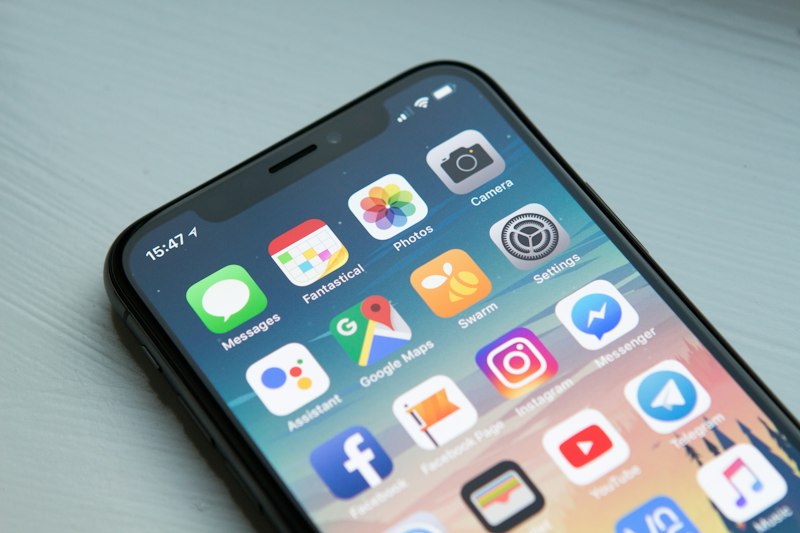
Social Media App Cost Breakdown by Tier
Your total cost depends on how many features you ship and how polished they need to be at launch. Here is a realistic breakdown across three tiers.
MVP: $60K to $120K
A social media MVP gets you the core loop: user profiles, a content feed, posting (text and images), likes, comments, follow/unfollow, push notifications, and basic search. You build for one platform (iOS or Android, not both) using React Native or Flutter to keep costs down. The backend runs on Firebase or Supabase for speed, and you use a managed service like Stream or Sendbird for the activity feed.
Development takes 3 to 5 months with a team of 3 to 4 engineers. At this stage, you skip video, messaging, content moderation AI, and recommendation algorithms. The goal is to prove that your target community will actually engage on your platform. If you are exploring the full mobile app development cost landscape, social media sits at the higher end because of the real-time and infrastructure requirements.
Mid-Tier: $120K to $300K
Mid-tier is where your app starts feeling like a real social platform. You add direct messaging (one-on-one and group), short-form video with recording and editing, Stories that disappear after 24 hours, hashtags and trending topics, content moderation with AI flagging and human review queues, a basic recommendation algorithm, analytics dashboards for creators, and cross-platform support (iOS and Android).
Development takes 5 to 9 months with 5 to 7 engineers. Video processing alone adds $20K to $40K because you need transcoding pipelines, adaptive bitrate streaming, and thumbnail generation. This is the tier where most funded startups launch.
Full-Scale Platform: $300K to $500K+
At this level, you are building a platform that competes with established players in a niche. Features include live streaming with real-time chat, an algorithmic feed powered by machine learning, creator monetization (tips, subscriptions, ad revenue sharing), marketplace or commerce integration, advanced analytics and creator tools, multi-language support, end-to-end encrypted messaging, and AR filters or effects. Development takes 10 to 18 months with a full product team of 8 to 12 people.
Core Feature Costs: Feed, Profiles, and Content
The feed is the heartbeat of any social media app. Getting it right is both a product and an engineering challenge.
Activity Feed: $15K to $40K
You have two architectural choices for feeds. A pull model queries the database when a user opens the app, assembling their feed on the fly from the posts of people they follow. This is cheap to build ($15K to $20K) but slow at scale. A fan-out model precomputes feeds by writing each new post to every follower's feed cache at publish time. This is fast to read but expensive to build ($25K to $40K) and requires infrastructure like Redis or Apache Kafka.
Most teams start with a pull model using PostgreSQL and a caching layer, then migrate to fan-out once they hit 50K to 100K active users. Services like Stream and GetStream offer managed feed infrastructure starting at $500/month, which can save you $20K in upfront development if you are comfortable with the vendor dependency.
User Profiles: $8K to $15K
Profiles seem simple, but they involve avatar uploads with cropping and compression, bio fields with link detection, follower/following counts and lists, profile privacy settings, account verification badges, and content grids or lists. Building a polished profile system with all these elements costs $8K to $15K.
Content Creation and Media Handling: $12K to $30K
Text posts are straightforward. Add photo support and you need image compression, multi-image carousels, and EXIF data stripping for privacy. Add video and the complexity jumps again. You need client-side recording, server-side transcoding (FFmpeg or a managed service like Mux), adaptive bitrate streaming for playback, and thumbnail generation. Each media type adds $5K to $10K in development cost.

Messaging, Notifications, and Real-Time Features
Real-time features are what make a social media app feel alive. They are also where your infrastructure costs start climbing fast.
Direct Messaging: $15K to $35K
Basic one-on-one messaging with text costs $15K to $20K if you build it yourself using WebSockets or a managed service. Adding group chats, read receipts, typing indicators, media sharing, message reactions, and message search pushes the cost to $25K to $35K. End-to-end encryption (using the Signal Protocol or similar) adds another $10K to $15K.
Third-party chat SDKs like Sendbird ($399/month and up), Stream Chat, or PubNub can cut your messaging development cost by 50% to 70%. The tradeoff is monthly API fees that scale with your user count and less control over the UX. For an MVP, using a managed chat service is almost always the right call.
Push Notifications: $5K to $12K
Push notifications drive re-engagement, and building a smart notification system matters more than people think. You need notification preferences (per type: likes, comments, follows, messages), batching logic so users do not get 50 notifications when a post goes viral, quiet hours settings, and rich notifications with images on iOS and Android. Firebase Cloud Messaging handles delivery, but the preference and batching logic is custom work.
Real-Time Updates: $8K to $18K
Users expect to see likes, comments, and new posts appear without refreshing. WebSocket connections maintain a persistent link between client and server. At scale, you need a pub/sub layer (Redis Pub/Sub, Ably, or Pusher) to broadcast updates efficiently. Building reliable real-time infrastructure that handles connection drops, reconnection, and state synchronization costs $8K to $18K.
Content Moderation and Safety: The Hidden Budget Item
Content moderation is the feature nobody wants to build but every social media app needs. Skip it and you will face app store rejections, legal liability, advertiser flight, and community collapse. Plan for it to consume 10% to 15% of your total development budget.
Automated Moderation: $10K to $25K
AI-powered moderation catches the obvious violations before human reviewers see them. You can integrate pre-built services like Google Cloud Vision for image safety, OpenAI's moderation API for text, or AWS Rekognition for video analysis. Setting up automated pipelines that flag content, quarantine it, and route it to review queues costs $10K to $25K depending on how many content types you support.
Accuracy matters enormously here. False positives frustrate legitimate users. False negatives expose your community to harmful content. Tuning thresholds and building appeal workflows adds to the cost but protects your platform long-term.
Human Review Tools: $8K to $15K
No AI catches everything. You need an internal moderation dashboard where reviewers can see flagged content, view context (user history, report volume), take action (remove, warn, suspend, ban), and handle appeals. Building this internal tooling costs $8K to $15K. You also need to budget for the moderators themselves, either in-house staff or an outsourced moderation service like TaskUs or Besedo.
Reporting and Blocking: $5K to $10K
User-facing safety features include reporting content and users, blocking and muting, content visibility controls (who can comment, who can message you), and sensitive content warnings. These features are relatively simple to build individually, but they touch many parts of the application. Budget $5K to $10K for a complete user safety toolkit. If you are building a community-focused platform, moderation is even more critical because tight-knit communities are more sensitive to toxic behavior.
Infrastructure, Scaling, and Ongoing Costs
Social media apps have some of the highest infrastructure costs in consumer software because of media storage, real-time connections, and unpredictable traffic spikes.
Cloud Infrastructure: $500 to $15,000+/Month
At launch with a few thousand users, you can run on a modest AWS or GCP setup for $500 to $1,500/month. As you scale to 100K users, expect $3,000 to $8,000/month. At a million users, you are looking at $10,000 to $30,000/month or more, depending heavily on how much video content your users create.
Media storage is the biggest line item. A single 30-second video at 1080p is roughly 30MB. Multiply by the number of videos uploaded daily, add multiple transcoded resolutions, and storage costs climb fast. AWS S3 combined with CloudFront CDN is the standard stack. Cloudflare R2 has emerged as a cost-effective alternative, eliminating egress fees that can double your S3 bill.
Video Transcoding: $1,000 to $5,000/Month
If your app supports video, you need a transcoding pipeline. Every uploaded video gets converted to multiple resolutions (360p, 720p, 1080p) and formats (HLS for streaming). AWS MediaConvert, Mux, or Cloudflare Stream handle this. Costs scale directly with video volume. Mux charges roughly $0.015 per minute of video stored and $0.005 per minute of video delivered.
Third-Party API Costs: $1,000 to $5,000/Month
Your monthly bill includes push notification delivery (Firebase is free for basic usage, but advanced analytics costs), search infrastructure (Algolia at $1/1,000 search requests), chat SDK fees if using a managed service, content moderation API calls, and email/SMS for authentication. These add up quickly once you cross 50K active users.

How to Reduce Costs Without Cutting Corners
You do not need to spend $300K to validate a social media concept. Smart teams cut costs by making strategic trade-offs, not by shipping broken software.
Start with One Platform
Building for both iOS and Android doubles your QA burden and slows iteration. Pick the platform where your target audience lives. If you are targeting Gen Z creators, start with iOS. If you are building for an emerging market, start with Android. Cross-platform frameworks like Flutter or React Native let you ship to both platforms from one codebase, but even then, platform-specific bugs and performance tuning eat time.
Use Managed Services Aggressively
For an MVP, do not build what you can buy. Use Stream or GetStream for feeds ($500/month), Sendbird for messaging ($399/month), Firebase for auth and push notifications (free tier), Mux for video ($0.015/min stored), and Hive Moderation or OpenAI's API for content safety. Your total managed service bill might be $2,000 to $3,000/month, but you will save $80K to $120K in upfront development. You can always replace these with custom-built systems later as revenue grows.
Skip the Algorithm at Launch
A chronological feed based on who you follow is perfectly fine for your first 10,000 users. Recommendation algorithms require data to train on, and you do not have that data yet. Build the event tracking infrastructure from day one so you collect the behavioral data you will need later, but defer the machine learning work until you have a meaningful dataset.
Nail Your Niche
The most expensive mistake in social media is building for everyone. Strava did not try to compete with Facebook. They built a social network specifically for athletes, and it worked because every feature decision was filtered through that lens. A focused niche means fewer features, clearer product decisions, and lower development costs. Read our full guide on how to build a social media app for a detailed breakdown of the feature prioritization process.
Choosing the Right Development Partner
Your choice of development partner will shape both your budget and your product quality. Here is how the options compare for social media apps specifically.
In-House Team: $250K to $500K/Year
Hiring full-time engineers gives you the most control but costs the most. A minimum viable team for a social media app includes 2 mobile engineers, 1 to 2 backend engineers, 1 designer, and a part-time product manager. Fully loaded (salary, benefits, equipment, office), that team costs $250K to $500K per year in the US. The advantage is deep product knowledge and fast iteration. The disadvantage is the time and cost of recruiting, and the risk of key-person dependency.
Development Agency: $80K to $300K Project Cost
Agencies bring assembled teams, established processes, and experience shipping similar products. Good agencies have built social features before and can avoid common architectural mistakes. The best ones will push back on your feature list and help you ship a tighter MVP faster. Look for agencies with specific social media or real-time app experience, not generalists who build everything from e-commerce to enterprise dashboards.
Offshore Teams: $30K to $120K Project Cost
Offshore development cuts costs by 50% to 70% but introduces communication overhead, timezone challenges, and variable quality. For social media apps, where real-time performance and UX polish are critical differentiators, going fully offshore is risky. A hybrid model, with product leadership and architecture in-house and execution offshore, can work if you have a technical co-founder who can review code and enforce standards.
Whichever path you choose, make sure your partner has experience with real-time systems, media processing pipelines, and apps that need to perform well at scale. Social media is not a CRUD app with a pretty UI. The backend complexity is where projects succeed or fail.
If you are ready to scope your social media app and get a realistic cost estimate tailored to your specific feature set, book a free strategy call with our team. We will help you define the right MVP scope, identify where managed services can save you money, and build a development roadmap that matches your budget and timeline.