
Why This Comparison Actually Matters in 2026
Every founder building an MVP faces the same fork in the road. On one side, no-code platforms like Bubble and FlutterFlow promise a working product in weeks, not months. On the other, custom code promises total control and unlimited scalability. Both camps have strong opinions, and both are partially right.
Here is the problem with most comparison articles. They treat this decision like a feature checklist. Bubble has drag-and-drop. FlutterFlow exports real code. Custom development lets you do anything. That framing misses the point entirely. The real question is: which approach gives you the best chance of validating your idea, acquiring your first 1,000 users, and surviving long enough to reach product-market fit?

At Kanopy Labs, we have built MVPs using all three approaches. We have watched Bubble apps thrive for years and FlutterFlow apps collapse within months. We have also seen custom-coded MVPs burn through $200,000 before a single user signed up. The tool is never the problem. The mismatch between tool and context is the problem. This guide will help you avoid that mismatch.
We are going to compare Bubble, FlutterFlow, and custom code across the dimensions that actually determine whether your MVP succeeds: speed to launch, real cost of ownership, scalability ceilings, team requirements, and exit options when you outgrow your initial choice. No hand-waving, no hypotheticals, just the numbers and tradeoffs we have seen play out across dozens of real projects.
Bubble for MVPs: What You Actually Get
Bubble is the most popular no-code platform for building web applications, and for good reason. It lets you create a full-stack application with a visual editor, a built-in database, user authentication, and API connections. For certain types of MVPs, it is genuinely the fastest path from idea to live product.
Where Bubble excels
Bubble is best for CRUD-heavy applications: marketplaces, directories, SaaS dashboards, booking systems, and internal tools. If your MVP is fundamentally about users creating, viewing, updating, and managing records, Bubble can get you live in 3 to 6 weeks with a skilled developer. That timeline assumes you already have clear wireframes and a defined data model. Without those, add another 2 to 4 weeks.
The platform's plugin ecosystem is its superpower. Need Stripe payments? There is a plugin. Need SendGrid emails? Plugin. Need Google Maps integration? Plugin. For standard integrations, you can wire up functionality that would take a custom developer 20 to 40 hours in just a few hours of configuration.
Real costs for a Bubble MVP
Platform fees run $32 to $349 per month depending on plan tier. But the platform fee is the smallest line item. A competent Bubble freelancer charges $75 to $150 per hour, and a realistic MVP build takes 80 to 200 hours. That puts your total development cost at $6,000 to $30,000. Add another $50 to $400 per month for plugins. For the first year, expect a total cost of $8,000 to $36,000 depending on complexity.
Where Bubble falls apart
Performance is the first wall you will hit. Bubble apps run on Bubble's servers with Bubble's database engine. You cannot add indexes, optimize queries, or implement caching. Apps that feel snappy with 50 users start lagging noticeably at 2,000 to 5,000 users. Page load times creep from 1.5 seconds to 4 or 5 seconds, and there is nothing you can do except pay for a dedicated server plan at $1,000 per month or more.
The second wall is mobile. Bubble apps are web-only. You can wrap them in a webview container and push to app stores, but users notice. The experience feels clunky compared to native apps. Scroll performance, animation smoothness, and offline capability all suffer. If mobile is central to your product, Bubble is the wrong choice.
The third wall is lock-in. Bubble apps cannot be exported. Your entire product lives on Bubble's infrastructure, built with Bubble's proprietary visual logic. If you outgrow the platform, you are rebuilding from zero. As we covered in our deep dive on no-code vs custom app costs, migration typically costs 1.5 to 2.5 times the original build. Factor that into your planning.
FlutterFlow for MVPs: The Middle Ground
FlutterFlow occupies an interesting space between no-code and custom code. It is a visual development environment that generates real Flutter (Dart) code. You design your app with drag-and-drop components, and FlutterFlow compiles it into a native mobile app that runs on both iOS and Android. It also supports web deployment, though the web experience is not its strongest suit.
Where FlutterFlow shines
FlutterFlow is the best option when your MVP needs to be a mobile app and you do not have the budget for a full native development team. A skilled FlutterFlow developer can produce a polished iOS and Android app in 4 to 8 weeks. The generated code is real Flutter, which means you get native performance, smooth animations, and access to device features like cameras, GPS, and push notifications.
The code export feature is the key differentiator from Bubble. When you outgrow FlutterFlow's visual editor, you can export the entire codebase and hand it to Flutter developers. This creates a genuine migration path that Bubble simply does not offer. Your initial investment is not thrown away when you scale beyond the platform's limits.
Real costs for a FlutterFlow MVP
The platform costs $30 to $70 per month. FlutterFlow developers charge $60 to $130 per hour, and an MVP typically takes 100 to 250 hours. Total first-year cost: $8,000 to $35,000. That is roughly comparable to Bubble, but you get a native mobile app instead of a web app. The value per dollar is strong for mobile-first products.
The FlutterFlow catch
The exported code, while functional, is not what a senior Flutter developer would write by hand. It is verbose, heavily auto-generated, and organized around FlutterFlow's component model rather than clean architectural patterns. When your team starts modifying the exported code, they will spend significant time refactoring before they can work productively.
We have seen this play out repeatedly. A startup exports their FlutterFlow project at the 12-month mark, hands it to a Flutter developer, and the developer estimates 3 to 4 weeks just to restructure the codebase before adding new features. That is not a dealbreaker, but it is a real cost that nobody mentions upfront.
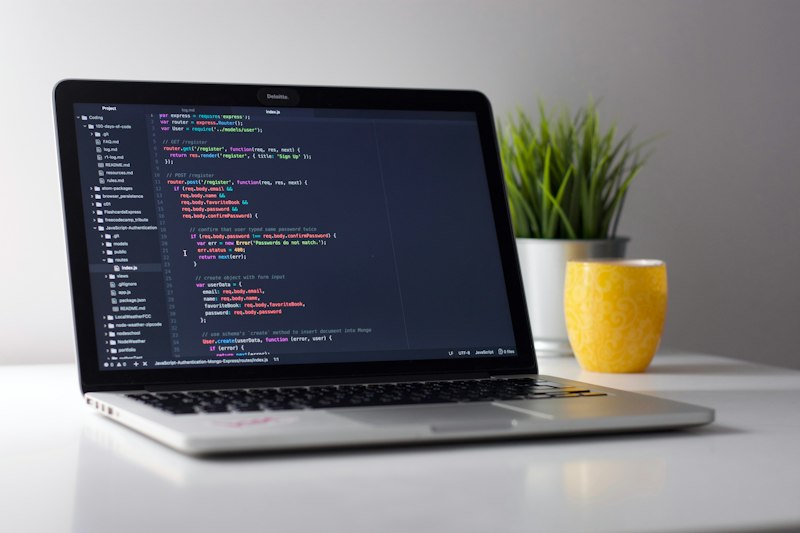
FlutterFlow also has a smaller plugin ecosystem compared to Bubble. Complex integrations, especially with enterprise APIs that require custom authentication flows, often push you out of the visual editor and into hand-written Dart code. At that point, the speed advantage narrows because you need someone who understands both FlutterFlow and raw Flutter development.
Custom Code for MVPs: The Full-Control Path
Custom code means hiring developers to build your MVP from scratch using frameworks like React, Next.js, React Native, Flutter, or Rails. No visual editors, no platform constraints, no abstraction layers between you and the final product. You get exactly what you specify, for better or worse.
Where custom code wins
Custom development is the right choice when your product has genuinely complex business logic that no-code tools cannot express. Examples include real-time collaboration features, algorithmic matching or recommendation engines, complex multi-role permission systems, and products that need to process or transform large datasets. If your MVP is doing something technically novel, custom code is not just better. It is the only realistic option.
Scalability is another clear win. With custom code, you choose your database (PostgreSQL, MongoDB, or whatever fits your data model), your hosting infrastructure (AWS, Vercel, Railway), and your caching layer (Redis, Cloudflare). When traffic spikes, you add capacity. When queries slow down, you optimize them. You are never waiting for a platform vendor to solve your performance problems.
Real costs for a custom-coded MVP
The range here is enormous because "custom code" covers everything from a solo freelancer to a 10-person agency team. For a typical B2B SaaS MVP with user auth, a dashboard, API integrations, and an admin panel, realistic costs look like this. A skilled freelancer delivers in 8 to 14 weeks for $15,000 to $50,000. A mid-market product studio like Kanopy Labs delivers in 6 to 12 weeks for $40,000 to $120,000 with design, testing, and DevOps included. Monthly hosting and infrastructure costs run $50 to $300, which is dramatically lower than Bubble or FlutterFlow platform fees at scale.
The custom code trap
Here is where founders get burned. Custom development gives you infinite flexibility, but flexibility without discipline produces chaos. We have seen countless MVPs where the development team spent four months building a perfect authentication system with passwordless login, social OAuth, two-factor authentication, and session management before touching a single feature that users actually care about.
The other trap is premature optimization. Your MVP does not need microservices architecture, Kubernetes orchestration, or a custom design system. It needs to validate your core hypothesis as fast as possible. As we discussed in our comparison of AI app builders vs custom development, the fastest path to validation is not always the most technically sophisticated one.
If you choose custom code for your MVP, you need an experienced technical lead who can ruthlessly prioritize and resist the temptation to over-engineer. Without that discipline, custom development takes twice as long and costs three times as much as it should.
Head-to-Head Comparison: Speed, Cost, and Scale
Let us put all three approaches side by side with real numbers. These ranges are based on projects we have worked on or evaluated over the past six years, adjusted for 2026 pricing.
Time to launch
Bubble: 3 to 6 weeks for a standard MVP. This is the fastest path if your app is primarily CRUD workflows and you have a clear spec. FlutterFlow: 4 to 8 weeks for a mobile MVP with standard features. Slightly slower than Bubble because mobile apps require more attention to navigation flows and platform-specific details. Custom code: 6 to 14 weeks depending on scope and team size. Longer upfront, but the codebase is production-ready from day one.
Total first-year cost
Bubble: $8,000 to $36,000 (development plus platform fees plus plugins). FlutterFlow: $8,000 to $35,000 (development plus platform fees). Custom code: $15,000 to $120,000 (development plus hosting at $50 to $300 per month). The upfront difference is significant. Custom code costs 2 to 4 times more than no-code for the initial build. But the recurring cost picture flips by year two or three.
Total three-year cost of ownership
This is where the comparison gets interesting. Bubble: $20,000 to $72,000 (initial build plus $1,000 to $3,000 per month in platform, plugin, and maintenance costs). FlutterFlow: $16,000 to $55,000 (initial build plus $400 to $1,500 per month in ongoing costs). Custom code: $20,000 to $140,000 (initial build plus $100 to $500 per month in hosting, plus $5,000 to $15,000 per year in maintenance). At the three-year mark, the gap between Bubble and custom code narrows significantly. For apps with more than 5,000 monthly active users, custom code is often cheaper over three years because hosting scales more efficiently than platform fees.
Scalability ceiling
Bubble: Practical limit of 5,000 to 15,000 active users before performance degrades noticeably. Heavy optimization and dedicated plans can push this higher, but you are fighting the platform. FlutterFlow: No inherent user limit since the compiled app is native, but your backend (usually Firebase or Supabase) determines actual scalability. Firebase can handle hundreds of thousands of users, but costs increase with usage. Custom code: No ceiling. You control the entire stack and can scale to millions of users with appropriate architecture.

Team requirements
Bubble: You need a Bubble-specific developer. The skills do not transfer to other platforms or traditional development. FlutterFlow: You need someone who knows FlutterFlow and ideally has Flutter/Dart experience for when you outgrow the visual editor. Custom code: You need developers fluent in your chosen stack (React, Flutter, Python, etc.) plus a designer. More people, but the skills are universally transferable.
How to Choose: A Decision Framework That Works
After helping startups navigate this decision for years, we have distilled the choice into five questions. Answer them honestly, and the right approach becomes obvious.
Question 1: Is your core product technically complex?
If your MVP requires real-time features, complex algorithms, heavy data processing, or deep third-party integrations, go custom. No-code platforms cannot express that complexity without hacky workarounds that break under load. If your product is a marketplace, directory, booking tool, or standard SaaS dashboard, Bubble or FlutterFlow can handle it fine.
Question 2: Is mobile native experience essential?
If your users primarily interact with your product on their phones and expect a polished native experience, choose FlutterFlow or custom Flutter/React Native development. Bubble's mobile output is a wrapped web view that feels sluggish. For more on this decision, read our PWA vs React Native vs Flutter comparison. If your product is web-first with mobile as a secondary channel, Bubble or custom web development works well.
Question 3: How fast do you need to launch?
If you have a narrow market window and need to launch within 4 weeks, Bubble is your best bet. FlutterFlow needs 4 to 8 weeks. Custom code needs 6 weeks minimum, and that is with a focused team working from a tight spec. If time is your scarcest resource, no-code wins.
Question 4: What is your 18-month user growth target?
If you expect to stay under 5,000 monthly active users for the first 18 months, Bubble or FlutterFlow will serve you well. If your growth model projects 10,000 or more users within a year, start with custom code. The migration cost from no-code to custom at that scale is brutal, often $50,000 to $150,000 for a full rebuild. Starting with custom code avoids that entirely.
Question 5: What is your budget reality?
If your total MVP budget is under $15,000, no-code is your only realistic option. A custom-coded MVP below that threshold usually means cutting so many corners that the result is neither scalable nor maintainable. Between $15,000 and $40,000, either approach works depending on complexity. Above $40,000, custom code almost always delivers better long-term value. Be honest about your budget. Building a custom MVP with $10,000 is like renovating a kitchen with $2,000. You can do it, but the result will not hold up.
Our Recommendation: Match the Tool to the Stage
Here is the honest advice we give every founder who asks us this question. There is no universally correct answer, but there is a framework that consistently produces good outcomes.
If you are pre-revenue and testing a hypothesis, use Bubble or FlutterFlow. Spend $5,000 to $15,000 to get a functional MVP in front of real users within 6 weeks. Validate demand before investing in a scalable codebase. The goal at this stage is learning, not building a production system.
If you have validated demand and are ready to scale, invest in custom code. Take what you learned from your no-code prototype and build it properly with a team that understands your growth trajectory. This is the stage where architecture decisions compound, both positively and negatively.
If you are somewhere in between, consider a hybrid approach. Use FlutterFlow for the mobile front end and custom code for the backend and business logic. This gives you native mobile performance with full backend control, and it shortens the timeline compared to building everything custom. We have used this pattern successfully for several clients who needed mobile apps with complex data pipelines.
The biggest mistake we see is founders treating this as a permanent decision. It is not. Your tech stack should evolve as your product and business evolve. Starting on Bubble and migrating to custom code after reaching product-market fit is a perfectly valid strategy, as long as you budget for the migration and plan for it from the beginning.
The second biggest mistake is choosing custom code for ego reasons. If your MVP is a straightforward marketplace and you have $12,000 to spend, building it in React with a custom PostgreSQL backend because "real startups use real code" is vanity engineering. Ship fast, learn fast, and upgrade your tools when the business demands it.
Whatever path you choose, the key is making a deliberate decision based on your specific constraints rather than following blanket advice from people who do not understand your product. If you want help making that decision with full context, book a free strategy call and we will walk through the tradeoffs together.